
Last updated November 4, 2026
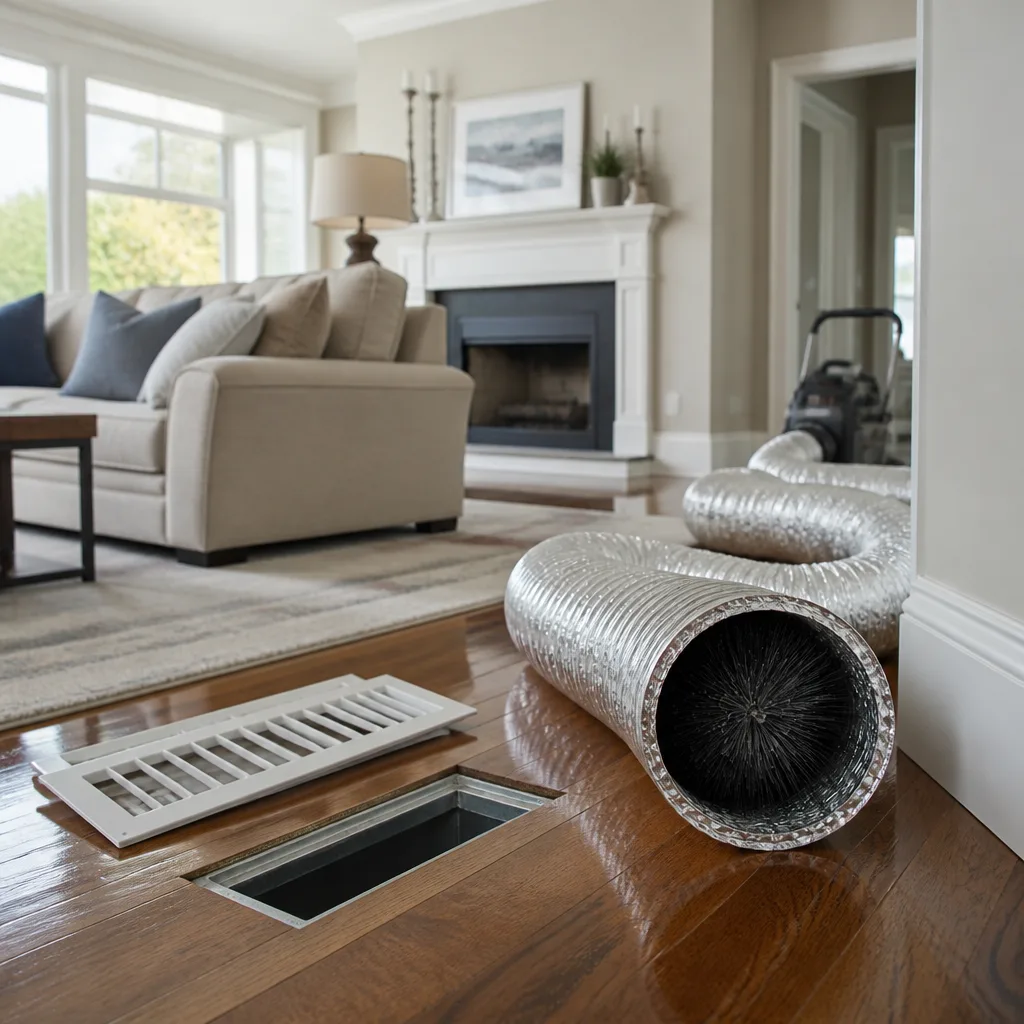 Whole-home duct cleaning
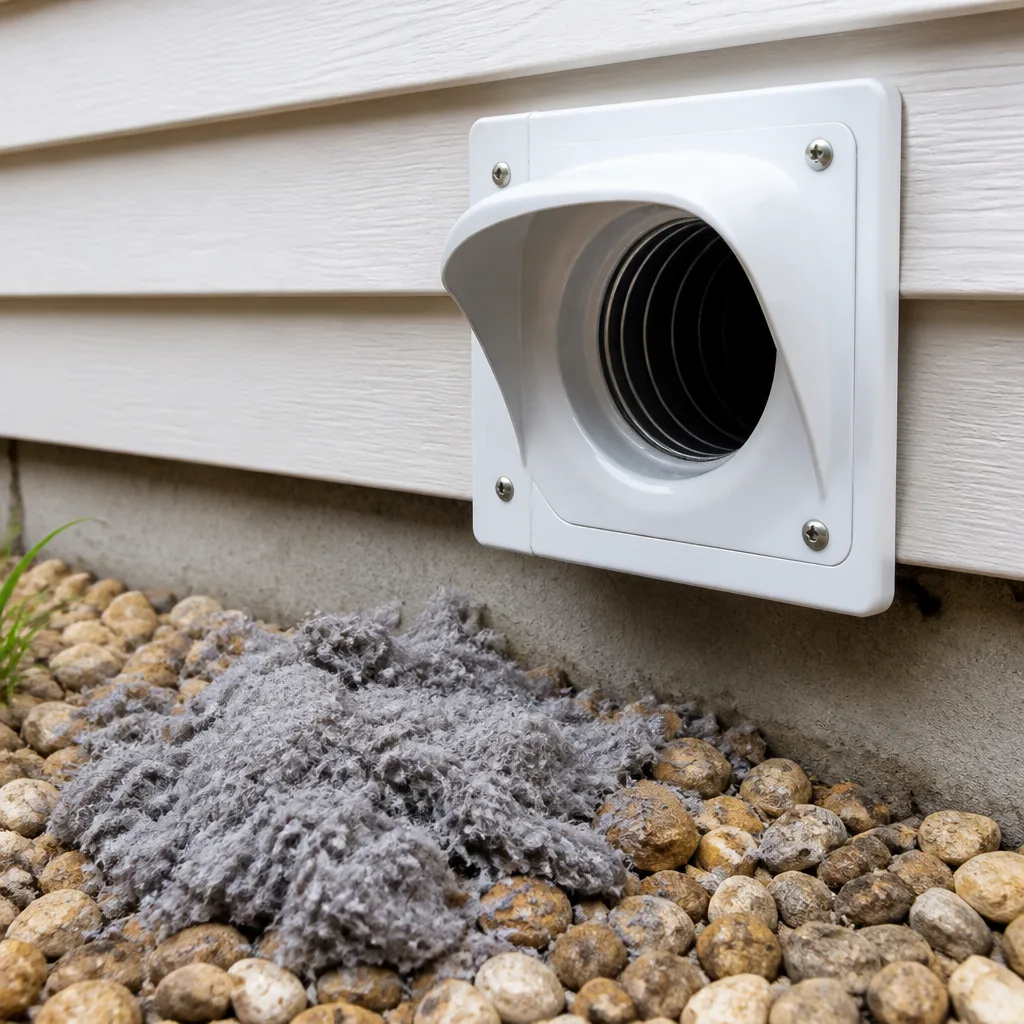 Dryer vent cleaning
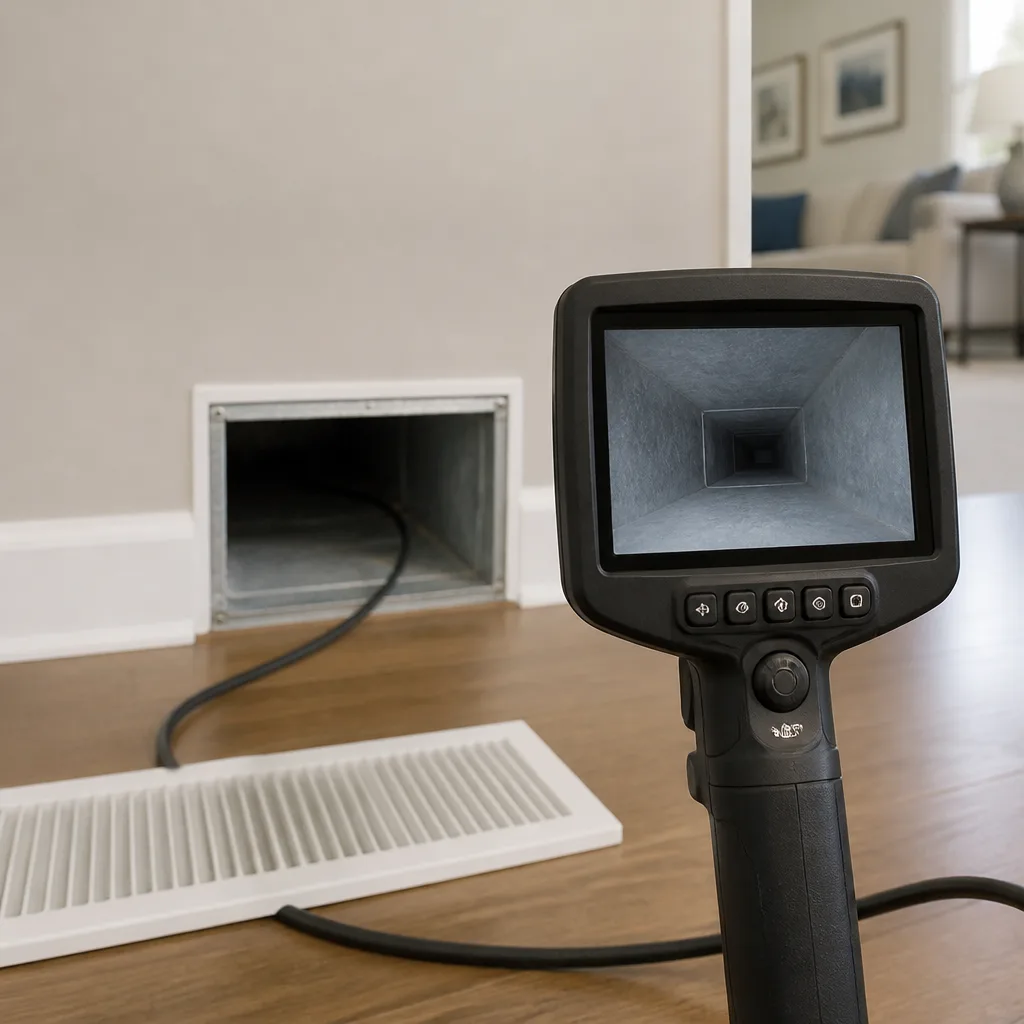 Camera inspection
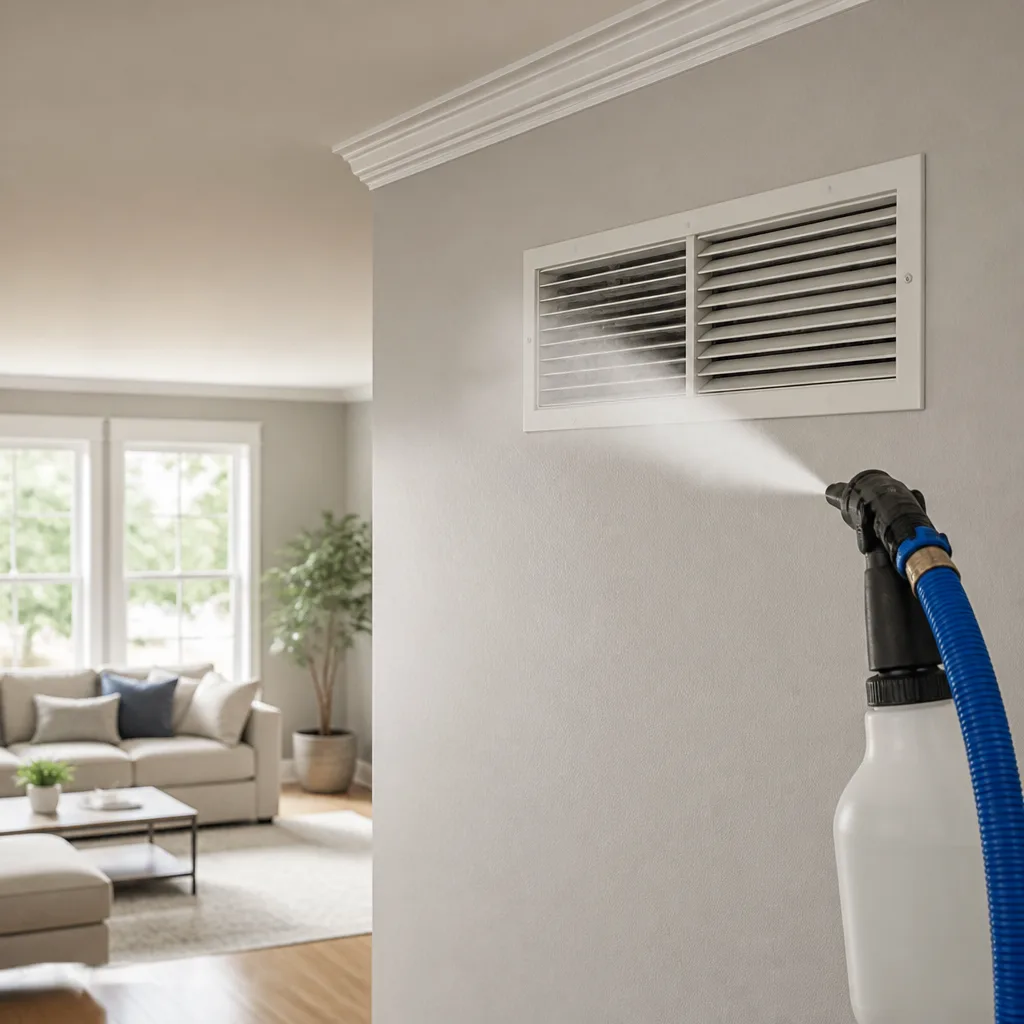 Sanitizing & deodorizing
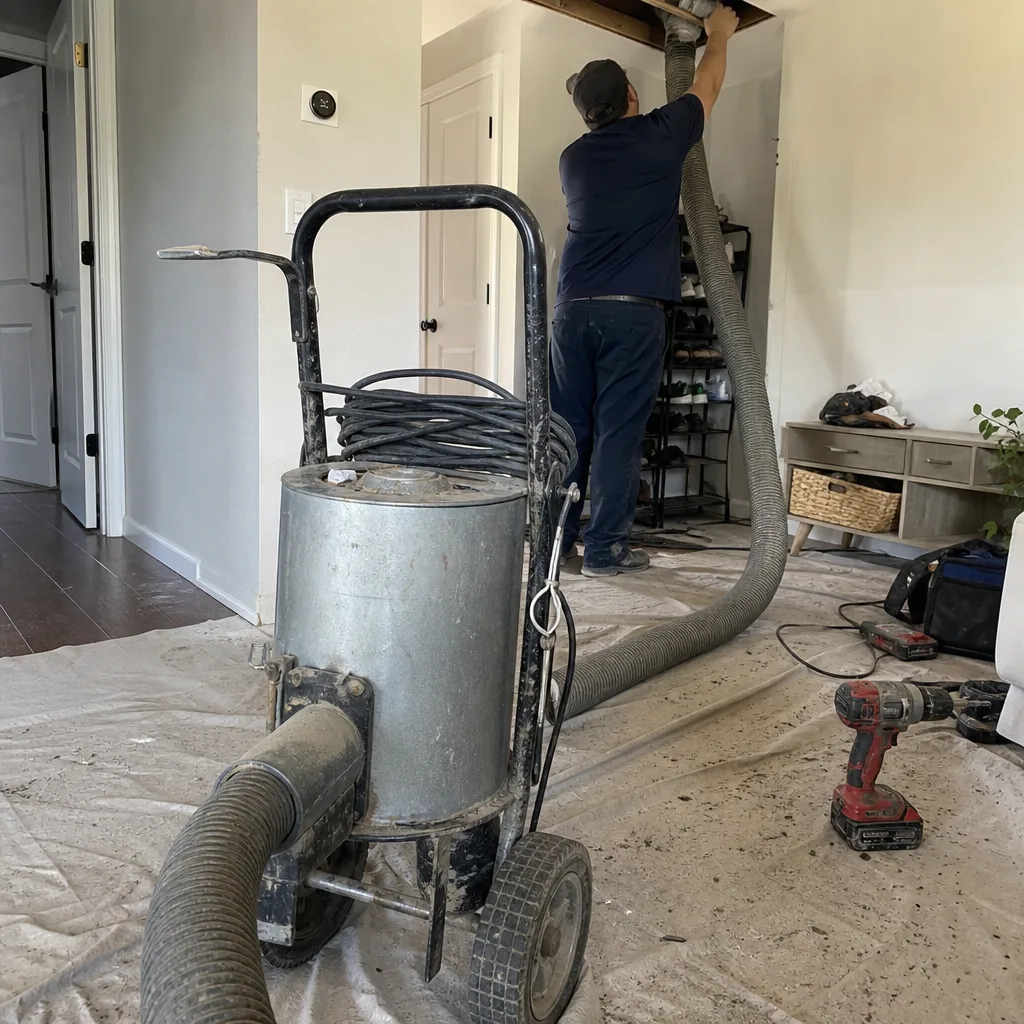
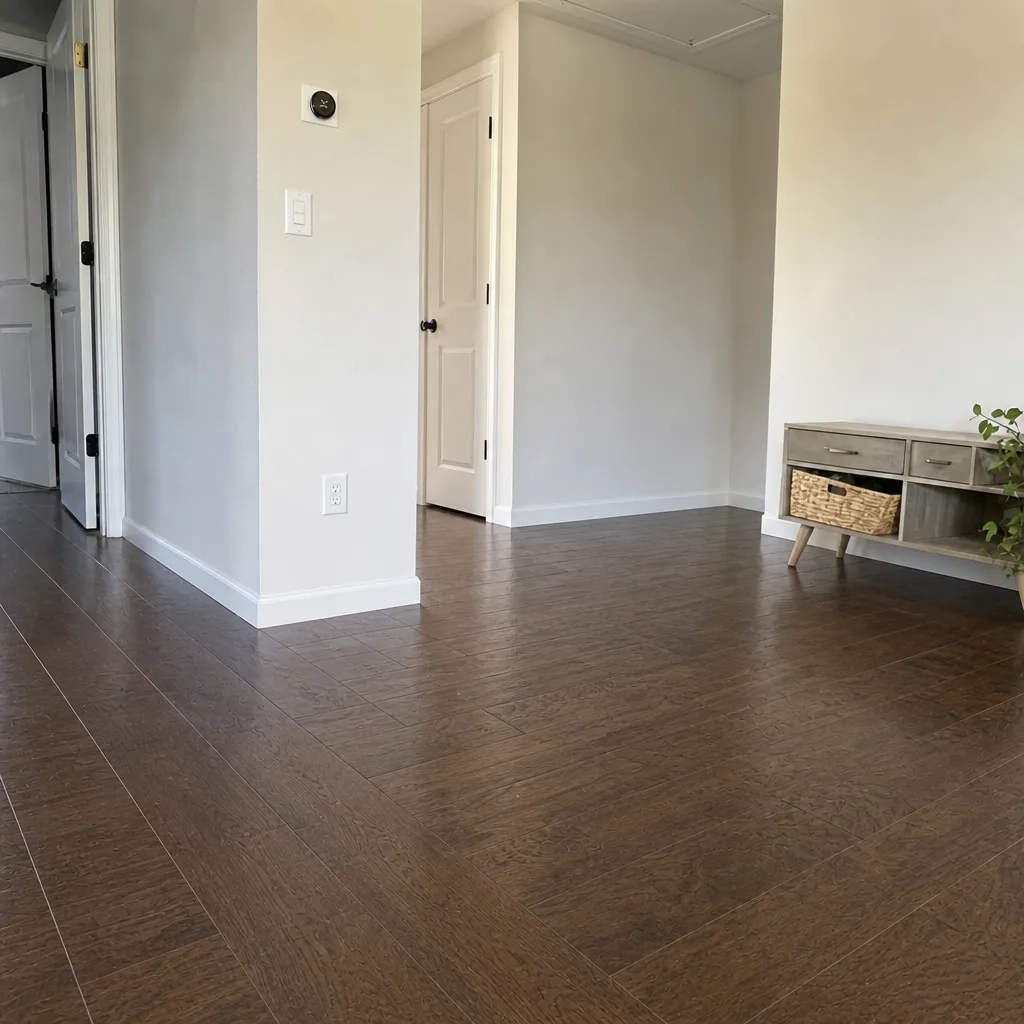
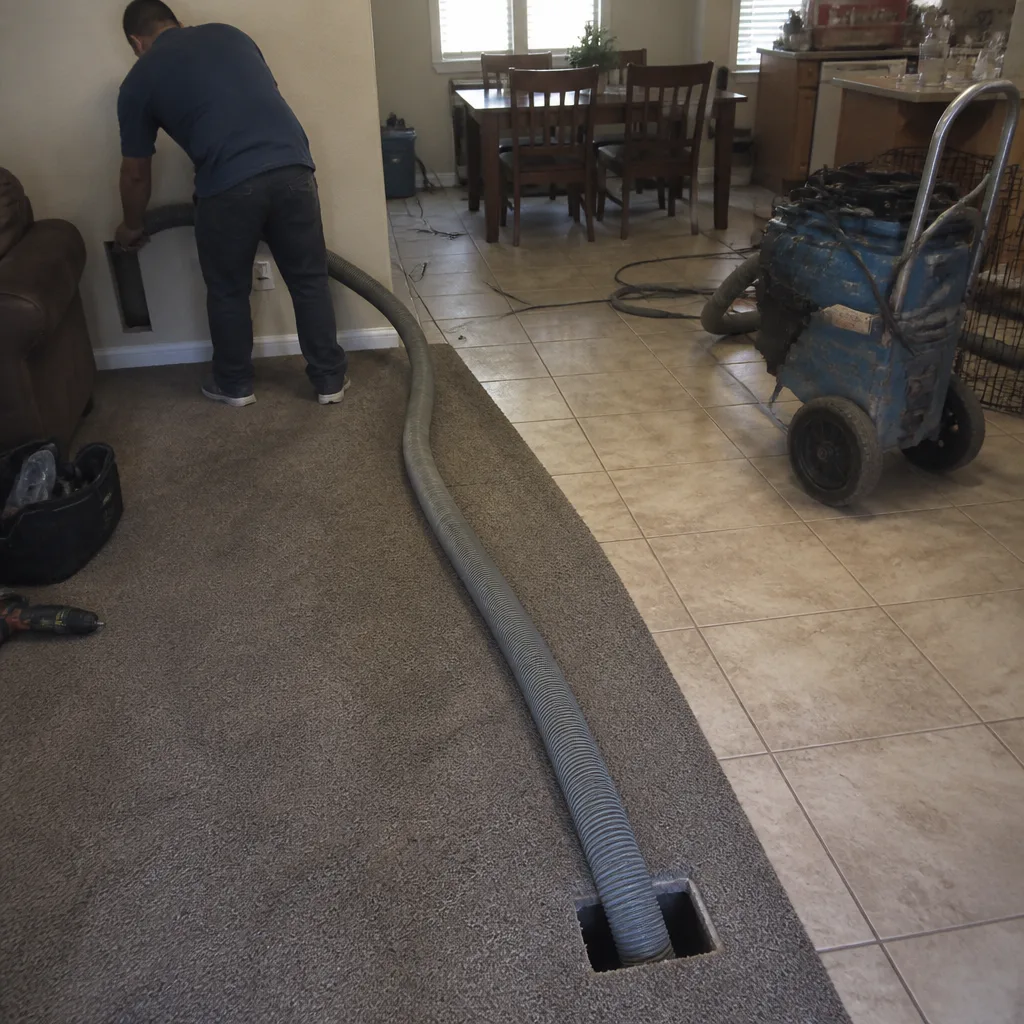
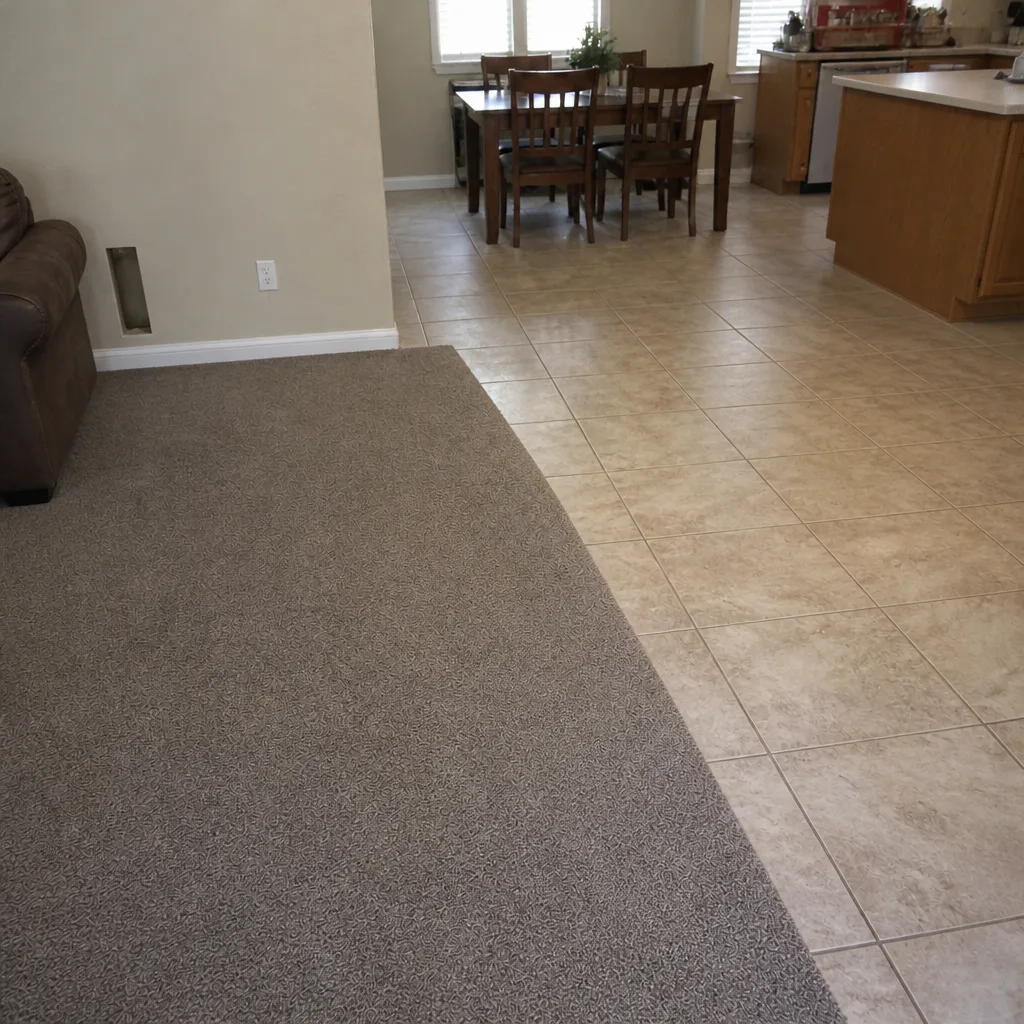
Whole-system duct and dryer vent check with before-and-after photos - you see exactly what came out of your vents
That "$99 whole-house special" is a bait ad - the real number appears once they are in your hallway, or the "clean" is a shop-vac at the register. We photograph the inside of your ducts before and after instead.
DIY vs Professional Air Duct Cleaning: The Chino Homeowner’s Decision Guide
Most homeowners who attempt a DIY air duct cleaning come away believing they’ve done a thorough job. They saw dust fly, the vacuum bag filled, and the registers looked cleaner. What they don’t see is what happened deeper in the system. A consumer drill-brush kit attached to a shop vacuum actually creates positive pressure at the point of contact, which pushes dislodged debris further down the duct run toward the air handler, exactly where it causes the most harm to equipment and air quality. This guide is written for Chino homeowners who want an honest, equipment-level explanation of what DIY can and cannot accomplish, so you can make an informed decision rather than a hopeful one.
Styles & brands we work with
- Whole-home duct cleaning
- Dryer vent cleaning
- Camera inspection
- Sanitizing & deodorizing
Quick Answer
For routine surface dust on return grilles and the first few feet of visible ductwork, a careful DIY approach using a HEPA-filtered vacuum is legitimate maintenance. For anything beyond that, professional negative-air cleaning is the only method that actually removes contamination from the system rather than redistributing it, and it is the only realistic option when dealing with construction dust, rodent debris, mold, or post-wildfire ash in a Chino home.
Table of Contents
- DIY vs Professional Air Duct Cleaning: The Chino Homeowner’s Decision Guide
- The Physics of Air Duct Cleaning
- What DIY Air Duct Cleaning Can Legitimately Accomplish
- The Limits of DIY Air Duct Cleaning
- Equipment Cost Analysis
- Contamination Types That Require Professional Service
- How to Inspect Your Ducts Before Deciding
- Common Mistakes to Avoid
- When to Call a Professional
- Frequently Asked Questions
- The Bottom Line
The Physics of Air Duct Cleaning
Duct cleaning is not a scrubbing problem. It is an airflow problem. The entire question of DIY versus professional service comes down to which direction air moves while you are working, and what carries the dislodged material out of the house.
A residential HVAC system pulls return air in through grilles, sends it through the filter, across the blower, and out through supply ducts. During normal operation, the system runs on negative pressure on the return side and positive pressure on the supply side. This matters for cleaning because it tells you where debris tends to accumulate and where it goes when disturbed.
Professional air duct cleaning systems, such as the Rotobrush contact-cleaning systems and Nikro negative-air equipment we use, operate by creating a sustained negative pressure on the entire duct system. A powerful vacuum is connected to the main trunk line, pulling air backward through every branch and register. Only after that negative pressure is established do technicians agitate the duct walls with rotating brushes and compressed air. The debris knocked loose is immediately drawn into the vacuum stream and out of the house. The direction of airflow guarantees that contamination exits the system rather than traveling deeper into it.
A DIY drill-brush kit works the opposite way. The spinning brush loosens debris, but the shop vacuum attached at the register opening can only pull from that single point. The vacuum’s reach in terms of actual airflow is limited to roughly the first few feet of duct, because the narrow hose and the friction of the duct walls quickly dissipate suction. Meanwhile, the spinning brush is actively pushing air and debris away from the point of contact. The debris that loosens beyond the vacuum’s effective capture zone is now airborne inside the duct, where it drifts toward the air handler, the evaporator coil, and into any air leakage inside walls and ceilings. You have, in effect, relocated contamination from a visible area to an invisible and more damaging one.
What DIY Air Duct Cleaning Can Legitimately Accomplish
None of this means a homeowner should never touch their own ducts. There is real, worthwhile maintenance that every Chino homeowner should be doing, and it does not require professional equipment. Here is what a homeowner can genuinely accomplish with basic tools and an afternoon.
- Register and grille cleaning. Remove floor, ceiling, and wall registers. Wash them in warm soapy water, dry them thoroughly, and vacuum the opening of the duct as far as your vacuum hose naturally reaches. This removes the visible dust that triggers most people’s cleaning impulse in the first place.
- Return grille vacuuming. The return side is where the majority of airborne dust enters the system. Vacuum the grille face and the filter slot every month. A soft brush attachment works well.
- Filter replacement. This is the single most impactful thing any homeowner can do for system cleanliness. In Chino’s dry climate, dust loading happens quickly, and a clogged filter forces the blower to work harder while allowing more bypass air to carry dust past the filter. Check filters monthly and replace them when visibly loaded, not on a fixed calendar.
- Visual trunk inspection. If your home has an accessible attic or crawlspace with exposed ductwork, you can do a meaningful inspection. Look for sagging flex duct, disconnected joints, visible dust accumulation inside open ends, and dark streaks around connections that suggest air leakage. Bring a flashlight and a camera. Photos help you track changes over time.
- Supply register reach. For floor registers, a vacuum hose can often reach one to two feet into the duct boot. That is genuinely useful, because the boot is where heavier particles settle first.
These five tasks, done consistently, cover the maintenance layer of duct hygiene. They do not clean the system. They keep the visible entry and exit points from becoming sources of visible dust, and they let you monitor the system for developing problems.
The Limits of DIY Air Duct Cleaning
Understanding what DIY cannot do is more important than understanding what it can. The limitation is structural, not a matter of effort or technique.
Reach. The average residential duct run in a Chino home is 15 to 40 feet from register to trunk line, with multiple bends. A shop vacuum hose maintains useful airflow for a small fraction of that distance. The interior surfaces beyond that reach remain untouched regardless of how long you work.
Sealed access. Many duct systems have no accessible cleanout points. The only access is through the registers. That means you are working through openings designed for airflow, not for tool passage. A drill brush on a flexible rod can snake around a bend or two, but it cannot reliably contact the entire interior circumference of a duct, and it cannot reach the trunk line that carries air to every room.
No containment. When a professional crew uses Abatement Technologies air-filtration equipment on duct work, they are actively filtering the room air during the cleaning process, capturing displaced particulates before they settle on furniture and floors. A DIY job has no containment. What you disturb in the duct either goes deeper into the system or exits into your living space as dust.
No verification. You cannot see what you cleaned. Professional systems include inspection cameras that show the duct interior before and after the work. A DIY job ends with a guess. You know what the registers looked like. You do not know what the main trunk looked like, because you never saw it.
No repair capability. This is the difference that matters most in practice. During a professional cleaning in a Chino home, we routinely find disconnected joints, crushed flex runs, screws that have backed out, and seams that have separated. None of these are visible from a register. Left unaddressed, a separated return duct pulls attic air or crawlspace air directly into your home, bypassing the filter entirely, and a separated supply duct is conditioning the attic or wall cavity instead of your living room. A DIY cleaning will not find these problems, and even if you suspect one, you now need a contractor to come out anyway. We clean it and, if needed, fix it, on the same visit, because Duct Cleaning Chino offers air duct repair as a first-party service rather than a referral.
Equipment Cost Analysis
One way to approach the DIY question is financial. What would it actually cost to replicate professional-grade cleaning capability, and is that a reasonable purchase for a homeowner?
Professional-Grade Equipment Costs
- Negative-air machine (Nikro-type): $2,500 to $5,000. This is a floor-standing, high-static-pressure vacuum unit designed to connect to a duct trunk and maintain airflow through the entire system.
- Rotating brush contact-cleaning system (Rotobrush-type): $2,000 to $4,500, including hoses, brush heads, and the powered reel. This is a specialized tool, not a drill attachment.
- Compressed-air agitation setup: $300 to $800 for a compressor, lines, and air nozzles designed for duct work.
- HEPA air scrubber (Abatement Technologies-type): $1,000 to $2,500 for the negative-air-capable scrubbers used to contain displaced particulates during residential jobs.
- Inspection camera system: $500 to $1,500 for a duct-rated camera with a long push rod and articulating head.
- Miscellaneous: ladder, drop cloths, Guardsman-brand surface protection, PPE, and hoses: $500 to $1,000.
A realistic total for homeowner-grade versions of professional equipment runs $6,800 to $15,300. These are one-time purchases, but they are purchases of single-purpose tools. A homeowner does not have another use for a negative-air machine, a duct-rated camera, or a rotating brush on a powered reel. These are not generalist tools.
Consumer DIY Kit Costs
- Drill-brush kit with flexible rods: $30 to $80. Designed for short runs and light dusting at the register boot.
- Shop vacuum with HEPA filter and bag: $120 to $400. A genuine HEPA-rated shop vacuum with a sealed filtration system is the minimum for even register-level work, because a standard shop vacuum exhausts fine dust back into the room.
- Registration cleaning supplies: $20 to $50 for register brushes, microfiber cloths, and a decent flashlight.
A realistic DIY kit runs $200 to $500. It covers the maintenance tasks listed earlier in this guide. It does not cover system cleaning, and no amount of money spent on drill attachments changes the physics of the limitation. The vacuum is still pulling from one register at a time, and the brush is still pushing debris deeper.
For comparison, professional air duct cleaning typically runs in the several-hundred-dollar range for a full system in a Chino home, with the final price determined by system size, access, and the level of contamination discovered during inspection. The estimate is free, and the written estimate sets the price before any work begins. When a homeowner weighs $200 to $500 for a DIY kit that performs register maintenance against a professional service that actually cleans the system, the financial case for DIY only holds if the goal is register maintenance, not duct cleaning.
Contamination Types That Require Professional Service
Certain situations in Chino make DIY duct cleaning not merely insufficient but genuinely counterproductive. These are the cases where attempting a DIY approach will make the problem worse, because the contaminant involved is hazardous, persistent, or both.
Rodent Debris
Chino’s older housing stock, particularly in established neighborhoods with mature landscaping, tends to see rodent activity in attic spaces and occasionally in duct runs. Rodent droppings, urine, and nesting material inside ducts are a serious air quality issue. The dust from dried rodent waste contains particles that should not be sent through a shop vacuum and should not be inhaled without proper respiratory protection. A professional crew arrives with containment, filtration, and the right PPE, and the cleaning process removes the material under negative pressure so it exits the house rather than aerosolizing into living spaces. If you can see or smell evidence of rodents in your ducts, this is not a DIY project.
Post-Wildfire Ash
Chino sits close enough to the wildfire zones of the Inland Empire and the San Gabriel foothills that smoke events push fine ash into homes, and that ash settles inside duct systems. Wildfire ash is not ordinary dust. It is a complex mixture of charred organic material and mineral particles that is finer than standard household dust and lighter, which means it stays airborne longer and travels deeper into a system. It also clings to duct surfaces with an electrostatic charge that vacuuming alone does not reliably break. A professional cleaning agitates the duct walls mechanically while the negative air stream carries the ash out. A DIY vacuum will capture some of it and force the rest deeper toward the air handler.
Construction Dust from Renovation
Chino has seen consistent residential remodeling activity, and drywall dust is one of the most common reasons a homeowner discovers their ducts are contaminated. Drywall dust is extremely fine, coats every surface, and passes through standard filters. It also has a tendency to settle inside supply boots and ducts, where it stays until airflow re-entrains it and pushes it back into rooms. Homeowners who have sanded drywall inside their home, or who bought a home that had renovation work done before the sale, should assume the ducts contain drywall dust. Vacuuming from the register will not reach it, and the dust that remains will be reintroduced into living spaces for months or years.
Mold and Microbial Growth
Mold inside a duct system is less about cleaning and more about identifying the moisture source and correcting it. Ducts do not generate moisture on their own, but a disconnected return line drawing humid crawlspace air, or a supply duct that has been sweating into insulation inside a hot Chino attic, can create the conditions. If you see mold on a register, on visible duct surfaces, or on insulation inside a supply boot, do not attempt to clean it yourself. The material needs to be removed or treated properly, the insulation replaced, and the moisture problem solved, otherwise the growth returns. Professional inspection is the only way to determine the scope, and air duct repair is often part of the solution.
How to Inspect Your Ducts Before Deciding
You can answer the DIY-versus-professional question for your own home without spending money on either approach. A limited DIY inspection tells you what you are dealing with, and the results will make the decision clear. Here is a step-by-step process that works in most Chino homes.
- Check the filter. Pull the filter and hold it up to a light. A filter loaded with grey, clingy dust means the system has been actively circulating fine particulates. Look at the filter slot itself. Dust or debris past the filter on the blower side suggests bypass or an oversized filter gap, which is a repair concern.
- Inspect registers. Remove three or four registers in different rooms, including one far from the air handler and one close to it. Shine a flashlight into the boot and the first foot or two of duct. Dark accumulation on the duct walls is normal to a degree, but a thick, felted layer or visible debris means deeper buildup is likely. Take photos with your phone for reference.
- Look for stains and streaks. Around register openings, especially on the ceiling, dark streaks or ghosting around the register indicate air bypassing the register seal and pulling attic dust into the room. This is a sealing issue that a professional cleaning visit will surface but that DIY equipment cannot address.
- Inspect accessible duct runs. In the attic, look at flex duct for kinks, sags, and disconnected joints. In the crawlspace, look for crushed ducts and open seams. A disconnected return pulling attic air is a much bigger air quality problem than dust on the inside of ducts, and it is one that DIY cleaning cannot fix.
- Smell test. Turn the system on and stand at a supply register. A dusty, musty, or stale smell that intensifies when the system runs suggests contamination somewhere in the system, possibly microbial. A smell that appears only when the system is off points to the return side. Either way, a smell you notice means material is being introduced into the air stream.
After this inspection, you will know whether your system has routine dust, visible contamination, suspected damage, or an odor problem. If the answer is routine dust at the registers and a clean filter slot, the DIY maintenance list in this guide is appropriate. If you find debris, damage, odor, or evidence of rodents or renovation dust, call a professional before spending money on DIY equipment. See what is in your ducts before we start: a professional inspection with a duct camera tells you the truth about the whole system, not just the first two feet you can reach.
Common Mistakes to Avoid
- Using a leaf blower to blow out ducts. A leaf blower at a register forces every bit of debris toward the air handler and into the wall and ceiling cavities through any duct leaks. This is the single most destructive DIY duct cleaning method, and it converts a cleaning problem into a contamination problem.
- Running a shop vacuum without HEPA filtration. A standard shop vacuum without a sealed HEPA filter and bag captures large debris but exhausts the fine, lung-irritating fraction directly into the room air. The dust you can see is not the dust that matters most for indoor air quality.
- Spraying cleaning chemicals into ducts. Duct interiors should not have liquid cleaners or deodorizers applied by hand. The liquid wets the dust layer and creates a paste that hardens and becomes nearly impossible to remove, and it adds chemical residue to the air stream. Duct cleaning is mechanical, not chemical.
- Attempting to clean a flexible duct with a hard brush. Flex duct inner liners are plastic film. A stiff brush or a drill brush with aggressive bristles tears the liner, and a torn liner loses the smooth interior surface that keeps airflow moving and dust from accumulating. Torn flex duct needs replacement, not more cleaning.
- Ignoring the return side. Most DIY attention goes to supply registers because that is where visible dust accumulates in the rooms. The return side is where dust enters the system, and it is typically the dirtier side. If you are going to DIY, spend more time on returns than supplies.
- Confusing register dust with duct contamination. A dusty register face does not mean the ducts are dirty. Registers are the first surface room air touches, and they collect dust primarily from the room, not from the duct. Clean registers first, then inspect before deciding the system needs cleaning.
- Using duct tape as a repair material. Despite the name, duct tape does not belong on ducts. It dries out, loses adhesion, and fails on metal duct surfaces under Chino’s attic heat. Ducting needs foil-backed tape or mastic. If you find failed tape, you have found a job for a professional repair visit.
When to Call a Professional
Some situations are not a judgment call. Call a professional duct specialist when any of the following applies: visible mold on registers or duct surfaces, rodent droppings or nesting material in the system, renovation dust that has moved beyond the register boots, a persistent musty or stale odor from the supply registers, visible disconnected or crushed ducts in the attic or crawlspace, or a home built before 2000 that has never had the ducts inspected. For these situations, DIY is not the cheaper option because it does not solve the problem and it can spread the contamination further. If you are in the Chino area and want an honest assessment, Duct Cleaning Chino offers free estimates. Call (844) 789-0415 and tell us what you are seeing. We answer 24/7. Fast dispatch from 7am to 7pm, Sunday through Friday.
Frequently Asked Questions
Professional air duct cleaning in Chino typically runs in the several-hundred-dollar range for a full residential system, with the final price set by the written estimate after a visual inspection of the system’s size, access, and contamination level. The estimate is free, and the price is agreed before any work begins. Call (844) 789-0415 for an exact quote on your system.
DIY air duct cleaning is worth doing for register cleaning, return grille vacuuming, filter maintenance, and visual inspection of the first few feet of duct, tasks that cost under $500 in equipment and genuinely improve surface cleanliness. It is not worth doing as a substitute for whole-system cleaning, because a drill-brush and shop vacuum setup lacks the negative-air containment, reach, and verification that professional equipment provides, and it can push debris deeper toward the air handler.
A shop vacuum with a sealed HEPA filter and bag can clean register boots and the first few feet of duct from each opening, but it cannot pull meaningful airflow through the full length of a typical residential duct run, and it cannot reach the main trunk line where the majority of accumulated material sits. The vacuum works on positive-displacement contact at the register only, not on the system as a whole.
Remove a few registers and shine a flashlight into the boot and the visible duct section; if you see a thick felted layer of dust, debris, or stains, the system has buildup beyond what register vacuuming addresses. You can also check the filter slot for bypass dust, inspect accessible attic or crawlspace duct for disconnections and damage, and pay attention to any stale or dusty smell from the supply registers when the system runs. Any odor, visible debris, or signs of rodents or renovation dust warrant a professional inspection.
Most homes in Chino benefit from a professional air duct cleaning every 3 to 5 years, with shorter intervals for homes with pets, occupants with allergies, recent renovation work, or nearby wildfire smoke events that have pushed fine ash into the system. Homes that have never been cleaned and were built before the current homeowners moved in should be inspected once, and the results will tell you whether cleaning is needed now or can wait. Call (844) 789-0415 for a free estimate and a camera inspection of your system.
With Duct Cleaning Chino, yes. Air duct repair is a first-party service, meaning that any disconnected joints, crushed flex runs, or failed seals discovered during the cleaning inspection can be corrected on the same visit. Many duct cleaning companies only clean and will refer repair work to a separate contractor, which means a second appointment, a second estimate, and a second day of disruption. We clean it and, if needed, fix it.
The Bottom Line
The DIY-versus-professional decision for air duct cleaning is not a question of skill or effort. It is a question of what the equipment can physically do. Consumer tools are built for reach-in maintenance at the registers, and that maintenance has real value for every Chino homeowner. But whole-system cleaning requires negative-air equipment that pulls contamination out of the system rather than pushing it deeper, and it requires the inspection and repair capability that comes with professional service. If your inspection finds routine surface dust, clean your registers and change your filter. If it finds anything more, spend the money on the service that actually solves the problem. For residential air duct cleaning, dryer vent cleaning, and air duct repair in Chino, call (844) 789-0415 for a free estimate. We answer 24/7. Fast dispatch from 7am to 7pm, Sunday through Friday.
Written by the team at Duct Cleaning Chino, serving Chino since 2018.
See the difference
 Before
 After
 Before
 After
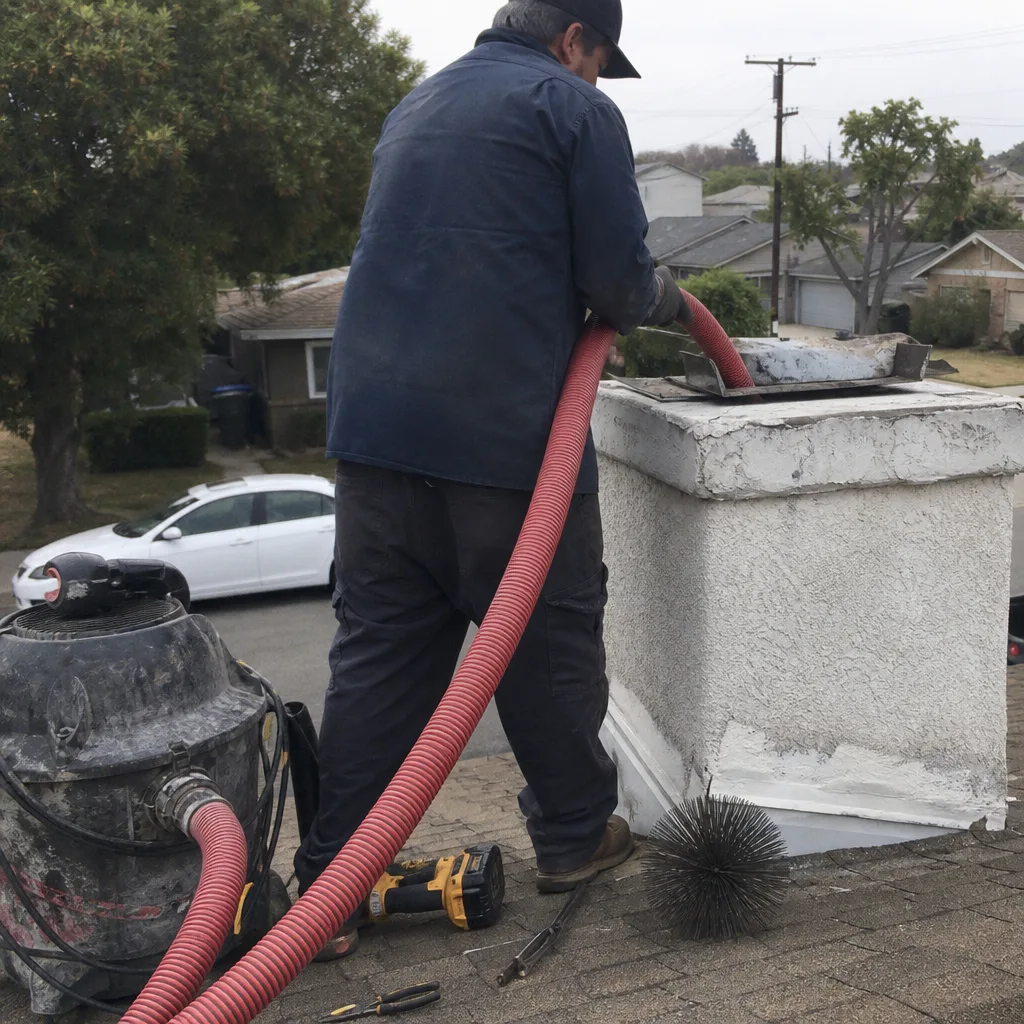 Before
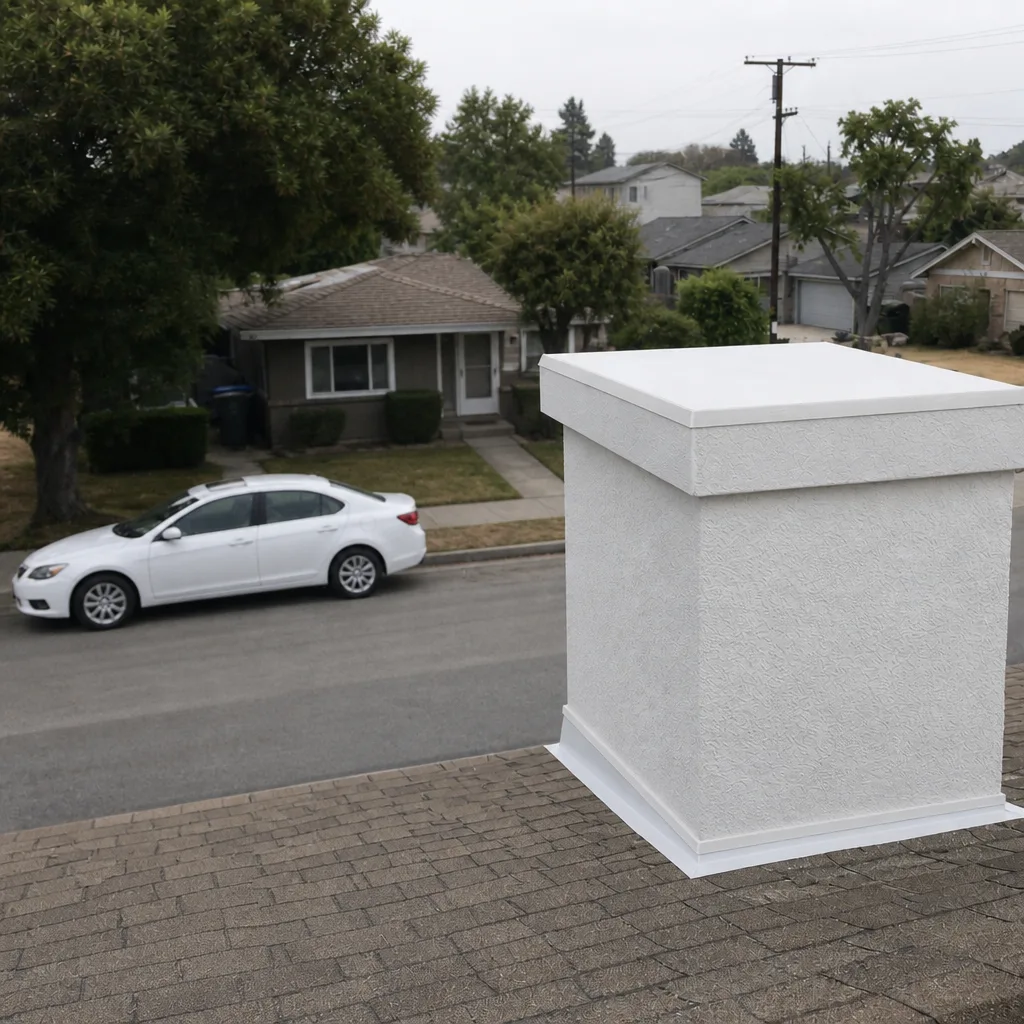 After