
Last updated November 4, 2026
 Whole-home duct cleaning
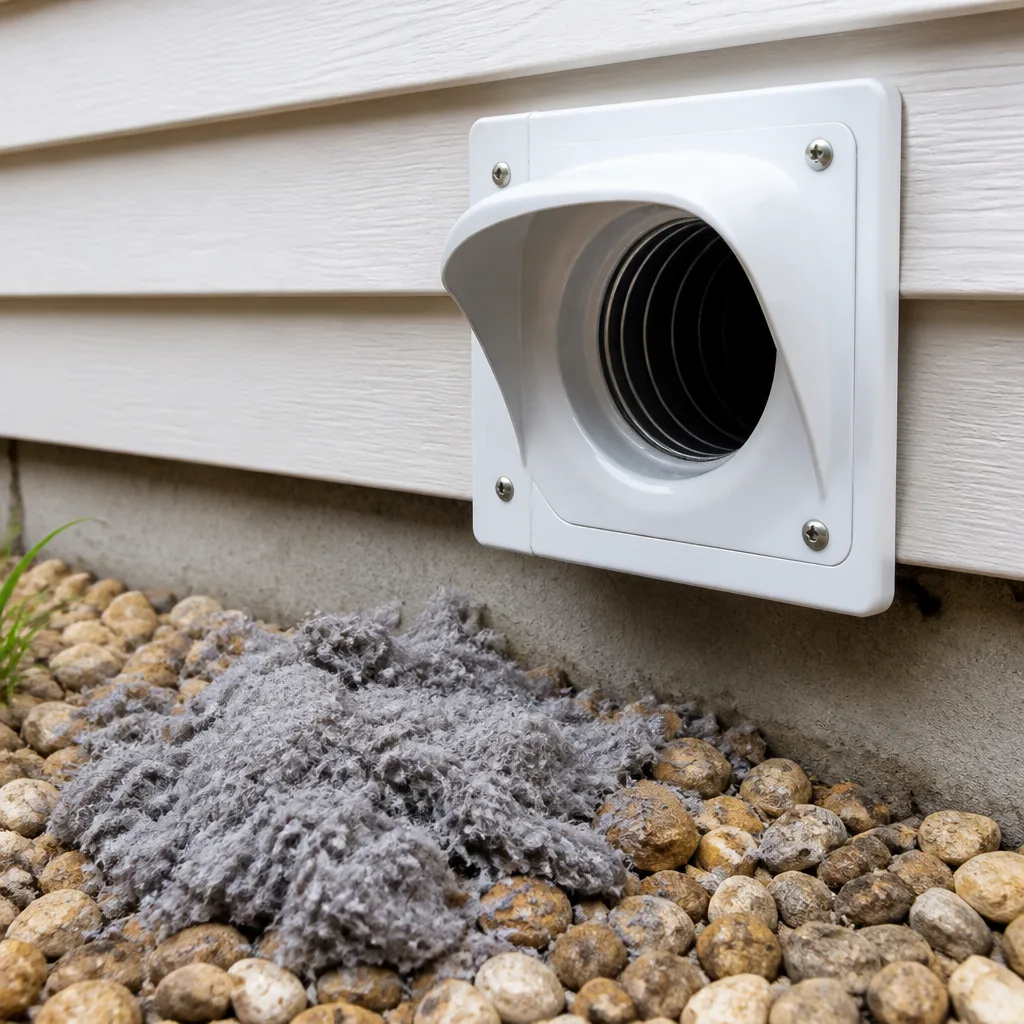 Dryer vent cleaning
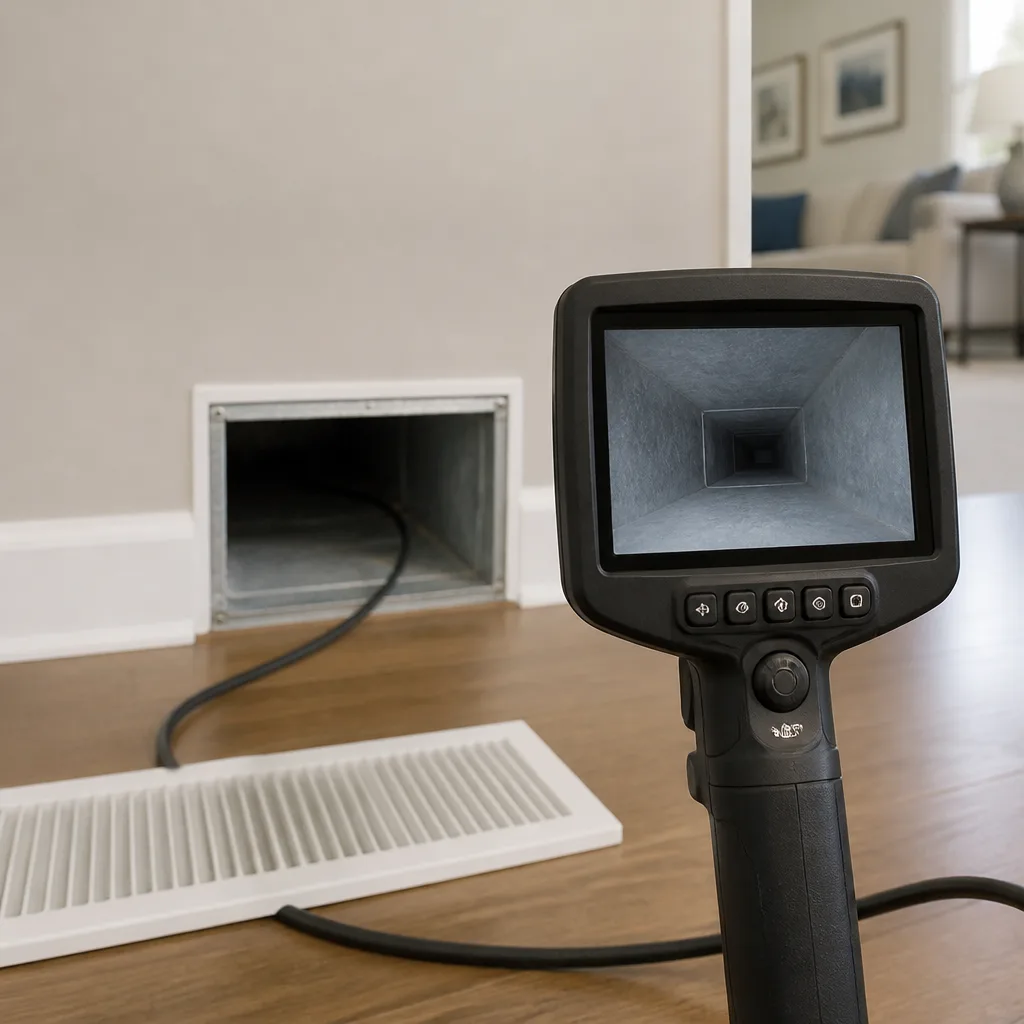 Camera inspection
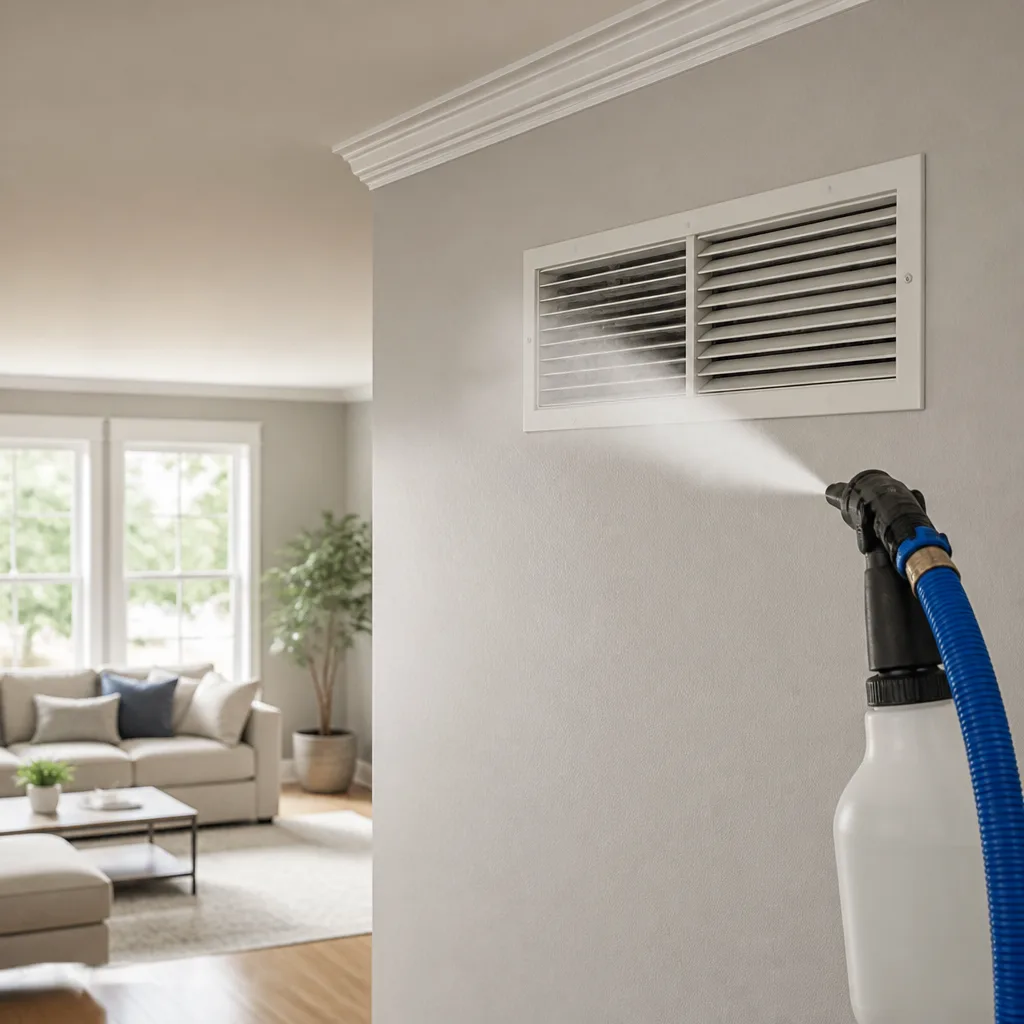 Sanitizing & deodorizing
Whole-system duct and dryer vent check with before-and-after photos - you see exactly what came out of your vents
That "$99 whole-house special" is a bait ad - the real number appears once they are in your hallway, or the "clean" is a shop-vac at the register. We photograph the inside of your ducts before and after instead.
Air Duct Cleaning Cost Breakdown: The Chino Homeowner’s Reference for 2026
A $99 whole-home duct cleaning quote and a $600 quote can both be honest. The difference almost always comes down to equipment capability and whether the technician actually enters the system or just vacuums at the registers, and most homeowners in Chino have no way to tell from the quote alone. This guide breaks down what actually drives duct cleaning pricing in this area: system size, duct layout, contamination type, and the difference between surface cleaning and source removal. By the time you finish reading, you’ll know how to compare quotes line by line instead of defaulting to the lowest number. That instinct costs Chino homeowners real money every year, because a cheap cleaning that misses the return system isn’t a cleaning at all.
Styles & brands we work with
- Whole-home duct cleaning
- Dryer vent cleaning
- Camera inspection
- Sanitizing & deodorizing
Quick Answer
Air duct cleaning in Chino typically runs between $350 and $750 for a full system on a standard single-family home, with larger two-story properties or heavily contaminated systems reaching $900 or more. The price per job is set by the written estimate, and that estimate should reflect specific line items: access points, main trunk line, branch runs, registers, the return system, and post-cleaning verification. A legitimate quote names those components. A suspicious one doesn’t.
Table of Contents
- What Actually Drives Duct Cleaning Costs in Chino
- Why Equipment Matters More Than the Technician’s Personality
- The Line-Item Breakdown of a Full-Service Cleaning
- How Chino Home Construction Affects Your Quote
- What Professional-Grade Equipment Costs to Operate
- When Additional Costs Are Legitimate (And When They’re Upsells)
- How to Compare Quotes Using Cost Per Linear Foot
- Common Mistakes to Avoid
- When to Call a Professional
- Frequently Asked Questions
- The Bottom Line
What Actually Drives Duct Cleaning Costs in Chino
Duct cleaning pricing isn’t random. Contractors who charge different amounts for the same house are often responding to different assumptions about what “cleaning” means. Before you compare quotes in Chino, you need to understand the variables that legitimately move the number. The biggest one is system size: how many supply runs, how long the trunk line, how many returns, and how many access points will need to be cut and resealed. A 1,200-square-foot single-story with eight registers is a fundamentally different job than a 3,200-square-foot two-story with twenty-two registers and two return drops.
The second variable is contamination type. Light dust accumulation requires different effort than construction debris from a renovation, pet hair packed into the return, or the gray fibrous buildup that accumulates when a home has gone a decade or more without cleaning. Each of these changes how long the technician spends on each branch line and whether additional passes are required. The third variable is access. In Chino, many air handlers sit in attics with limited headroom, narrow scuttle holes, or awkward platform positioning. That access complexity is real and it shows up in honest pricing, not as a line item called “attic difficulty” but as additional labor time.
Here’s what a Chino homeowner should expect to see on a legitimate scope of work: total number of supply runs, total number of returns, linear footage of trunk line, number of access points to be created, and whether the blower compartment and plenum are included. If a quote doesn’t mention the return system at all, that’s a red flag. The return side is often as contaminated as the supply side, sometimes more so.
Why Equipment Matters More Than the Technician’s Personality
Most homeowners evaluate a quote by the number at the bottom and the friendliness of the person who gave it. That’s backwards. The single most important factor in whether your ducts actually get clean is what equipment the crew brings into your home. Consumer-grade equipment, the kind of portable vacuums and spinning brush kits you can rent from a hardware store, moves air but doesn’t really remove the particulate that’s adhered to duct walls. It’s a surface disturbance, not a cleaning. And in some cases, it makes things worse by loosening debris without capturing it, so particulate resettles and recirculates through your living space.
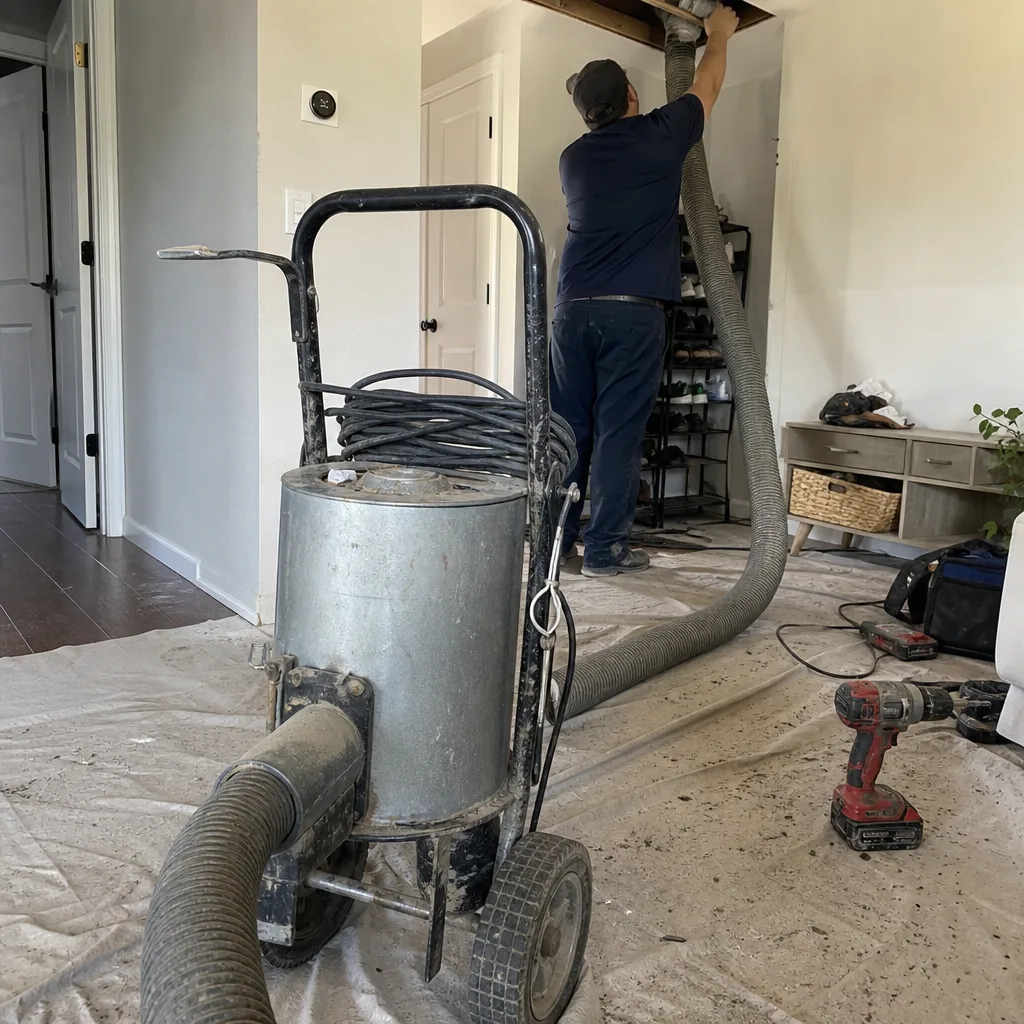
This is where Duct Cleaning Chino draws a hard line. Our crews run Rotobrush contact-cleaning systems, the same class of tool used by commercial and restoration contractors, and pair them with Nikro negative-air equipment that puts the system under continuous extraction while we work. The difference isn’t subtle. A contact-cleaning system physically engages the duct surface. Negative air means the debris we dislodge gets pulled out of your home rather than pushed into it. We also deploy Abatement Technologies air-filtration units on-site to capture anything that tries to escape during the process. That’s the discipline you’d expect on a remediation job, applied to residential air duct cleaning.
Professional equipment costs real money to own, maintain, transport, and operate. That cost necessarily appears in the quote. When you see a $99 whole-home offer, you’re looking at a business model that can’t possibly support professional-grade tools. What it usually supports is a portable vacuum, a long hose, and twenty minutes at the registers. In Chino’s two-story homes with long flex runs, that approach leaves the majority of the system untouched.
The Line-Item Breakdown of a Full-Service Cleaning
A complete duct cleaning isn’t one action. It’s a sequence of specific operations, and each one represents labor, equipment time, and material. Here’s how a full-service job breaks down, and what each component should mean to you as a homeowner evaluating a quote. This is the framework we use when writing estimates in Chino, and it’s the framework you should ask any contractor to explain.
- System inspection and pre-cleaning photos. Before anything runs, a technician should evaluate your system, confirm the scope, and document what’s actually in the ducts. “See what’s in your ducts before we start” isn’t a slogan for us, it’s the way every job begins. You should know what you’re paying to remove.
- Access point creation. Clean ductwork requires getting tools into the system, not just holding a hose at a register. On flex-duct systems common in Chino’s tract housing, that means cutting and later resealing access points at strategic locations along the trunk line. Each access point is a separate labor step with its own time cost.
- Main trunk line cleaning. The trunk is the central highway of your duct system. Contact cleaning tools run the length of the trunk, dislodging buildup that has accumulated over years. This is where negative-air extraction proves its worth: the loosened material gets pulled to the collection unit rather than drifting through supply runs.
- Branch line cleaning. Each supply run gets individually accessed and cleaned. In a two-story Chino home, branch runs can extend forty feet or more from the trunk. Cleaning twenty branch lines is not the same job as cleaning eight.
- Return system cleaning. The return side brings air back to the air handler. It collects the same particulate as the supply side and sometimes more, because return grilles are closer to foot traffic, pets, and activity. Any legitimate cleaning includes the full return path, including return drops and the return plenum.
- Register and grille cleaning. The visible parts matter too. Registers and grilles get cleaned and reinstalled, leaving the whole system consistent.
- Post-cleaning verification and photos. You should see what your ducts look like after the work. Before-and-after documentation isn’t marketing. It’s your receipt for the job.
If a quote skips the return system, skips branch line access, or won’t show you before-and-after photos, that’s not a cheaper version of the same service. It’s a different service entirely, and it usually isn’t worth the money it costs.
How Chino Home Construction Affects Your Quote
Chino’s housing stock has a specific character, and it has direct implications for duct cleaning pricing and process. The city grew in distinct waves, and each wave built with different HVAC conventions. Understanding which era your home falls into helps you anticipate what a technician will find and why your quote looks the way it does.
Chino’s 1980s through early 2000s tract construction relied heavily on flex duct systems, those insulated flexible tubes that snake through attics between rigid trunk lines and register boots. Flex duct is affordable to install and effective when maintained, but it presents cleaning challenges that rigid metal ducts don’t. Flex duct’s corrugated interior gives particulate more surface area to cling to. It also can’t tolerate aggressive agitation. Cleaning it properly requires lower-pressure, higher-contact methods that take more time than cleaning rigid pipe. That means more labor, which means a higher quote. It also means hiring a company that knows what flex duct is and treats it accordingly matters more than it does in markets with predominantly rigid ductwork.
Two-story layouts are another Chino constant. Many of these homes have long supply runs feeding second-floor rooms, with the air handler in a ground-floor closet or garage. Long runs require more tooling, more access planning, and more time per branch. A home where the air handler sits in a cramped attic space adds another layer: technicians may be working on plywood platforms in low clearance, which slows the process and adds physical difficulty. None of this is a reason to inflate a quote or a tactic to make you pay more. It’s simply reality, and a contractor who acknowledges it is doing better work than one who pretends every home is the same.
We’ve also noticed that Chino’s mild winters and warm summers mean HVAC systems run for extended months of the year. Steady operation, especially during the summer cooling season, cycles more air through the system and deposits more fine particulate on duct surfaces. That’s not a problem unique to Chino, but the seasonal reality is one reason homes here benefit from regular evaluation.
What Professional-Grade Equipment Costs to Operate
There’s a real cost difference between running professional duct cleaning equipment and running a shop vac with a brush attachment, and that difference explains a significant portion of the price spread in the Chino market. This section isn’t about defending pricing. It’s about giving you the context to recognize when a quote is too low to be legitimate.
A professional negative-air system like the Nikro units we run uses a high-powered extraction fan that pulls substantial amperage. The unit itself represents a multi-thousand-dollar capital investment, and it has a finite service life, regular maintenance cycles, and filter costs. Contact cleaning tools like Rotobrush systems wear consumable components that get replaced on a schedule. On-site air filtration equipment from Abatement Technologies uses high-efficiency filters that are expensive to replace and must be stocked, transported, and set up at every job. That’s before you account for the vehicle, insurance, training, and the time it takes to do the job properly rather than rushing through it.
The labor side is equally real. A proper cleaning on an average Chino home takes three to five hours with a two-person crew. A $99 job cannot support that labor model. It can’t support any professional equipment. It supports a technician with a portable vacuum and a compressed schedule, and the result is the kind of service that gives the whole industry its bait-and-switch reputation. When you see a low-ball duct cleaning offer in Chino, assume the quote reflects the method, not a discount. Real equipment, real access, real verification: that’s what honest pricing pays for. We use Guardsman-brand protective products during our service process because the work itself should protect your home, not introduce new problems.
When Additional Costs Are Legitimate (And When They’re Upsells)
Every duct cleaning contractor offers add-on services, and sorting legitimate recommendations from upsell pressure is one of the most useful skills a Chino homeowner can develop. The three most common add-ons are mold treatment, sanitizer application, and duct sealing. Each has a place. None should be sold reflexively.
Mold treatment. If mold is actually present in your duct system, surface cleaning alone won’t resolve it. But mold in ducts is less common than some contractors imply, and the only way to know it’s there is to see it. If a technician recommends mold treatment, ask to see the affected area before you agree to anything. Duct Cleaning Chino doesn’t offer mold remediation, and we’ll tell you plainly if what we see requires a specialist. That’s the honest answer, even when it costs us the add-on.
Sanitizer application. Sanitizing products can reduce microbial load after a cleaning, and there are legitimate circumstances where they make sense: a home with persistent odor issues, pets, or a recent illness among occupants. What’s less legitimate is applying sanitizer as a universal default. If a contractor tells you every duct system needs sanitizing, that’s a revenue strategy, not a recommendation. Ask what product they use, why they recommend it for your system, and what measurable difference it will make.
Duct sealing. This is where our repair capability changes the conversation. During a cleaning, technicians often discover gaps, disconnections, or tears in flex duct that allow conditioned air to escape into the attic. That’s not an upsell. It’s a real defect with real energy consequences, and in Chino’s hot summers, leaking ductwork means your air conditioner works harder to cool the attic rather than your living room. Because Duct Cleaning Chino performs dryer vent cleaning and air duct repair as a first-party service, we can address damage found during a cleaning on the same visit without handing you off to a second contractor. We clean it and, if needed, fix it. That’s the whole point of a dedicated duct specialist.
The guideline for evaluating any add-on: ask to see the condition, ask why it’s being recommended, and ask what happens if you decline. A contractor who can answer all three questions clearly is treating you like a client. One who can’t is treating you like a transaction.
How to Compare Quotes Using Cost Per Linear Foot
The per-vent pricing model is widespread in duct cleaning, and it’s a poor way to evaluate value. Per-vent pricing multiplies the register count by a rate, which means a home with more registers gets a higher quote even when the total duct length and complexity are identical. It also creates an incentive for contractors to inflate register counts or push add-ons per vent. A better framework is cost per linear foot, which measures what you’re actually paying to clean the system itself.
Here’s how it works. Ask each contractor for the total estimated linear footage of your duct system, including trunk line and branch runs. Then divide the quote by that number. In Chino’s market, a full-service cleaning with professional equipment typically lands somewhere in a range that reflects the labor and equipment costs we’ve already discussed. When you frame quotes this way, the differences between them stop being mysterious. A $400 quote for a seventy-linear-foot system is $5.71 per foot. A $600 quote for a hundred-and-twenty-linear-foot system is $5.00 per foot. The second quote looks more expensive at first glance and is actually delivering more value per foot of actual ductwork.
This framework also exposes the low-ball business model. A $99 whole-home quote divided by eighty linear feet is $1.24 per foot, which cannot support contact cleaning, negative air, access point creation, or verification. At that price, the contractor is doing something much less than cleaning the system, and you’re paying to have your registers vacuumed. That’s not a value. It’s a misrepresentation.
When you compare quotes in Chino, ask these questions before you decide:
- What’s the total linear footage you’re estimating for my system? If they can’t estimate it, move on.
- Does the quote include the return system? If it doesn’t, the price isn’t for whole-home cleaning.
- How many access points will you create, and are they included in the price? Access should never be a surprise line item.
- What equipment are you bringing? “Professional-grade equipment” means specific brands and models, not a foggy promise.
- Will I get before-and-after photos of my own ducts? Verification is the only way to know the work actually happened.
Common Mistakes to Avoid
- Choosing the lowest quote without reading what’s included. A low quote that skips the return system, branch lines, or verification isn’t a deal. It’s a partial service at a misleading price, and in Chino’s flex-duct homes it often means the majority of your ductwork never gets touched.
- Falling for the $99 whole-home offer. The low-ball duct cleaning model works because the technician finds “problems” once on-site and builds the real invoice from add-ons. You didn’t buy a cleaning. You bought a sales appointment.
- Assuming per-vent pricing is the standard to evaluate. Per-vent pricing makes homes with more registers look more expensive even when the duct system is smaller. Compare cost per linear foot instead, and ask what the duct footage actually is.
- Skimming past the equipment question. If a contractor won’t name what equipment they’re using, or the answer is “a powerful vacuum,” you’re not talking to a duct specialist. You’re talking to someone with a long hose and a short schedule.
- Paying for mold treatment without seeing the mold. Mold in ducts is real, but it’s also a fear-based upsell. If someone recommends treatment, insist on seeing the affected area. In most Chino homes, what looks concerning turns out to be ordinary dust accumulation.
- Ignoring duct damage found during the cleaning. Tears and disconnections in flex duct don’t fix themselves, and in Chino’s summer heat they mean real money leaving your home as conditioned air leaks into the attic. If a technician shows you damage, take it seriously.
- Hiring a generalist for a specialist job. Duct cleaning, dryer vent work, and duct repair are their own discipline. A contractor who also does gutters and pressure washing is not going to bring Rotobrush and Nikro equipment to your home.
When to Call a Professional
Duct cleaning isn’t an annual obligation, but there are clear signals that it’s time to have your system evaluated. Visible dust blowing from registers when the system kicks on, a persistent layer of dust on surfaces despite regular cleaning, unexplained allergy symptoms that worsen at home, or a renovation that covered your home in drywall dust all point the same direction. If you’ve lived in your Chino home for five or more years and have never had the ducts evaluated, that’s reason enough to start the conversation. The same goes for any musty odor that appears when the HVAC runs, or rooms that never seem to stay comfortable no matter how the thermostat is set.
Duct Cleaning Chino offers free estimates in Chino. Call (844) 789-0415. We answer 24/7. Fast dispatch from 7am to 7pm, Sunday through Friday. Your air system, fully serviced.
Frequently Asked Questions
Expect $350 to $750 for a standard single-family home in Chino, with two-story properties or heavily contaminated systems reaching $900 or higher. The final price depends on total linear footage, number of supply runs and returns, access complexity, and what the technician finds during inspection. The written estimate sets the actual price, and estimates are free.
The difference almost always comes down to equipment and scope, not generosity. A $99 quote reflects a portable vacuum and time at the registers, not contact cleaning with professional-grade negative-air equipment. A legitimate quote includes the return system, branch line access, and post-cleaning verification. If a contractor can’t explain what makes their price lower, assume something is being left out.
Before-and-after photos are the standard. A professional cleaning should include pre-cleaning documentation and post-cleaning verification of the same areas, so you can see the difference in your own system. If a contractor won’t show you photos or can’t show specific areas they cleaned, that’s a reason to question the whole job.
Usually, yes. Two-story homes in Chino often have longer branch runs, more registers, and air handlers located in attics or ground-floor closets that add access difficulty. Longer runs mean more linear footage and more time per branch line. The difference in cost reflects additional labor, not a markup for the sake of it.
Newer homes can still accumulate significant particulate, especially if there was construction or renovation after the ductwork was installed. Construction debris in ducts is common even in recently built Chino homes. The better question is what’s actually in your system, and the only way to answer that is an inspection with visual documentation.
Most guidance suggests evaluation every three to five years, but the real driver is your specific situation: pets, occupants with allergies, recent renovation, or visible dust from registers. If you run your HVAC for long cooling seasons in Chino, buildup accumulates faster than in homes where systems sit idle for months. A visual inspection is a reasonable first step before committing to a full cleaning. Call (844) 789-0415 for an exact quote, estimates are free.
The Bottom Line
Duct cleaning pricing in Chino makes sense once you understand what you’re paying for: linear footage, access, equipment, and verification. A professional-grade cleaning with negative-air extraction and contact-cleaning tools costs more than a register vacuuming because it accomplishes fundamentally more. The return system gets cleaned. Branch lines get accessed individually. Before-and-after photos document the work. Additional costs like duct sealing or repair are legitimate when someone shows you the damage. If you’re evaluating quotes, compare cost per linear foot, ask what equipment is coming into your home, and never let the lowest number be the deciding factor. Duct Cleaning Chino serves Chino with professional-grade equipment, first-party duct repair, and a three-service scope that covers the full system lifecycle. That’s what a Duct Cleaning Chino estimate represents. We clean it and, if needed, fix it.
Written by the team at Duct Cleaning Chino, serving Chino since 2018.
See the difference
 Before
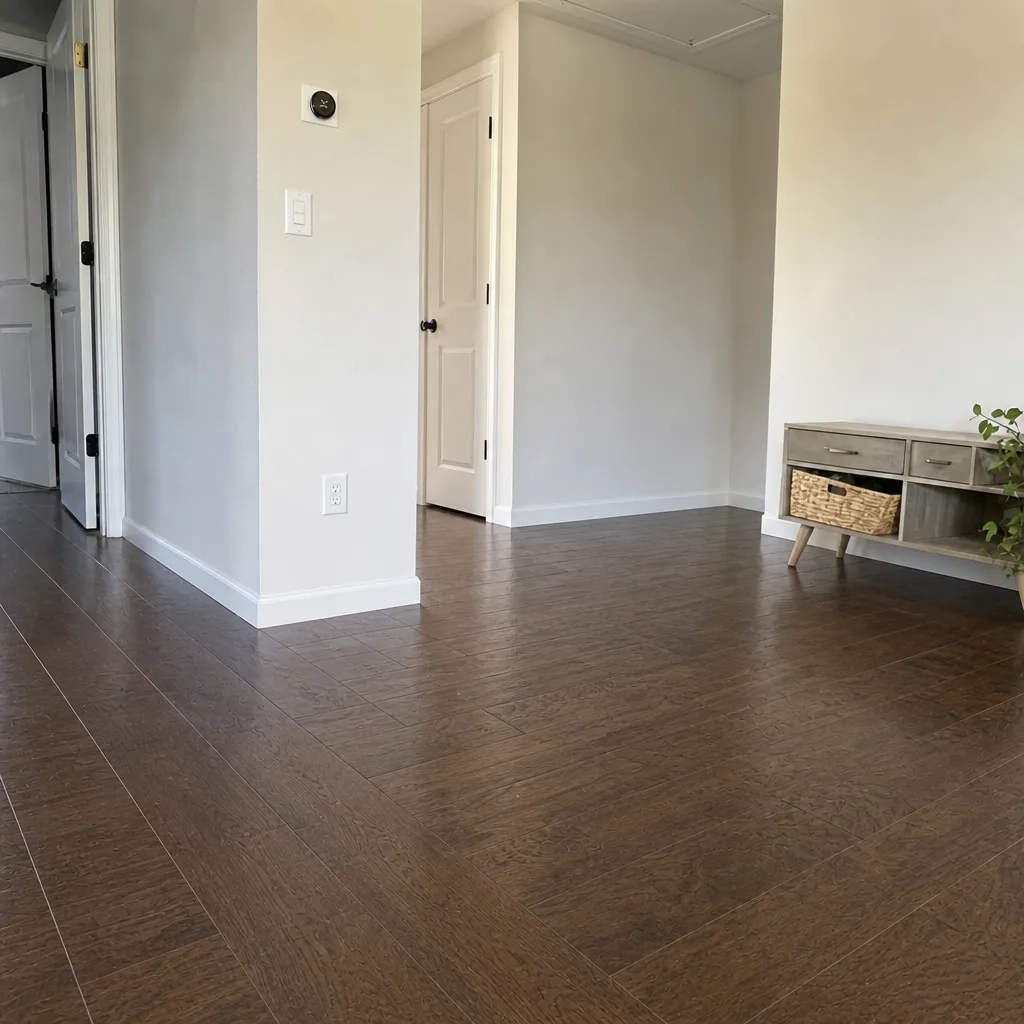 After
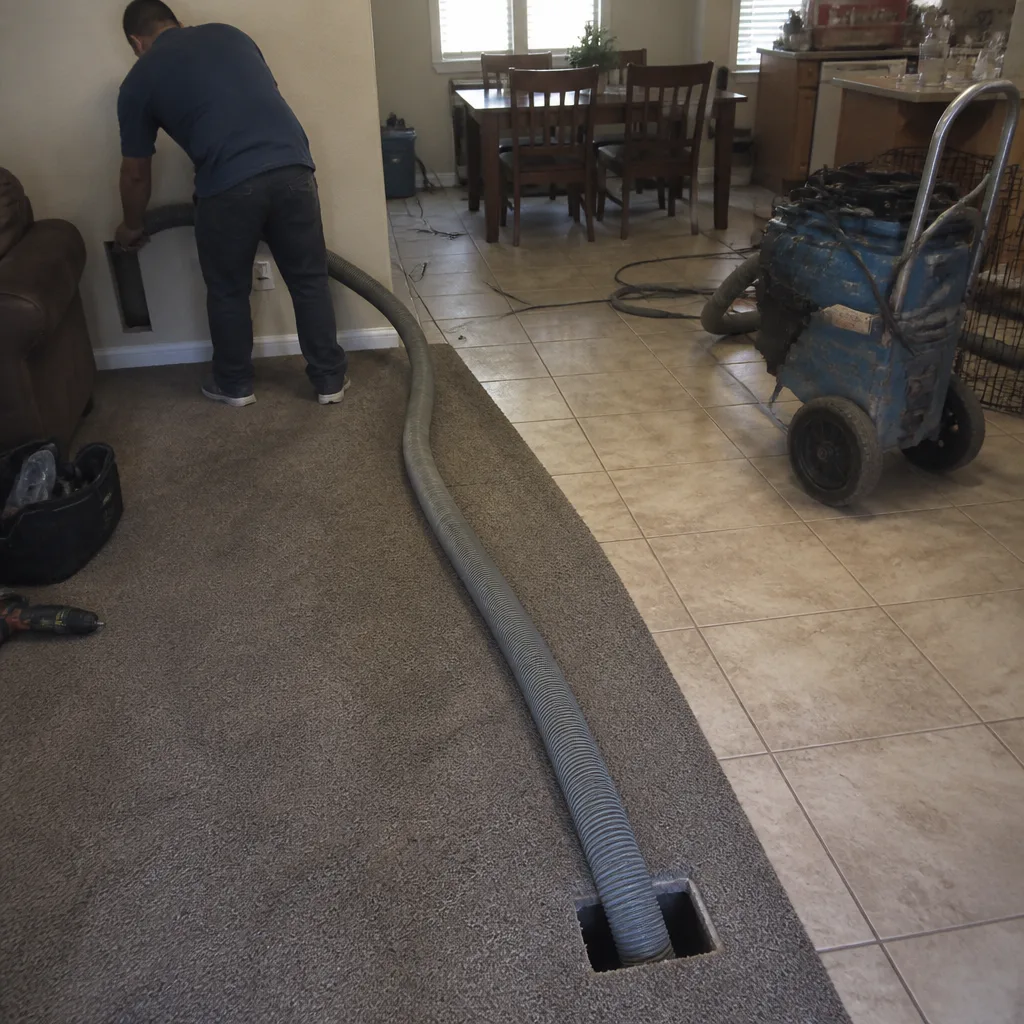 Before
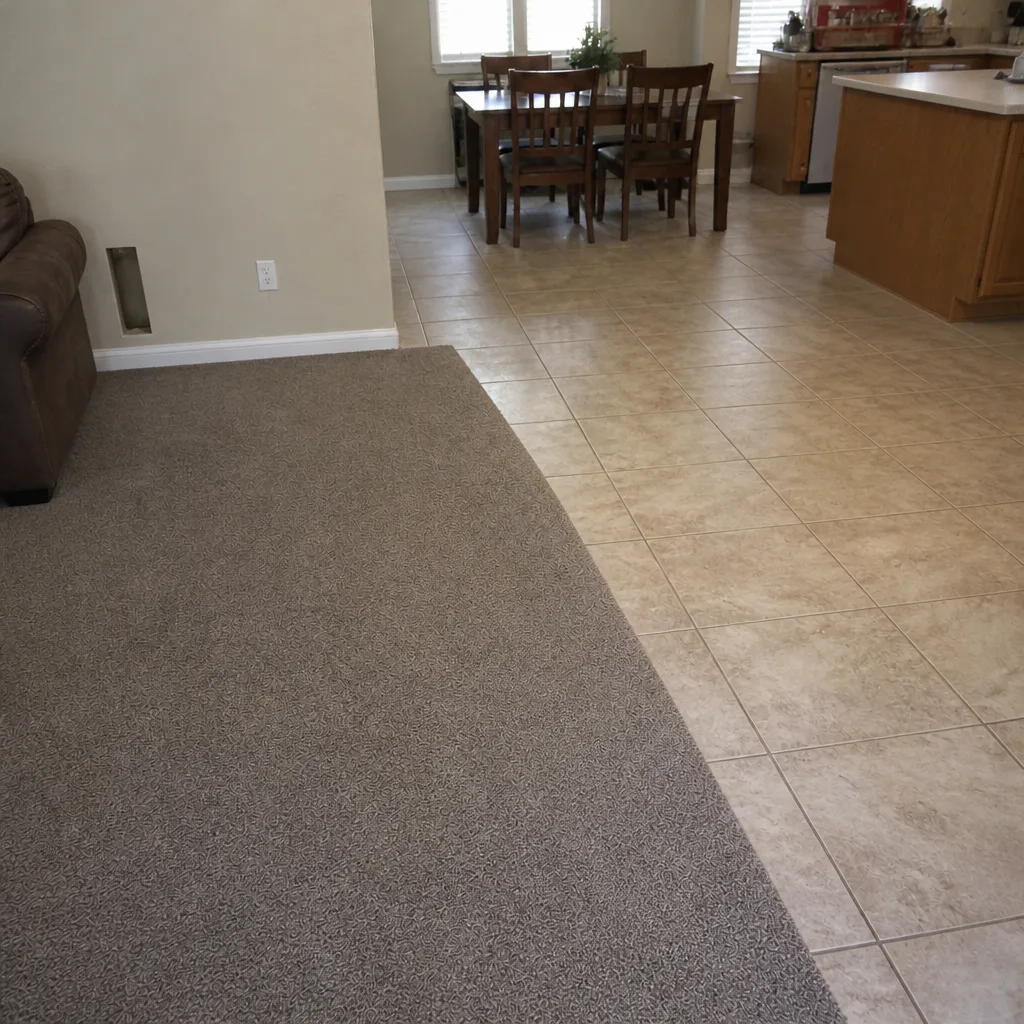 After
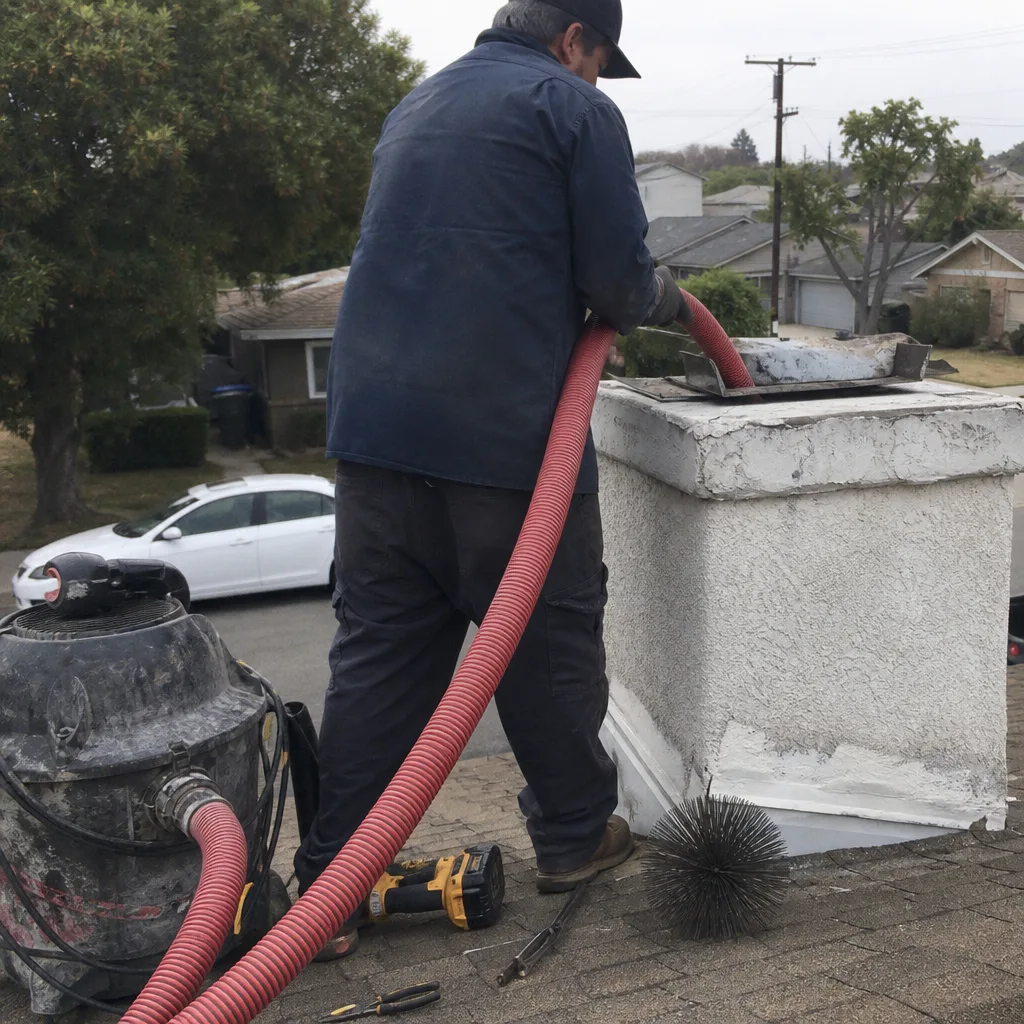 Before
 After