Last updated November 4, 2026
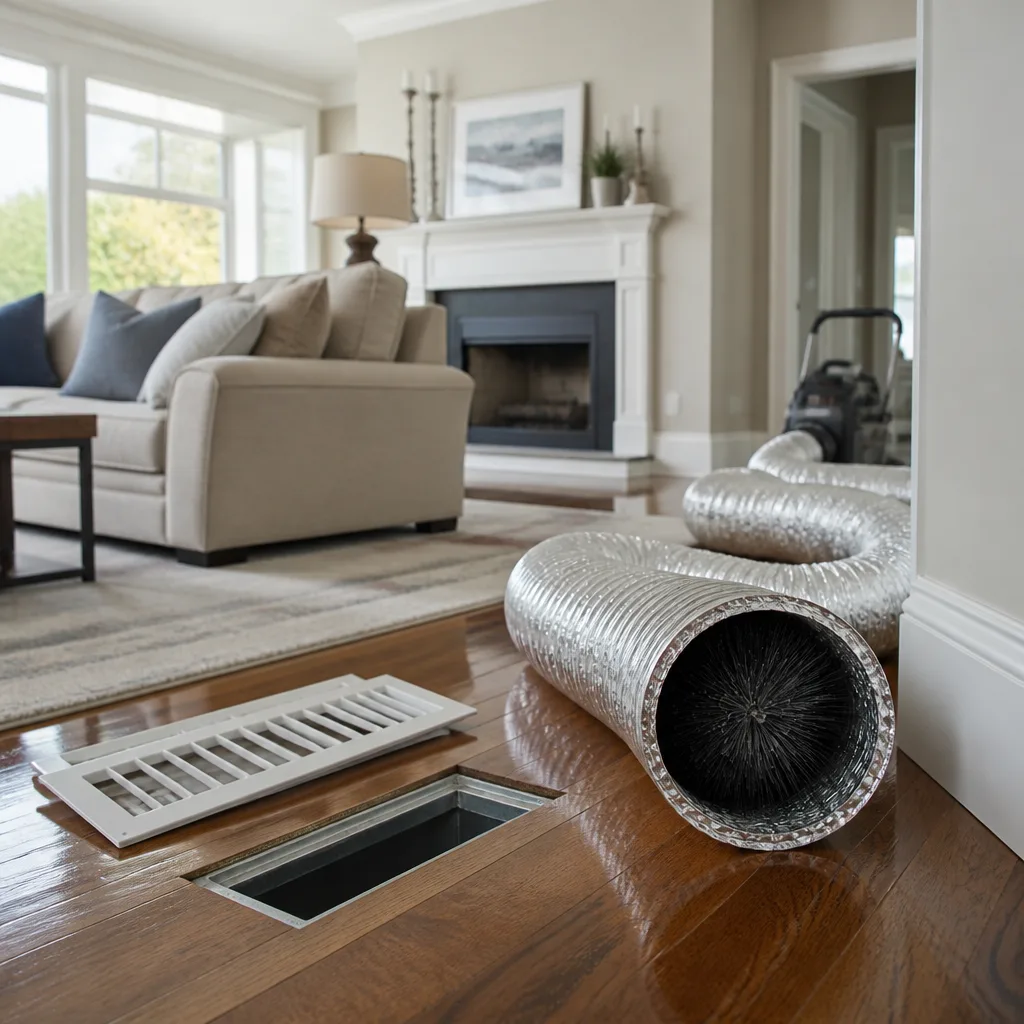 Whole-home duct cleaning
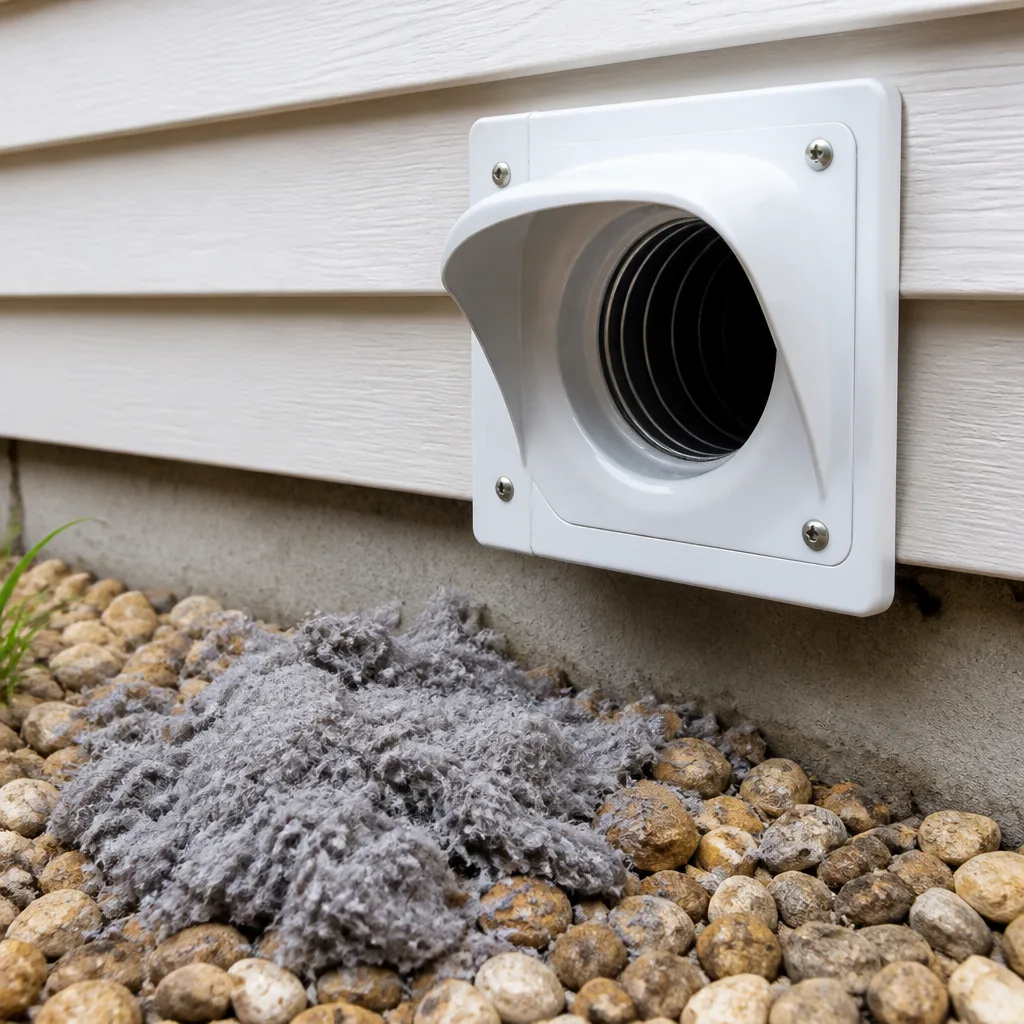 Dryer vent cleaning
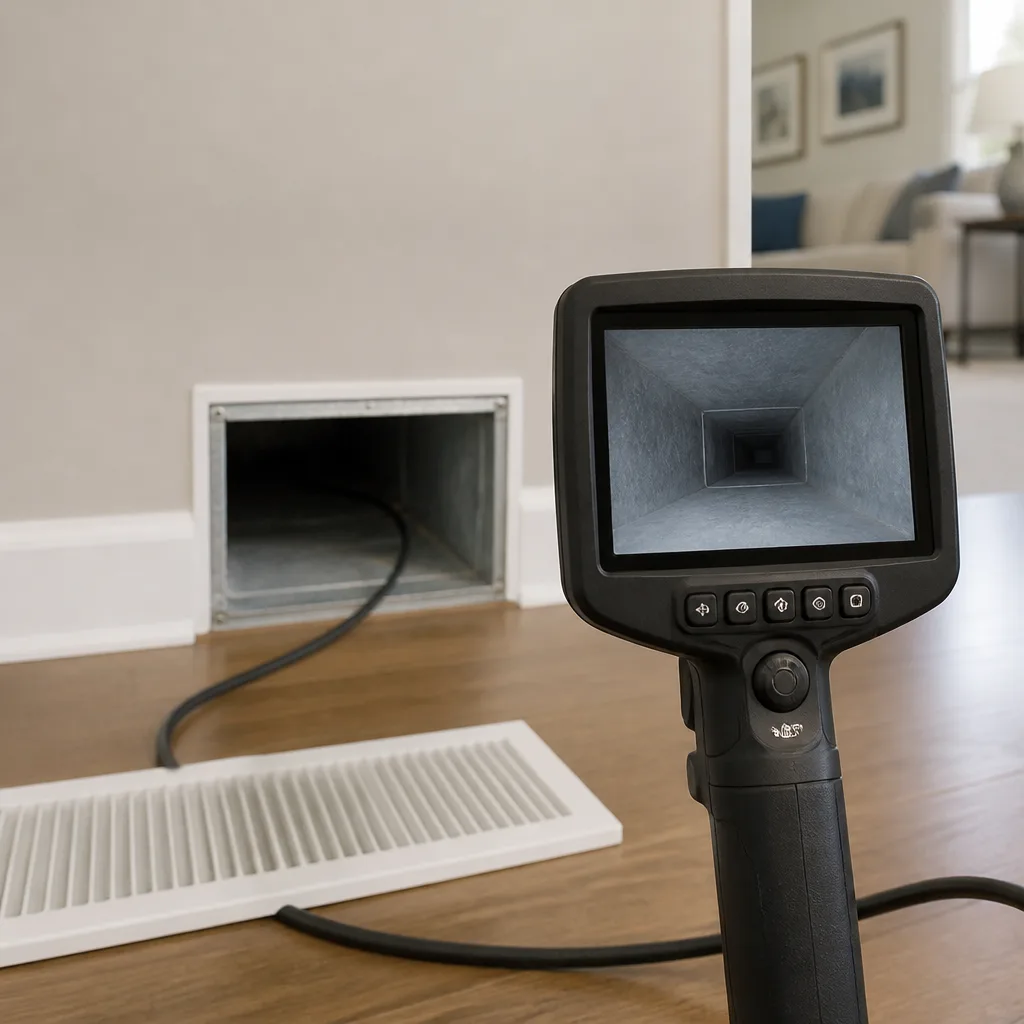 Camera inspection
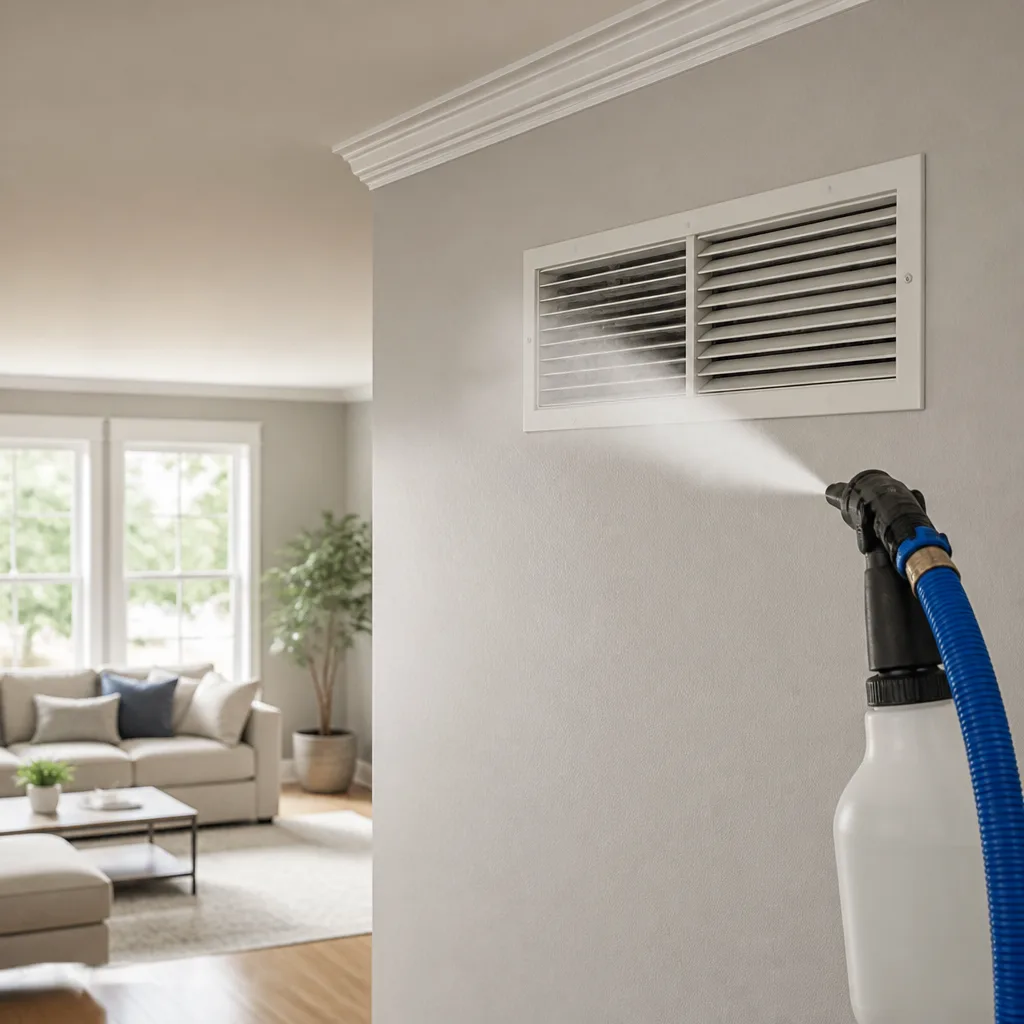 Sanitizing & deodorizing
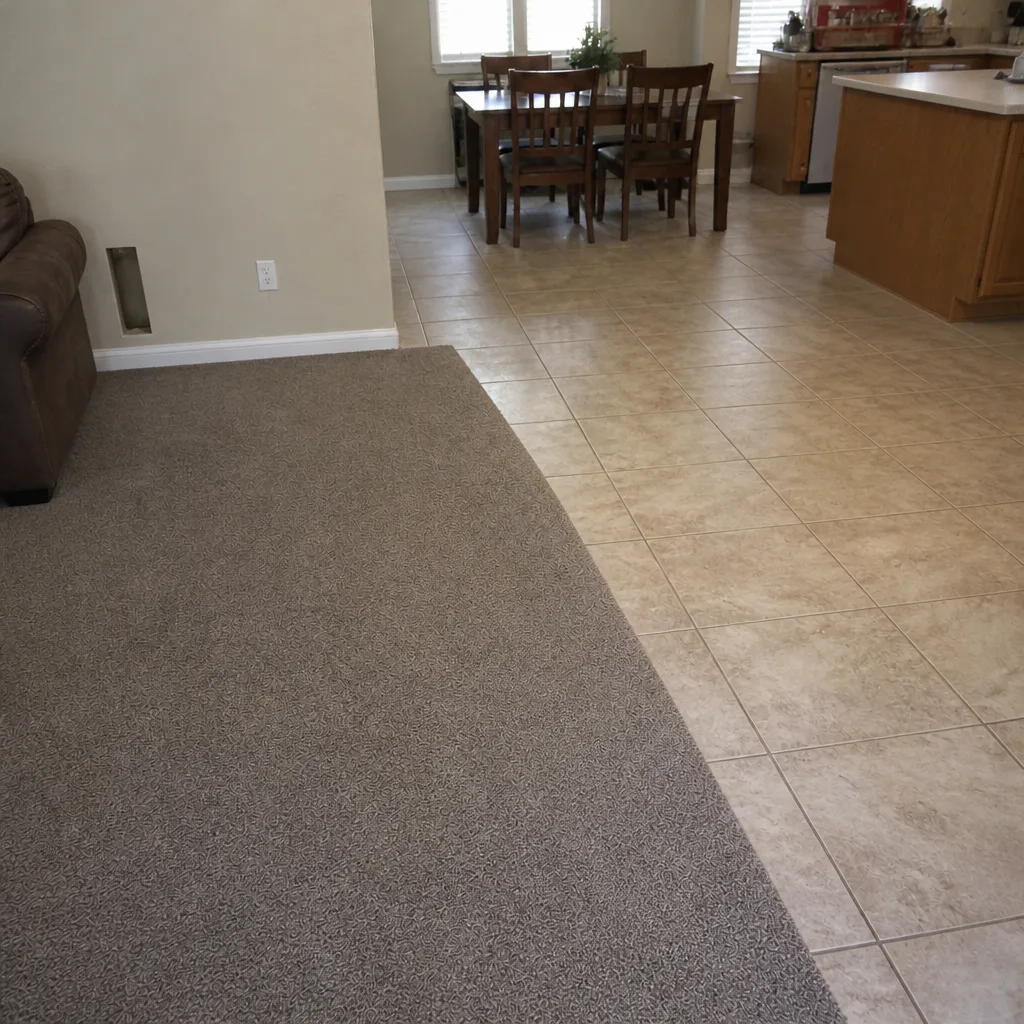
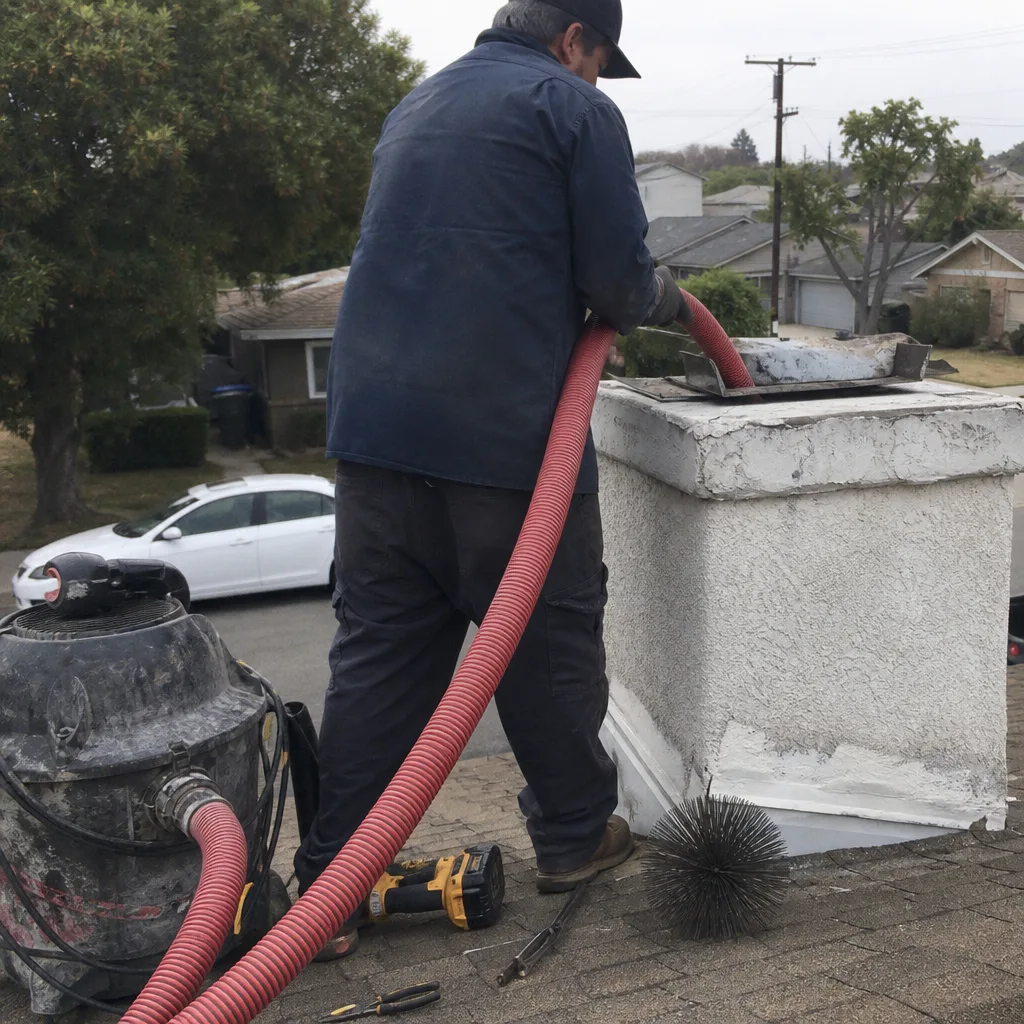
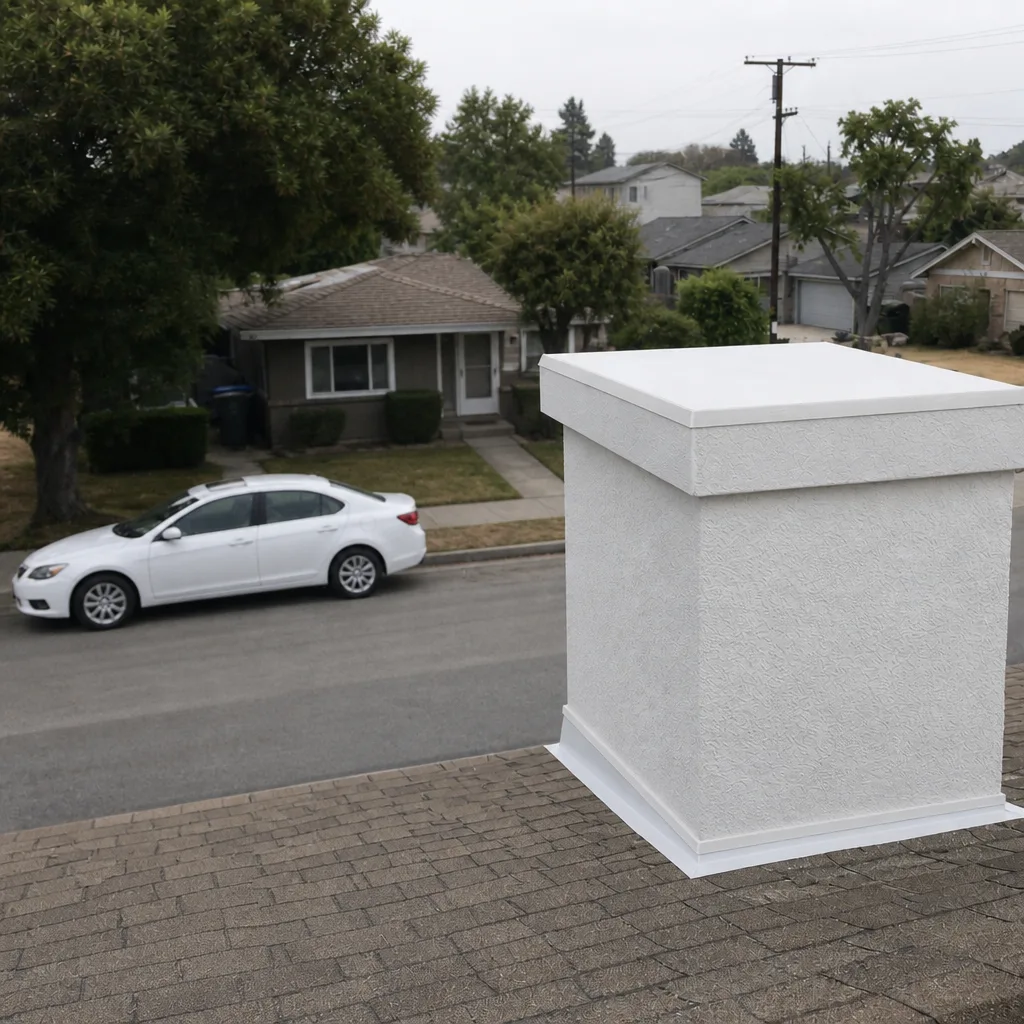
Whole-system duct and dryer vent check with before-and-after photos - you see exactly what came out of your vents
That "$99 whole-house special" is a bait ad - the real number appears once they are in your hallway, or the "clean" is a shop-vac at the register. We photograph the inside of your ducts before and after instead.
Choosing the Right Air Duct Cleaning Brand: A Buyer’s Guide for Chino
Most homeowners choose an air duct cleaning contractor by price, and that’s exactly backwards. The equipment a company runs tells you more about the result you’ll get than any quote. When a contractor can’t name the brand or CFM rating of their vacuum equipment, that’s not a minor gap in product knowledge. It’s a signal that they’re using consumer hardware in a professional context, and no cleaning technique compensates for insufficient negative-air capacity in a full duct system. This guide explains how to read the equipment signal and choose a contractor in Chino with confidence.
Quick Answer
The right air duct cleaning brand is less about a logo and more about equipment class: professional negative-air machines and agitation tools from manufacturers like Rotobrush, Nikro, and Abatement Technologies, not converted shop vacuums. In Chino, where inland dust, wildfire ash, and construction particulate accumulate in residential HVAC systems, a contractor should be able to name their equipment brand, its CFM rating, and its filtration stages. Duct Cleaning Chino runs Rotobrush and Nikro professional systems with Abatement Technologies filtration, so you’re not paying for a rented carpet cleaner pointed at your vents.
Styles & brands we work with
- Whole-home duct cleaning
- Dryer vent cleaning
- Camera inspection
- Sanitizing & deodorizing
Table of Contents
- Why Equipment Matters More Than You Think
- Professional-Grade vs. Consumer-Grade Equipment
- The Leading Professional Equipment Brands
- Questions That Reveal a Contractor’s Real Equipment Level
- Why CFM Matters More in Chino’s Air
- What Professional Equipment Costs, and Why It Explains Pricing
- Beyond Cleaning: Filtration and Repair as Brand Signals
- Common Mistakes to Avoid
- When to Call a Professional
- Frequently Asked Questions
Why Equipment Matters More Than You Think
Air duct cleaning is a negative-pressure job. The principle is simple: a vacuum pulls air backward through the duct system while agitation tools loosen debris from the duct walls. If the vacuum can’t pull enough air, the loosened debris doesn’t travel out of the system. It settles back down, or worse, gets pushed into your living space. The difference between a machine that holds negative pressure and one that doesn’t is the difference between clean ducts and dustier air than before.
Here’s what most contractors won’t tell you. A standard shop vacuum moves air at roughly 100 to 150 cubic feet per minute. A residential duct cleaning system needs sustained airflow in the thousands of CFM to maintain negative pressure across an entire duct run. That’s not a small gap. It’s an order-of-magnitude difference, and it’s the single biggest reason cheap duct cleanings underperform.
NADCA, the industry’s main standards body, requires equipment capable of maintaining negative pressure throughout the cleaning process. They don’t specify a single CFM number because home sizes vary, but the operational reality is clear: you need professional-grade blowers, not portable vacuums. A contractor who can’t speak to this distinction is telling you something before anyone even opens a register.
Key takeaways on this section:
- Negative air pressure is the core mechanism of duct cleaning. Lose it, and you lose the job.
- Consumer vacuums move 100-150 CFM. Professional systems move thousands of CFM.
- NADCA standards presume professional equipment. Consumer tools cannot meet them.
- If a contractor can’t explain negative pressure, the cleaning won’t work regardless of price.
Professional-Grade vs. Consumer-Grade Equipment
The fastest way to separate legitimate duct cleaners from low-bid operators is to ask one question: “What vacuum system will you use on my ducts?” Legitimate operators answer with a brand and a model line. Rotobrush, for example, builds truck-mounted and portable systems specifically for duct cleaning. Nikro builds negative-air machines designed to hold pressure across long duct runs. These are not modified household appliances. They are purpose-built industrial tools.
Low-bid operators answer differently. They say “a HEPA vacuum” or “our truck-mounted system” without naming a manufacturer. Sometimes they show up with a big shop vacuum and a spinning brush attached to a drill. That setup might pull some dust out of the first few feet of a vent. It cannot hold negative pressure across a full residential system in a Chino home with ducts running through an attic.
Here’s a breakdown of what separates professional and consumer equipment:
- Airflow capacity: Professional systems move 2,000 to 4,000+ CFM. Shop vacuums move 100 to 150 CFM. The difference is not incremental.
- Filtration: Professional systems run multi-stage filtration, often including HEPA stages. Consumer vacuums filter through a foam sleeve or a basic cartridge.
- Agitation tools: Professional systems pair negative air with powered agitation: rotating brushes, air whips, and skipper balls that physically knock debris off duct walls. A shop vacuum has suction and nothing else.
- Containment: Professional setups often include negative-air containment, meaning the work area is sealed and filtered air is exhausted properly. Consumer equipment offers no containment at all.
- Durability: Professional equipment is built for daily commercial use. A rented carpet cleaner is not.
We run Rotobrush contact-cleaning systems and Nikro negative-air equipment on our jobs in Chino. These are the same classes of tools used by commercial and restoration contractors. We also deploy Abatement Technologies air-filtration equipment on-site to capture displaced particulates during the cleaning process. That’s professional equipment doing professional work, not a consumer vacuum doing a professional impression.
The Leading Professional Equipment Brands
If you want to vet a contractor by their equipment, it helps to know the landscape. The duct cleaning industry has a handful of manufacturers whose equipment is widely accepted as professional-grade. Here’s what distinguishes them.
Rotobrush
Rotobrush builds contact-cleaning systems where a rotating brush physically scrubs the interior of ducts while a vacuum extracts dislodged material. The company’s equipment is used by restoration contractors and indoor air quality professionals across North America. Rotobrush systems are known for their integrated design: the brush and vacuum work as one unit, which matters when you’re cleaning horizontal runs common in Southern California slab foundations and attic ductwork. We use Rotobrush contact-cleaning systems on our residential jobs because they’re built specifically for this work, not adapted from another industry.
Nikro
Nikro builds negative-air machines designed to maintain pressure across long duct systems. Their equipment is used in commercial and residential work where sustained airflow matters more than raw brush force. A Nikro machine is not flashy. It’s a workhorse that holds negative pressure while agitation tools do their job downstream. In homes with longer duct runs, or systems with multiple returns, a Nikro negative-air machine is the difference between cleaning the whole system and cleaning the first ten feet of it.
Abatement Technologies
Abatement Technologies is best known in remediation circles for negative-air machines and HEPA filtration systems used in mold, lead, and asbestos work. That’s a useful pedigree. When a duct cleaner deploys Abatement filtration on a residential job, they’re bringing containment discipline from the remediation industry into your home. That means particulates loosened during cleaning get captured at the source instead of floating into your living room. We stock and deploy Abatement Technologies air-filtration equipment for exactly this reason.
Honeywell and Aprilaire: Filtration, Not Cleaning
Two more brands you’ll see in the duct cleaning conversation aren’t cleaning equipment at all. Honeywell and Aprilaire make filtration and purification products: media filters, electronic air cleaners, UV systems, and whole-home purifiers. They matter because they represent the next step after cleaning. A contractor who can supply and install Honeywell or Aprilaire products is positioned to improve your air quality over the long term, not just clean the ducts and leave. We’re authorized to supply and install both lines.
Questions That Reveal a Contractor’s Real Equipment Level
Here’s a step-by-step vetting process you can run over the phone before anyone visits your home.
- Ask what vacuum system they use. Listen for a brand name. “Rotobrush,” “Nikro,” or a specific model line are good signs. “A HEPA vacuum” is not. Every vacuum has a HEPA filter available these days. That’s not a system.
- Ask about CFM. The response you want is a number. “Our system moves 2,500 CFM” or “our machine is rated for 3,000 CFM.” The response you don’t want is silence or a pivot. If a contractor doesn’t know their CFM rating, they don’t understand their own equipment, and they can’t know whether it’s adequate for your home’s duct volume.
- Ask about filtration stages. You want to hear specifics: pre-filter, secondary filter, HEPA stage, maybe carbon. “We use a HEPA filter” is vague marketing. “We run a three-stage system with a HEPA final stage” is a professional answer.
- Ask about agitation tools by name. Good answers include air whips, skipper balls, rotating contact brushes. These are the tools that physically dislodge debris from duct walls. A vacuum alone cannot clean a duct system. It can only remove what’s already loose.
- Ask what containment they use. Professional crews set up containment: sealing registers, running negative air, protecting surfaces. Guardsman protective products, which we incorporate into our service process, are an example of surface and system protection done professionally. A crew that shows up with no plan for containment will spread dust, not remove it.
Here’s a quick reference table for your calls:
| Question | Professional Answer | Red Flag Answer |
|---|---|---|
| What vacuum system do you use? | Brand name + model line (Rotobrush, Nikro) | “A HEPA vacuum” |
| What’s your CFM rating? | Specific number (2,000-4,000+) | Silence, or “it’s powerful” |
| What filtration do you run? | Multi-stage with specifics | “We use HEPA” |
| What agitation tools do you use? | Air whips, skipper balls, rotating brushes | “We have a brush” |
| How do you contain the work? | Negative air, sealed registers, Guardsman protection | “We just vacuum out the vents” |
Why CFM Matters More in Chino’s Air
Chino sits in the Inland Empire, where the air carries a specific mix of contaminants. This isn’t coastal air with its salt and moisture. It’s inland air that picks up fine dust from the surrounding valleys, particulate from nearby agricultural operations, and construction dust from one of California’s most active building corridors. And in recent years, the region has experienced wildfire smoke that drives fine ash and carbon particulate into homes through attic soffits and HVAC returns.
This contamination profile has a practical consequence for duct cleaning: the debris in Chino ducts tends to be fine, dry, and deeply settled. Coarse debris jumps into a vacuum easily. Fine particulate sticks to duct walls and requires real airflow to lift. That’s why CFM capacity matters more here than in a humid climate where dust clumps and extracts more readily. In Chino’s dry air, dust cakes onto duct walls in a fine film. Removing it requires sustained negative pressure across the entire system, not a burst of suction at the register.
Construction dust is another local factor. Chino has seen sustained residential and commercial development, and homes all over the city sit within reach of road dust and job-site particulate. That dust drifts in through open windows, gets pulled into return air, and settles in ducts. A system that can’t hold negative pressure across the full duct run will leave that dust where it is, or worse, push it into your living space during the cleaning itself.
This is where equipment brand becomes a real signal. A contractor who runs Rotobrush and Nikro systems in Chino is running equipment built for exactly this contamination profile: fine, dry, deeply settled particulate that needs sustained professional airflow to extract. A contractor who shows up with a consumer vacuum is admitting, without saying it, that they don’t understand the local problem.
What Professional Equipment Costs, and Why It Explains Pricing
Professional duct cleaning equipment is expensive. A single Rotobrush or Nikro system typically runs $15,000 to $40,000 depending on configuration. Add Abatement Technologies negative-air filtration, and you’re another $8,000 to $20,000 per unit. A professional contractor operating in Chino is carrying tens of thousands of dollars in equipment before they ever pull up to your house.
A low-bid operator is carrying a shop vacuum they bought at a hardware store for $300 and a spinning brush attachment from an online marketplace. That’s not a judgment; it’s math. The $300 setup cannot clean ducts. It can only make some dust move around. And because the operator has no equipment investment, they can afford to quote $99 whole-house specials that a legitimate contractor could never match without losing money on every job.
This explains the pricing landscape without justifying inflated quotes. Legitimate professional duct cleaning in Chino typically costs several hundred dollars for a whole-home cleaning, with the exact price set by the written estimate after an inspection of your specific system. That’s not a markup for brand prestige. It’s the cost of running equipment that actually works, along with the training to operate it safely and the insurance to protect your home.
We don’t quote per-vent prices because that’s the pricing model of the low-bid industry: a teaser number per vent that becomes a much larger invoice once the crew walks your house. We quote one flat price per system, agreed before work starts, based on our actual inspection of your ducts. The estimate is free. The price is set in writing before we touch anything.
Beyond Cleaning: Filtration and Repair as Brand Signals
There’s another brand signal that separates a dedicated duct specialist from a cleaning-only contractor: what they offer after the cleaning. A company that only cleans ducts is a transactional service. A company that can also repair what it finds and install filtration to keep the system cleaner longer is operating as an indoor air quality specialist.
Repair capability matters because duct cleaning is also an inspection. When we run our Rotobrush and Nikro systems through a Chino home’s ducts, we see the condition of the ductwork itself: disconnected joints, crushed flex runs, gaps at the plenum, separated registers. In older Chino homes, duct damage is common, and it’s often the reason air quality is bad in the first place. Air Duct Repair is a core service for us. If we find damage during the cleaning, we can address it on the same visit without handing you off to a second contractor. You call one number, you deal with one company, and the duct system leaves the visit functional, not just cleaner.
Filtration matters for what happens after the ducts are clean. Honeywell and Aprilaire make filtration and purification products that trap particulate before it enters the duct system. A media filter from either manufacturer, installed at the air handler, captures dust and allergens that would otherwise settle in your ducts and require another cleaning sooner. We supply and install both brands because they represent the ongoing side of indoor air quality: built for air quality, not just air movement.
Dryer vent cleaning is the third piece. It’s the often-forgotten duct system in the house, and it’s the one that poses the clearest safety hazard. Lint buildup is a leading cause of residential dryer fires, and the restricted airflow also makes your dryer run longer and hotter. We offer dryer vent cleaning as a standalone service for Chino homeowners who haven’t thought about their dryer vent since move-in day.
The three-service scope, cleaning, dryer vent cleaning, and repair, is what “fully serviced” actually means. Your air system leaves the visit functional, not just dusted. That’s the position. That’s what the brand signals.
Common Mistakes to Avoid
- Hiring on price alone. A $99 whole-house cleaning in Chino is not a deal. It’s a trip charge with a show. The economics don’t work for a contractor running real equipment, which means you’re getting a consumer vacuum in a professional context.
- Believing “HEPA vacuum” means professional equipment. HEPA filters are sold on consumer vacuums at every hardware store. The phrase tells you nothing. Ask for CFM, brand, and model line.
- Not asking about containment. A crew that doesn’t seal registers, run negative air, and protect surfaces will spread the dust they’re supposedly removing. Guardsman protective products and Abatement filtration are examples of what professional containment looks like.
- Choosing a cleaner that can’t repair duct damage. Chino homes, especially older ones, often have duct problems that cleaning reveals. If your contractor can’t fix what they find, you’re paying for half a service and a second appointment with a different company.
- Ignoring the dryer vent. Your dryer vent is a duct system too, and a clogged one is a fire hazard. A dedicated duct specialist offers dryer vent cleaning as its own service. A cleaning-only contractor may not touch it at all.
- Not asking about filtration options. The cleanest ducts in Chino will re-accumulate dust if the system has no filtration. A contractor who can install Honeywell or Aprilaire filtration is offering a solution, not just a one-time cleaning.
- Treating all duct cleaning as the same commodity. It isn’t. The equipment, the filtration, the containment, the inspection depth, and the repair capability all vary widely. The brand of equipment a contractor runs is the most reliable signal of which class of service you’re buying.
When to Call a Professional
If you’ve never had your ducts cleaned, or you can’t remember the last time, that’s an easy starting point. If you live in Chino and you’re seeing dust accumulate on surfaces within days of cleaning, that’s a sign your ducts are circulating what’s settled in them. If you’ve renovated recently, construction dust has almost certainly entered your HVAC system. If anyone in your home struggles with allergies, or if your dryer is taking longer than it used to, the duct systems are worth a professional look. A professional inspection finds what’s actually in your ducts before any work begins. Duct Cleaning Chino offers free estimates in Chino. Call (844) 789-0415. We answer 24/7. Fast dispatch from 7am to 7pm, Sunday through Friday.
Frequently Asked Questions
A professional duct cleaner should be able to name their equipment manufacturer and model line. Rotobrush and Nikro are two established manufacturers of professional duct cleaning systems used by commercial and restoration contractors. Abatement Technologies makes the negative-air and filtration equipment used in remediation and professional duct cleaning. If a contractor can’t name their equipment brand, treat that as a red flag.
Professional whole-home duct cleaning in Chino typically runs several hundred dollars, with the exact price set by a written estimate after an inspection of your specific system. The price range exists because homes differ in size, duct configuration, accessibility, and contamination level. Be wary of quotes far below the market range; they often signal consumer-grade equipment or a bait-and-switch pricing model. Call (844) 789-0415 for an exact quote. The estimate is free.
Cheap duct cleaning quotes usually come from contractors running consumer equipment like shop vacuums, which cost a few hundred dollars. Professional contractors run Rotobrush, Nikro, and Abatement Technologies equipment that costs $15,000 to $40,000 or more per system. The equipment investment explains the price difference; the low-bid operator can’t clean ducts to a professional standard with consumer tools, no matter how carefully they work. The price difference isn’t a markup. It’s the cost of equipment that actually works.
Ask for before-and-after photos of your duct interiors. A professional contractor should document the condition of the ducts before cleaning and after, including the return, supply runs, and registers. You should also see containment in action: sealed registers, negative air, and surface protection during the job. If a contractor won’t show you photos or won’t walk you through what they found, that’s a signal the work wasn’t done thoroughly. We show before-and-after documentation as standard practice.
Most homes in Chino benefit from professional duct cleaning every three to five years, with some homes needing it more often. Chino’s inland air carries fine particulate from surrounding valleys, agricultural operations, and construction activity, and wildfire smoke events add ash and carbon particulate to the mix. Homes with pets, high occupancy, recent renovations, or allergy sufferers may need cleaning every two to three years. A professional inspection is the best way to determine your home’s specific schedule. Call (844) 789-0415 for a free estimate.
Air duct cleaning addresses the HVAC system’s supply and return ducts, which circulate conditioned air through your home. Dryer vent cleaning addresses the separate exhaust duct that carries hot, lint-laden air from your dryer to the outside. Lint buildup in dryer vents is a leading cause of residential dryer fires, and it also makes your dryer run longer and hotter. The two services use different equipment and target different hazards, but both are duct systems, and a dedicated duct specialist should be able to service both.
We can, and that’s part of what sets a dedicated duct specialist apart. Air duct repair is a core service for Duct Cleaning Chino. Our cleaning process includes a full inspection of the ductwork, and if we find disconnected joints, crushed flex runs, gaps at the plenum, or other damage, we can address it without scheduling a separate contractor. The goal is to leave your duct system functional, not just visually cleaner.
The Bottom Line
The brand of equipment a duct cleaning company runs is the most reliable signal of service quality before any work begins. Rotobrush, Nikro, and Abatement Technologies equipment costs tens of thousands of dollars because it’s built to hold negative pressure across full residential systems, capture dislodged particulate, and clean ducts to a professional standard. Consumer vacuums can’t do any of that. In Chino, where fine inland particulate, construction dust, and wildfire ash settle deep in duct systems, equipment capability is outcome. Ask about CFM, filtration stages, and agitation tools. If the answers are vague, so is the cleaning. Duct Cleaning Chino runs professional-grade equipment, repairs what we find, and installs Honeywell and Aprilaire filtration for long-term air quality. Call (844) 789-0415 for a free estimate. We answer 24/7. Fast dispatch from 7am to 7pm, Sunday through Friday.
Written by the team at Duct Cleaning Chino, serving Chino since 2018.
See the difference
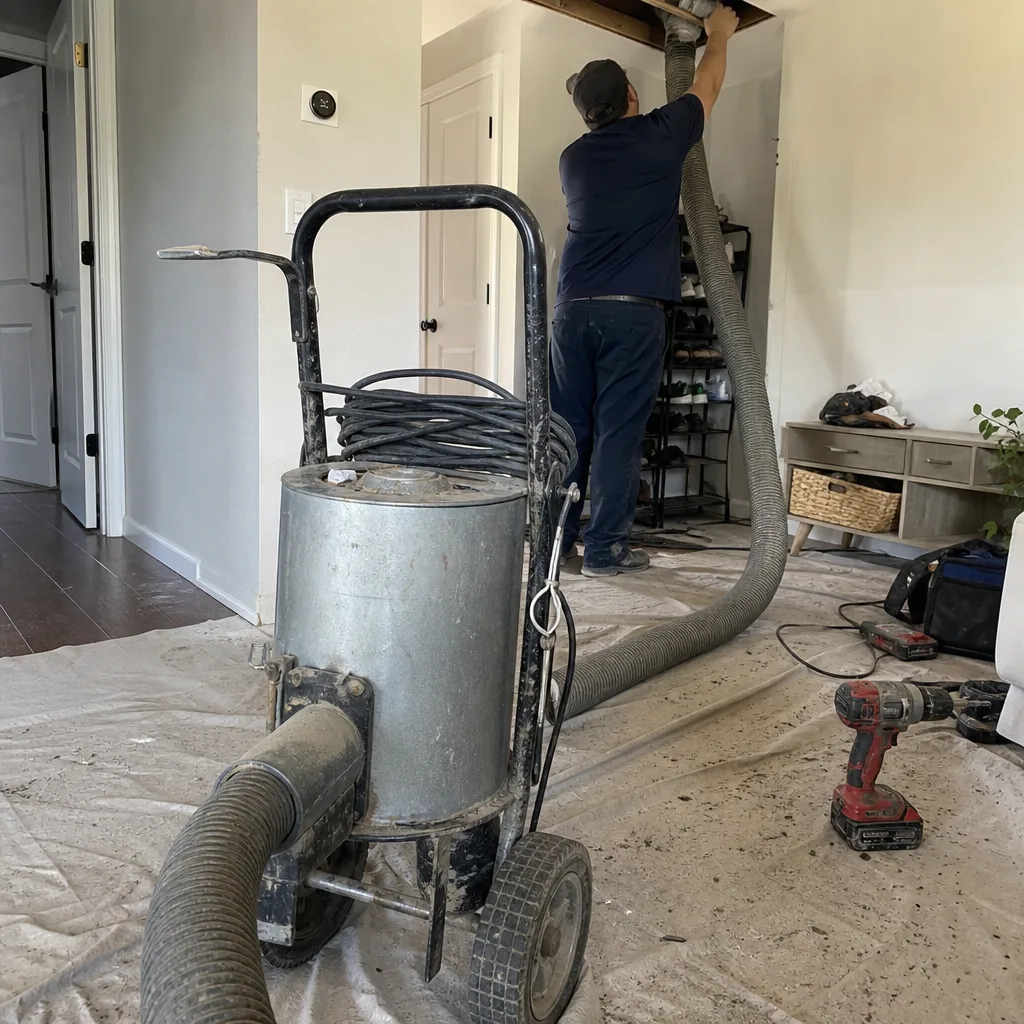 Before
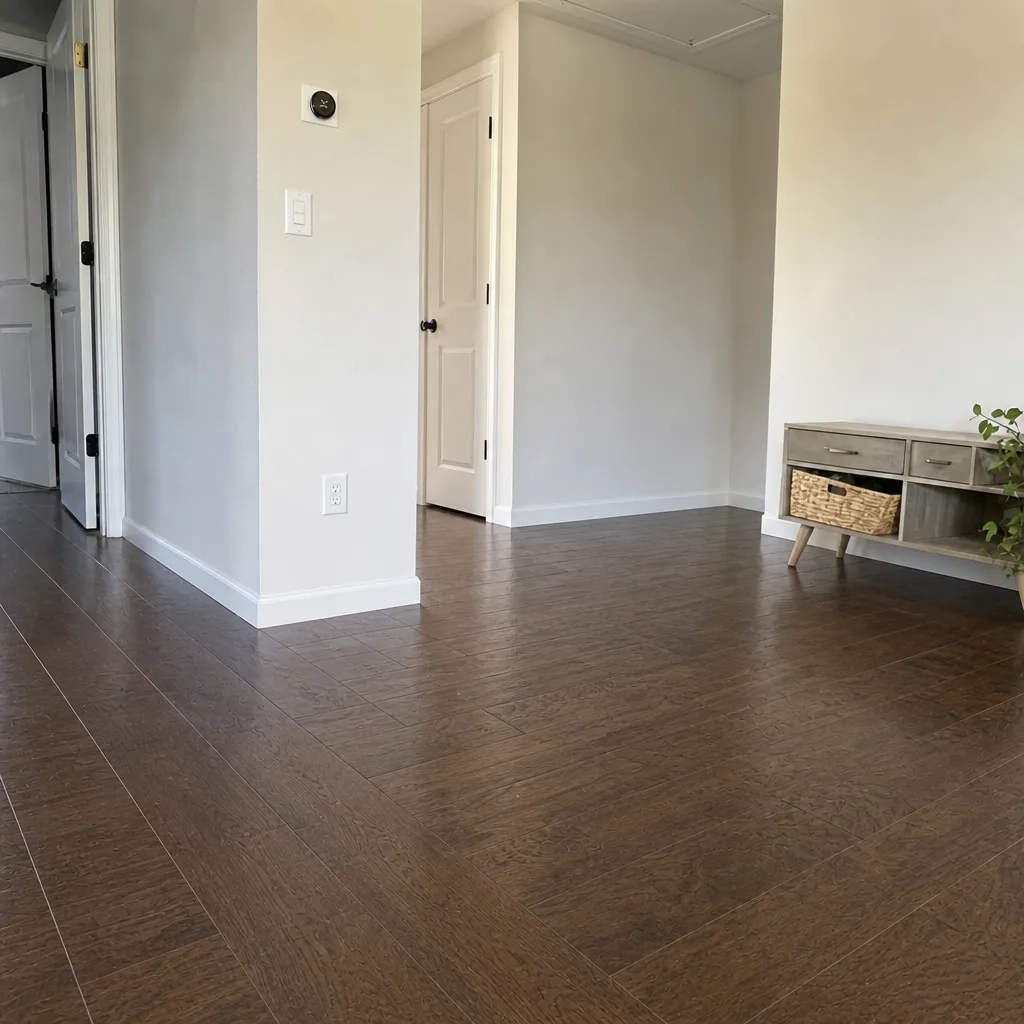 After
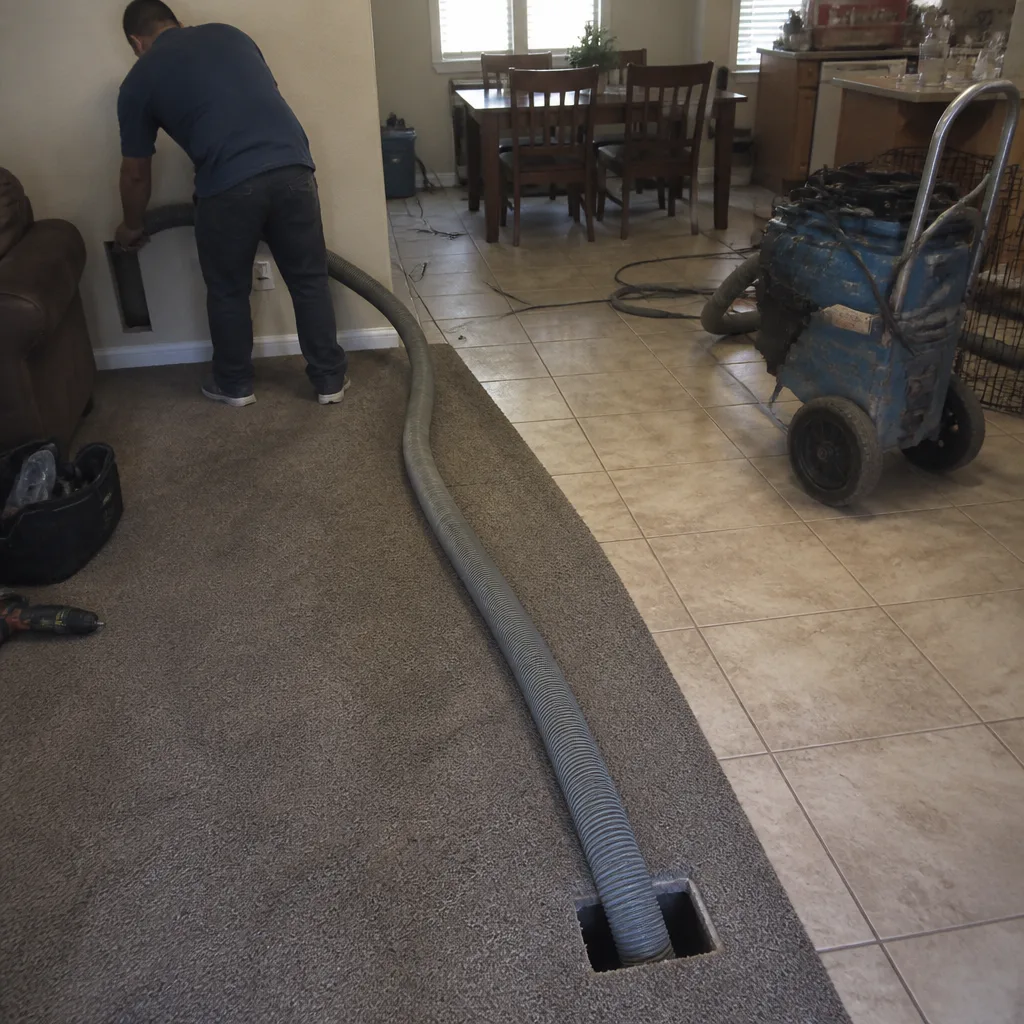 Before
 After
 Before
 After