
Last updated November 4, 2026
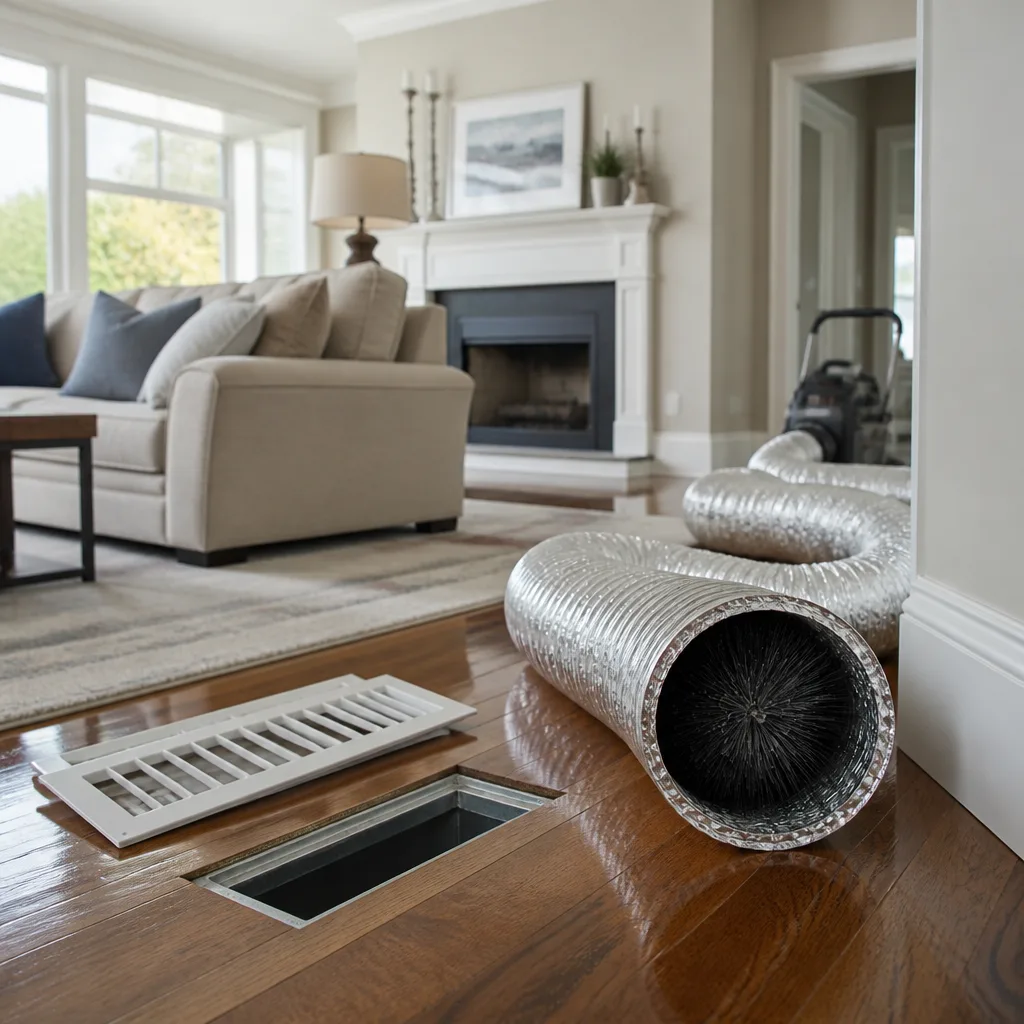 Whole-home duct cleaning
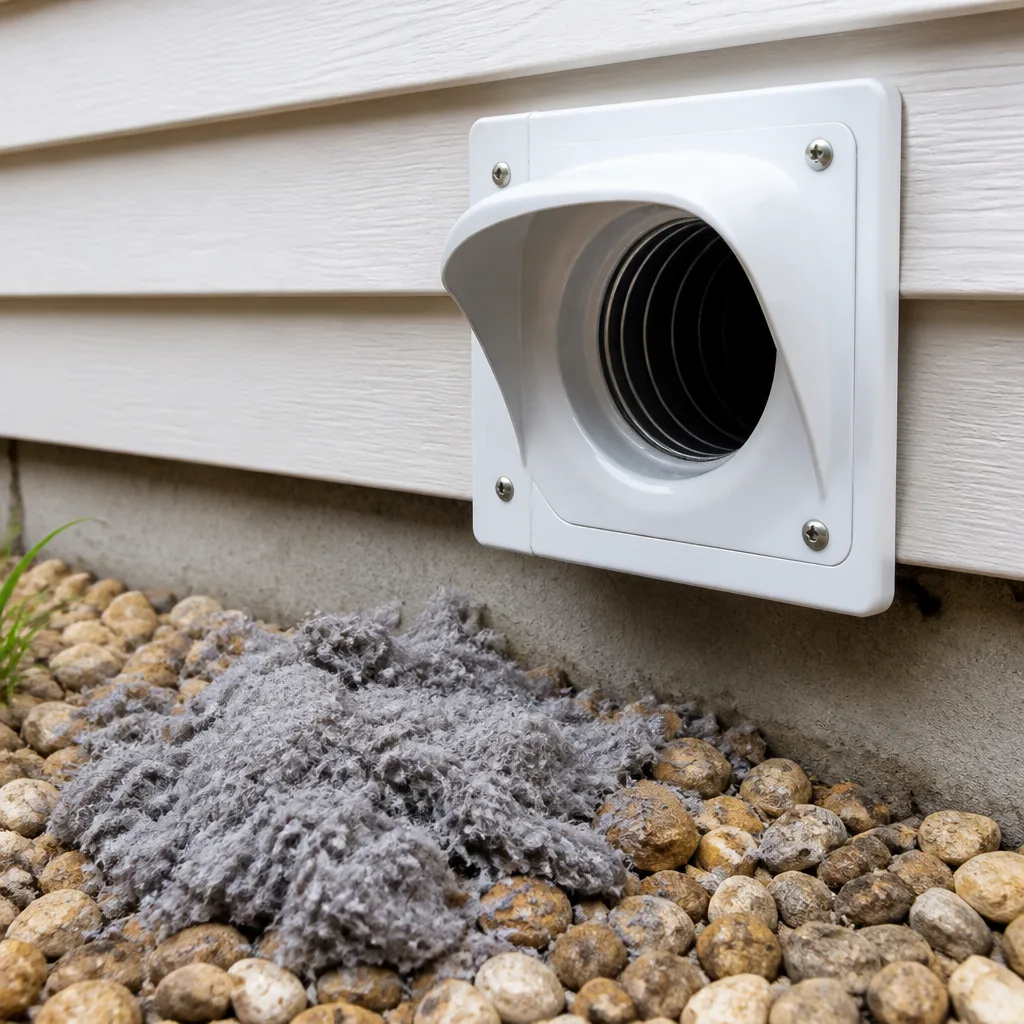 Dryer vent cleaning
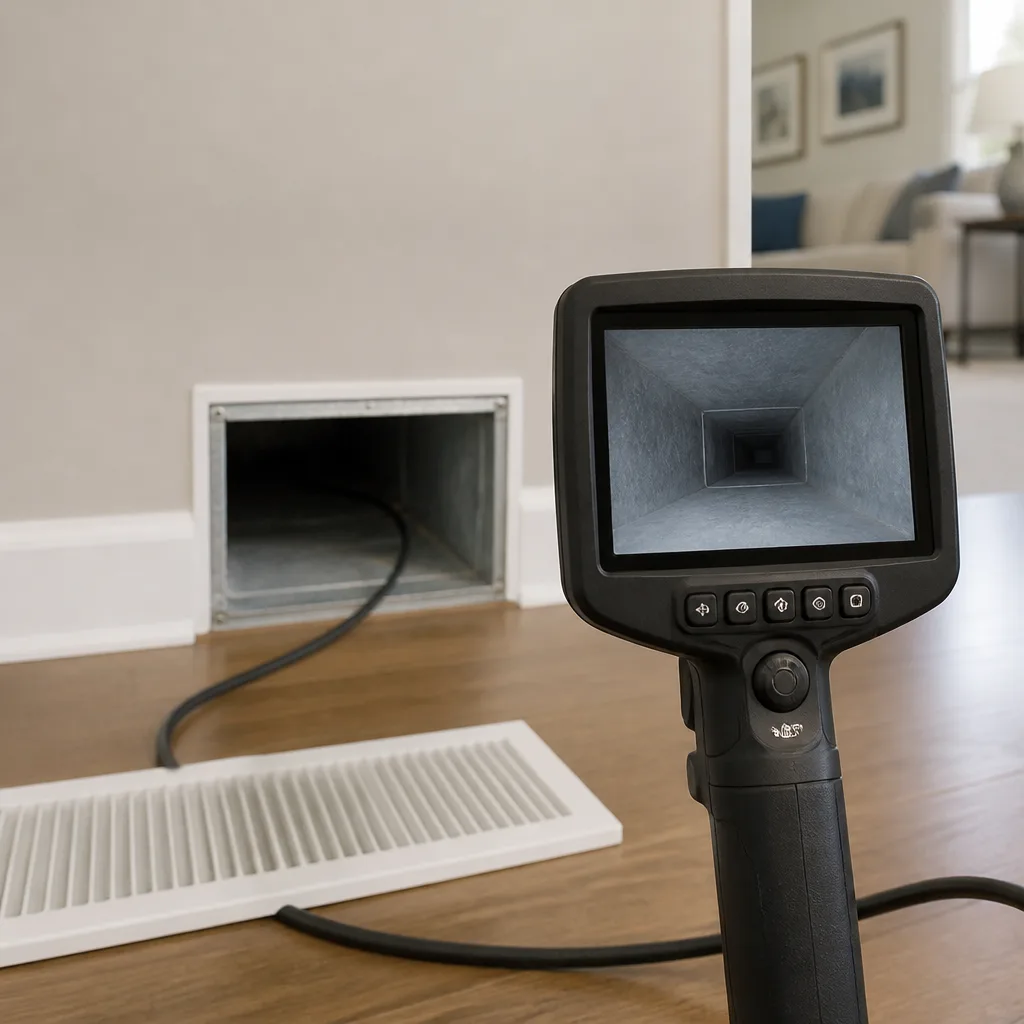 Camera inspection
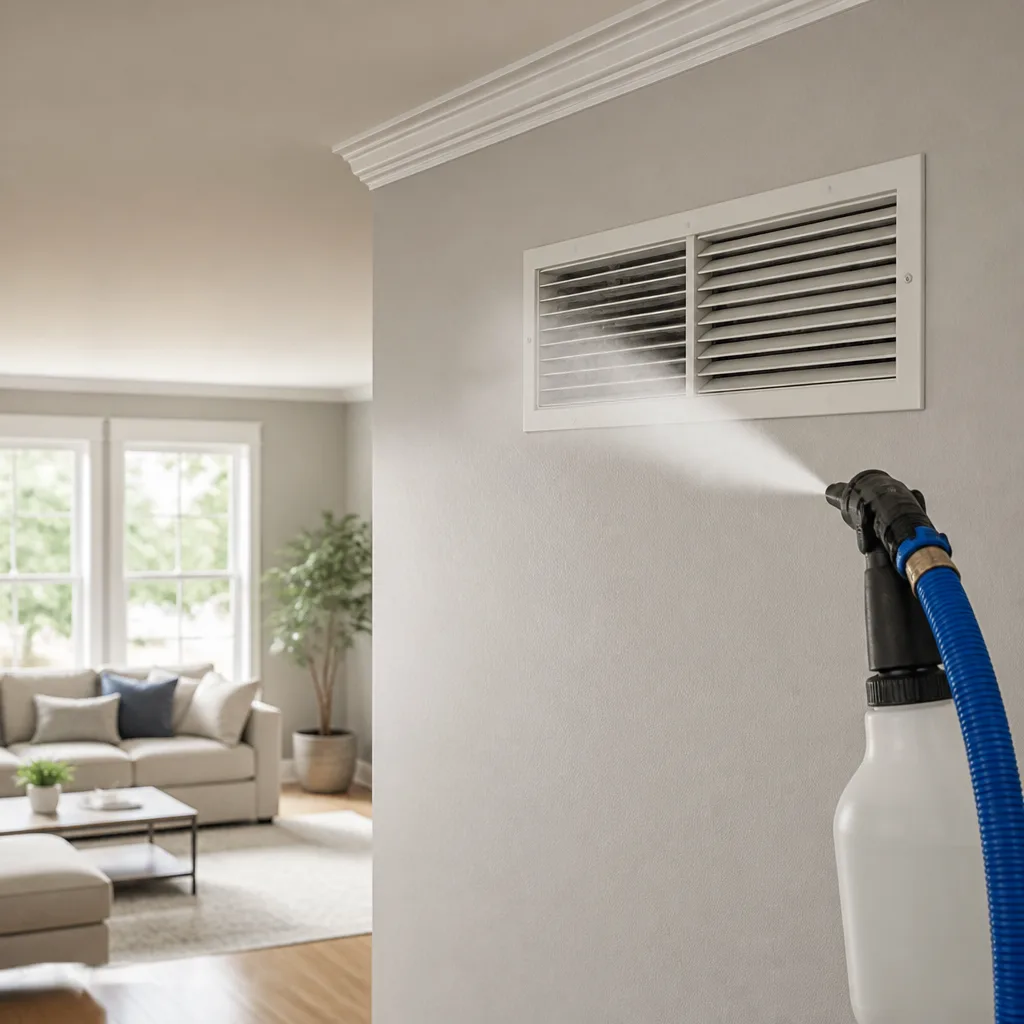 Sanitizing & deodorizing
Whole-system duct and dryer vent check with before-and-after photos - you see exactly what came out of your vents
That "$99 whole-house special" is a bait ad - the real number appears once they are in your hallway, or the "clean" is a shop-vac at the register. We photograph the inside of your ducts before and after instead.
Air Duct Cleaning Warning Signs: A Chino Homeowner’s Reference Guide
Most Chino homeowners spot duct contamination far too late. By the time dust is visibly caked on a supply register, the interior of the duct system has usually been collecting that material for a year or longer. The signs that matter most appear much earlier and are subtler: a room that never quite reaches temperature, a filter that loads up faster than it should, a faint mustiness that lasts only seconds after the blower kicks on. This guide teaches you to read those early signals as a diagnostic picture, not a list of isolated annoyances, so you can act before a dirty system becomes a health problem or a repair bill.
Styles & brands we work with
- Whole-home duct cleaning
- Dryer vent cleaning
- Camera inspection
- Sanitizing & deodorizing
Quick Answer
The earliest warning signs of duct contamination in Chino are uneven room temperatures, filter loading faster than normal, and a short-lived musty odor when the HVAC first activates. Visible dust on registers is a late-stage symptom. If you notice allergy flares or congestion that track with system operation rather than outdoor conditions, the ducts are a likely contributor and should be inspected.
Table of Contents
- Early-Stage Signals Most Homeowners Miss
- Performance Signs That Point to the Ducts
- Health-Correlated Warning Signs
- A Homeowner’s Visual Inspection Protocol
- Separating Duct Contamination From Other HVAC Problems
- When Cleaning Is Enough Versus When Repair Comes First
- How Chino’s Climate and Housing Stock Affect Duct Systems
- Common Mistakes to Avoid
- When to Call a Professional
- Frequently Asked Questions
- The Bottom Line
Early-Stage Signals Most Homeowners Miss
The first signs of duct contamination are rarely visual. They show up as small inconsistencies in how your home behaves. A bedroom on the far side of the house that runs three or four degrees warmer than the thermostat setting, even with the register fully open. An air filter that looks loaded at 60 days when it used to make it to 90. A very brief odor, sometimes described as attic-like or slightly earthy, that appears when the system first starts and disappears within a minute or two. Individually, none of these feels urgent. Together they tell a different story.
Uneven temperatures often get blamed on duct design or an undersized system. Sometimes that’s fair. But when a room that used to heat or cool properly starts drifting, the more likely cause is airflow restriction inside the ductwork. Contamination builds unevenly. Long horizontal runs, tight elbows, and transitions accumulate material faster than short vertical drops. That buildup shrinks the effective diameter of the duct, reducing the air volume reaching distant registers. The result is a room that never quite satisfies, even though the system runs constantly.
Filter loading is another under-read signal. Your filter’s job is to protect the equipment and capture particles moving through the return air stream. When ducts are heavily soiled, every cycle stirs that material back into circulation. The filter catches a portion of it and loads faster than it should. If you find yourself replacing or cleaning a filter noticeably more often than you did two years ago with the same product, the ducts are likely feeding the filter a heavier diet than they used to. In our experience with air duct cleaning in Chino homes, this is one of the most consistently reported observations from homeowners who turn out to have significant buildup.
That first-cycle odor matters because of when it appears. A musty smell that’s present all the time points to a source inside the living space, such as a damp carpet or a plumbing leak. A musty smell that appears only when the blower starts, then fades within about a minute, points to the ducts. The moving air stirs settled material, releases its odor into the supply stream, and then dilutes it as fresh air cycles through. It’s a short-lived clue, but a reliable one.
Performance Signs That Point to the Ducts
Beyond temperature and filter changes, several performance indicators suggest the duct system itself is compromised. These signs overlap with other HVAC problems, which is why they’re often misdiagnosed. The key is looking at the pattern across multiple signals rather than treating each one as its own mystery.
Longer run times to reach the set temperature. A system struggling to move air will run longer to satisfy the thermostat. If your cooling cycle in a Chino summer runs noticeably longer than it did in previous years, restricted airflow is a likely contributor. The restriction can be a clogged coil, a failing blower, collapsed duct lining, or accumulated contamination. Each produces the same symptom.
Dust re-settling quickly after cleaning. You wipe a surface on Monday and find a visible film by Thursday. Some dust settling is normal in any home, especially in a valley climate where windows are often open in the shoulder seasons. But when the rate of settling accelerates, the supply ducts are often the source. Contamination inside the ductwork doesn’t stay put. Every cycle picks up loose particles and carries them into the living space.
Whistling or changes in system sound. As buildup narrows the effective passage inside ducts, air velocity increases. The result can be a faint whistle at partially closed registers or a change in the character of the airflow noise at the returns. This is a late indicator compared to filter loading, but it’s worth noting when it appears. Duct leakage produces different sounds entirely, usually a hiss or rushing noise near joints and connections, and should be treated as a repair issue rather than a cleaning one.
Higher energy bills without a rate change or new equipment. Restricted airflow forces the system to work harder for longer. If your utility usage is up and you haven’t changed thermostats, added equipment, or altered your schedule, dirty ducts are one of the first things worth checking. They’re not the only cause; a refrigerant leak or degraded capacitor will do the same. But when energy use climbs alongside filter loading and uneven temperatures, the duct system belongs on the short list.
Health-Correlated Warning Signs
Health symptoms are the most complicated warning signs to interpret, because they never have a single cause. Allergies in Chino are driven substantially by outdoor conditions: grass pollen in spring, weed pollen in late summer and fall, and particulate matter that settles into the valley during inversion periods. If your symptoms track with the weather report, outdoor air is a major contributor and duct cleaning will only help at the margin. If your symptoms track with system operation instead, the ducts deserve closer attention.
Here’s the distinction. Outdoor-driven symptoms follow outdoor conditions: they’re worse on high-pollen days, better after rain, worse when windows are open. System-driven symptoms follow the HVAC: they’re worse in the first hour after the system starts running, worse in the morning if the system ran overnight, better when you’ve been away from home for several hours, and noticeably better in a hotel or someone else’s house. That pattern, repeated over weeks, is a meaningful signal.
The most commonly reported system-tied symptoms include morning congestion that clears within an hour or two of waking, allergy-like sneezing or eye irritation that appears when the AC runs but not when windows are open, and a dry cough that improves when the system is off. None of these proves duct contamination. All of them justify a look. A good place to start is the Duct Cleaning Chino visual inspection protocol below, which costs nothing and takes fifteen minutes.
It’s also worth understanding that different contaminants produce different health effects. Accumulated dust and pet dander are irritants; they aggravate allergies and asthma but rarely cause new conditions. Microbial growth, which requires moisture and is more common in systems with poor drainage or leaking ducts, produces a different range of responses including persistent mustiness, headaches, and respiratory irritation that doesn’t respond to typical allergy medication. If you smell something that reads as damp or fungal and it persists, don’t wait for visual confirmation. Have the system inspected.
A Homeowner’s Visual Inspection Protocol
You can learn a lot about your duct system without opening it. The inspection below focuses on accessible surfaces: supply registers, return grilles, and the duct connections visible in attics, garages, or utility closets. In most Chino homes, the supply registers are in the ceiling or high on walls, and the returns are in hallways or central living areas. Both are reachable with a step stool and a flashlight.
- Remove a supply register in a high-use room. Most registers lift out with two screws or simply pull down if they’re the friction-fit type. Shine a flashlight into the duct opening, not just at the register itself. Look at the interior surface of the duct, which should be smooth metal or clean flex liner. Dust that has accumulated into a visible gray or brown film is contamination, especially if it’s thick enough to obscure the underlying surface.
- Check the back side of the register and the inside face of the register opening. This is the surface that catches particles as they leave the system. A light dusting is normal and cleans off easily. A sticky, dark, or greasy residue is not normal and suggests the duct interior is heavily loaded. In kitchens, some of this residue can come from cooking aerosols, but the volume varies with duct condition.
- Inspect the return grille. Returns pull air from the living space into the system. A return grille that’s visibly loaded with dust and pet hair is doing its job, but it also tells you what’s been passing through. If the grille itself is clogged, the filter behind it is doing more work than it should. Wash return grilles regularly and note whether they reload quickly, which indicates high particulate load in the living space.
- Look at accessible duct connections. In attics, garages, and utility closets, you’ll often see the outer surface of duct runs and their connections. Gaps, loose tape, sagging sections, or joints that have pulled apart are duct leakage problems, not cleaning problems. Crushed or kinked flex duct is also a repair issue. All of these pull unfiltered air into the system and should be addressed before or during cleaning.
- Check the area around the air handler or furnace. If the unit is in a closet or garage, look at the floor or platform beneath it. Excess dust, debris, or signs of water staining near the unit can indicate return leakage, a clogged condensate drain, or both. Water staining near the equipment is a repair priority.
This protocol won’t reveal everything. The deep interior of long duct runs isn’t visible from the register opening, and that’s where a professional inspection with camera equipment earns its keep. But the protocol will identify obvious contamination, visible leakage, and signs of moisture, which covers a meaningful portion of what goes wrong in residential systems.
Separating Duct Contamination From Other HVAC Problems
Several HVAC conditions produce symptoms that overlap with duct contamination. Treating the wrong one wastes money and leaves the real problem in place. Here’s how to think about the differential diagnosis.
Coil fouling. The evaporator coil sits downstream of the filter and upstream of the supply ducts. When it’s fouled with dust, pet hair, and cooking residue, it restricts airflow, reduces cooling capacity, and can produce the same musty odor as contaminated ducts. The distinguishing feature is location: a fouled coil often produces condensation overflow, visible water near the unit, and a cooling system that ices up or short-cycles. Duct contamination alone doesn’t cause icing or water. Coil fouling and duct contamination frequently occur together, since the same particles that load the coil continue downstream into the ducts.
Blower problems. A blower wheel caked with dust moves less air. The symptom is low airflow at every register, not just at the end of long runs. Dirty ducts typically reduce airflow more at distant registers than close ones. A blower that’s failing electrically may make noise, run intermittently, or trip a breaker. None of those are duct symptoms. If airflow is uniformly weak across the whole house, look at the blower and the filter first.
Duct leakage. Leaky ducts pull attic or garage air into the system and push conditioned air into unconditioned spaces. The symptoms include higher energy bills, rooms that struggle to reach temperature, and dust that seems to appear constantly, often with attic-like odor. Leakage is a repair issue. Cleaning alone won’t fix it, and in fact cleaning a leaking system is wasted effort until the leaks are sealed, because the ducts will recontaminate quickly. Dryer vent cleaning addresses a different part of the house, but the same logic applies: airflow restrictions and leaks share symptoms, and you fix the structure before you clean the surface.
The filter itself. An under-sized, over-loaded, or incorrectly installed filter restricts airflow at the source. Before blaming the ducts, check the filter. A filter that’s collapsed, bypassed, or simply the wrong size will mimic many duct restriction symptoms and costs almost nothing to fix. The same applies to closed or blocked registers. Walk the house and confirm every supply and return is open and unobstructed before scheduling any service.
When Cleaning Is Enough Versus When Repair Comes First
This is the distinction that separates a useful service call from a wasted one. Duct cleaning removes accumulated contamination. It does not fix structural problems, seal leaks, or restore crushed ductwork. If the system is damaged, cleaning before repair means the ducts will recontaminate almost immediately, because the pathway for new contamination is still open.
Here’s the practical framework. Cleaning is enough when the duct interior is contaminated but structurally sound: the metal or flex material is intact, connections are tight, and the only problem is accumulated dust, debris, pet hair, or light microbial film from normal operation. This is the most common scenario in Chino homes. The system was installed correctly, nothing has failed, and the ducts simply haven’t been cleaned in years. A thorough cleaning restores the system to its original airflow and removes the accumulated material.
Repair comes first when inspection finds damaged ducts, disconnected joints, collapsed or crushed flex runs, gaps at the plenum, or signs of moisture intrusion. These conditions are structural. Cleaning cannot repair them, and more importantly, cleaning around them leaves the contamination pathway open. The correct order is to repair the damaged sections, seal the connections, then clean the system so it starts from a known-good state. This is why air duct cleaning and repair belong in the same service relationship. A technician who can do both addresses what they find without handing you off to a second contractor and scheduling another appointment.
Moisture is the wildcard. Any sign of water in the duct system, whether from a leaking condensate line, roof penetration, or foundation seepage, changes the priority. Moisture allows microbial growth that cleaning alone won’t fully address if the source isn’t fixed. Find the water source first, repair it, replace any damaged duct material, and then clean. In Chino’s dry climate, moisture problems are less common than in coastal or humid regions, but they still occur, particularly in systems where the condensate drain has clogged and backed up into the unit.
How Chino’s Climate and Housing Stock Affect Duct Systems
Chino’s inland valley climate places specific demands on duct systems. Summers are hot and dry, with long cooling seasons. The AC runs for months at a time, which means the system cycles large volumes of air through the ducts. Any contamination present gets stirred with every cycle and distributed through the living space. Winters are mild by national standards, which means the system runs less but also that homes in Chino often have extended periods where the HVAC sits idle. During those idle periods, dust settles inside the ductwork. The first few cycles after a long idle period stir that settled material back into the air, which is why many homeowners notice a musty or dusty smell at the start of each cooling season.
The housing stock matters too. Chino includes a range of housing ages, from mid-century tract homes to newer construction in the areas developed over the last two decades. Older homes often have metal duct systems that were sealed with materials that have dried and failed over time, leading to slow, accumulating leakage. Newer homes often have flex duct, which is easier to install but more vulnerable to crushing if it was run through tight spaces, and more vulnerable to damage from rodents entering attics. Ridgecrest, Ontario, and Eastvale track broadly similar patterns, but Chino’s specific mix of older core neighborhoods and newer perimeter development means duct conditions vary widely from one street to the next. A home built in 1975 and a home built in 2015 can have completely different duct problems even though they’re two miles apart.
The practical takeaway is that age alone doesn’t tell you much. What matters is construction type, system design, and maintenance history. A well-maintained metal system in an older home can be in better condition than a neglected flex system in a newer one. Inspection is the only way to know. That’s the case for an inspection-first approach: see what’s actually in the ducts before making any decisions about service.
Common Mistakes to Avoid
- Waiting for visible dust to act. By the time dust is caked on a register, the system has been circulating contaminated air for a long time. The early signals, uneven temperatures, filter loading, and first-cycle odor, are your best opportunity to act cheaply and early.
- Blowing off health symptoms as “just allergies.” Chino has a genuine outdoor allergen load, and symptoms that track with pollen counts are probably outdoor-driven. Symptoms that track with system operation instead deserve a duct inspection.
- Cleaning before repairing. If the ducts are leaking or damaged, cleaning is wasted effort. The contamination pathway remains open and the system recontaminates quickly. Repair first, then clean.
- Assuming a new home has clean ducts. Construction debris, drywall dust, and sawdust from the build process often remain in duct systems for years. New-construction homes are among the most consistently contaminated systems we see.
- Using a consumer-grade vacuum or DIY approach on a full system. Household vacuums don’t have the reach or filtration to clean duct interiors. At best, you clean the first few inches of the duct. At worst, you disturb material and push it deeper into the system. Professional-grade equipment, such as the Rotobrush contact-cleaning systems and Nikro negative-air setups we use, is built for this specific job.
- Ignoring the return side. Homeowners focus on supplies, because that’s where air comes out, but returns pull air in and can be just as loaded. An inspection that only looks at supply registers misses half the system.
When to Call a Professional
Call when the pattern across symptoms points to the ducts: uneven temperatures that have developed over time, filter loading that’s accelerated, a musty odor at system start, or allergy symptoms that track with HVAC operation rather than outdoor conditions. Call when you’ve done the visual protocol and found visible contamination or signs of leakage. Call when the system hasn’t been cleaned in several years and you’re noticing dust accumulation in the living space. And call before you buy filtration or purification equipment, because adding a Honeywell or Aprilaire product to a dirty system is like installing a clean air filter on a dirty engine. The system itself has to be clean first. Duct Cleaning Chino offers free estimates in Chino, call (844) 789-0415. We answer 24/7. Fast dispatch from 7am to 7pm, Sunday through Friday.
Frequently Asked Questions
The most reliable indicators are accelerated filter loading, uneven room temperatures that have developed over time, a musty odor when the system first starts, and visible contamination on register interiors or the back side of supply registers. Any two of these together justify an inspection. Call (844) 789-0415 for a free estimate if you’re seeing them.
There is no universal schedule that fits every home. Homes with pets, recent renovation work, or occupants with respiratory conditions generally need cleaning more often than a two-person household without pets in a tightly sealed newer home. The most honest answer is to inspect and let the findings set the schedule, which is the approach we use. Call (844) 789-0415 and we’ll help you figure out what your system actually needs.
Uneven temperatures happen when airflow is restricted unevenly across the system. Dirty ducts are one cause, and a common one in older Chino homes with long duct runs. Duct leakage, coil fouling, and blower problems produce the same symptom. A proper inspection separates them, which matters because the fixes are different.
They can. Accumulated dust, pet dander, and pollen inside ducts get re-circulated every time the system runs. If your symptoms are worse when the HVAC runs and better when it’s off or when you’re away from home, the ducts are a plausible contributor. Cleaning removes the reservoir of irritants and often produces noticeable improvement for people whose symptoms were system-driven.
Not by itself. Leaking ducts will recontaminate quickly because they pull unfiltered air from unconditioned spaces. The correct sequence is to seal or repair the leaks first, then clean. That’s why repair and cleaning should be handled by the same contractor, so the work is sequenced correctly in a single visit. We use Rotobrush and Nikro equipment for cleaning and can repair duct damage we find as a first-party service.
Ask for before-and-after photos of the duct interior. Any contractor doing thorough work should be able to show you the condition before cleaning and the result after. We document every job with photos at the registers, returns, and main trunk lines so you can see what was removed and what the duct looks like afterward. Call (844) 789-0415 for a free estimate and we’ll walk you through the process.
The Bottom Line
Duct contamination doesn’t announce itself with a single dramatic symptom. It builds quietly and shows up first as small inconsistencies: a room that drifts, a filter that loads, an odor that flashes and fades. Reading those signals as a system-level picture, and separating them from coil, blower, and leakage problems that share similar symptoms, is the difference between catching contamination early and managing the consequences later. In Chino’s hot, dry climate, where the AC runs for months and the ducts sit idle for stretches between seasons, the pattern is especially worth learning. Inspect first, repair what’s damaged, clean what’s dirty, and keep the system honest.
Written by the team at Duct Cleaning Chino, serving Chino since 2018.
See the difference
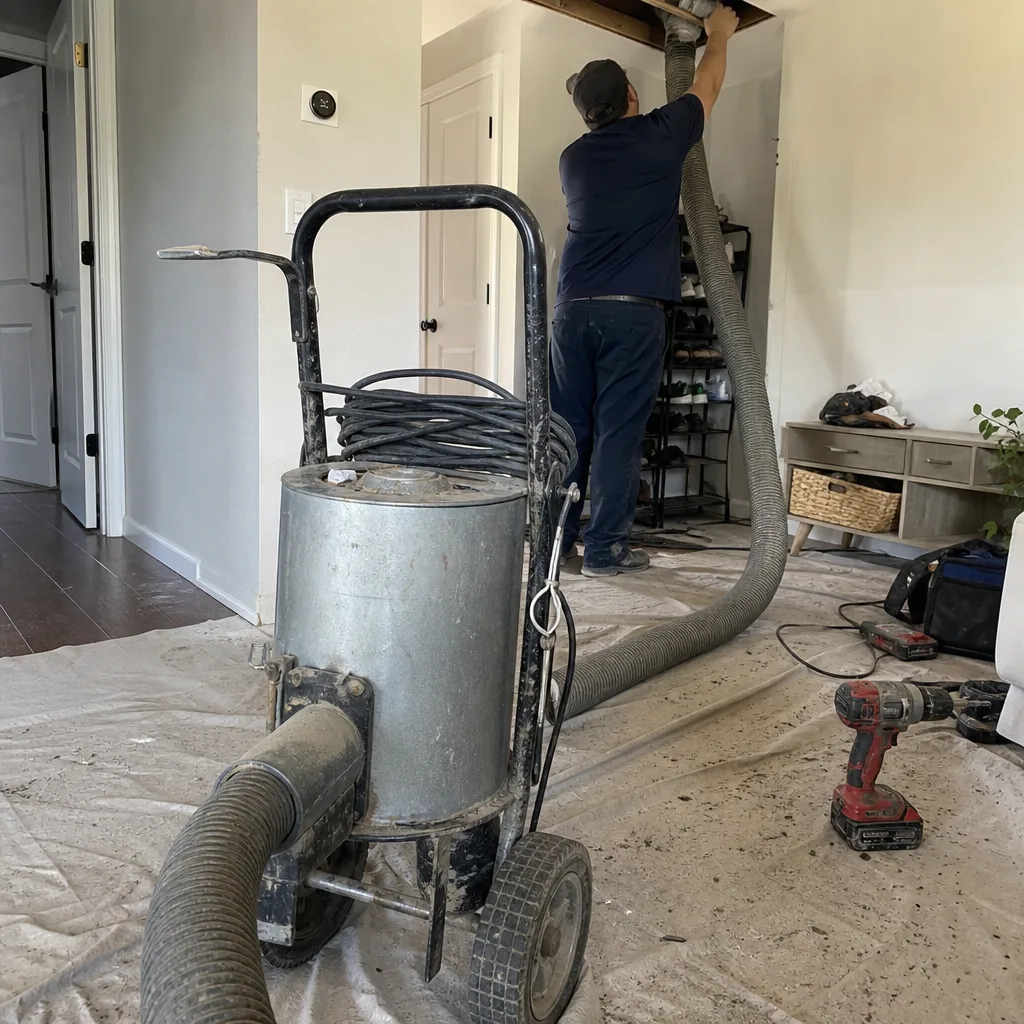 Before
 After
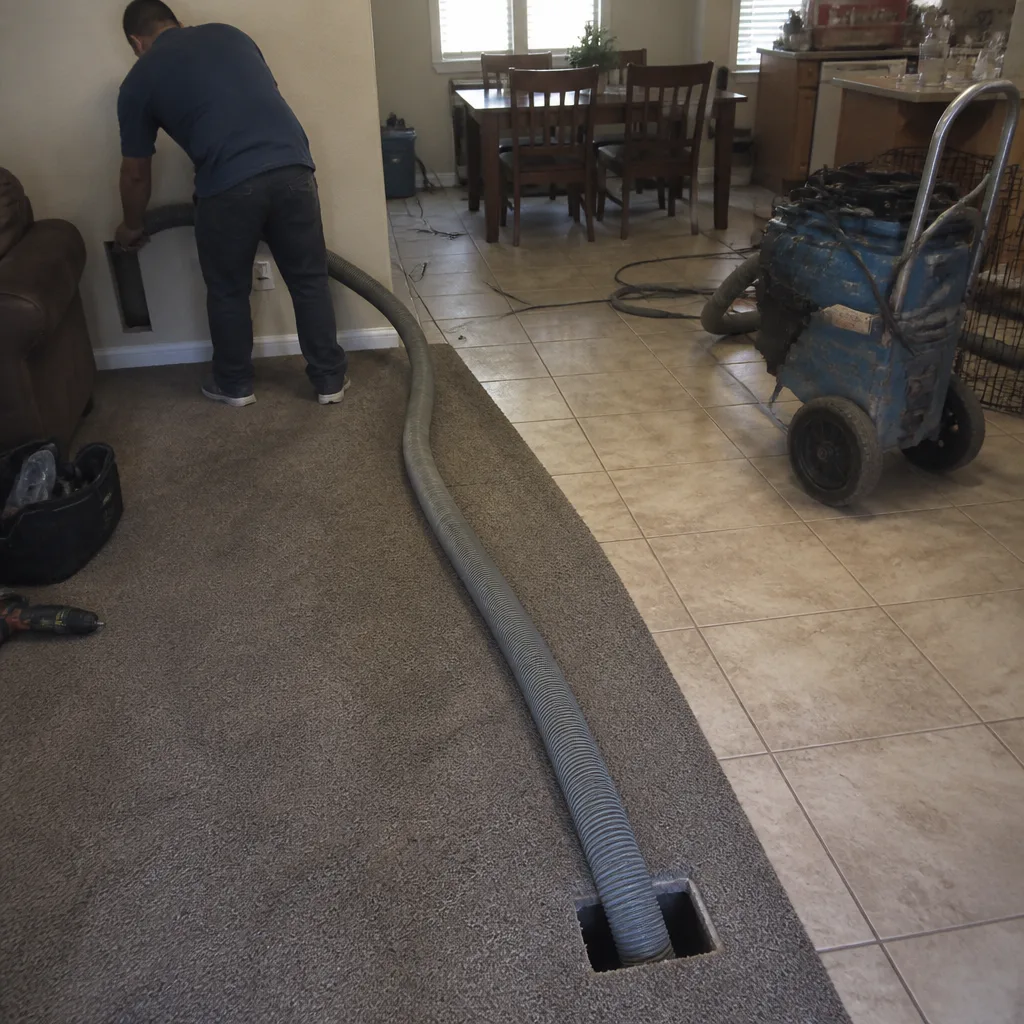 Before
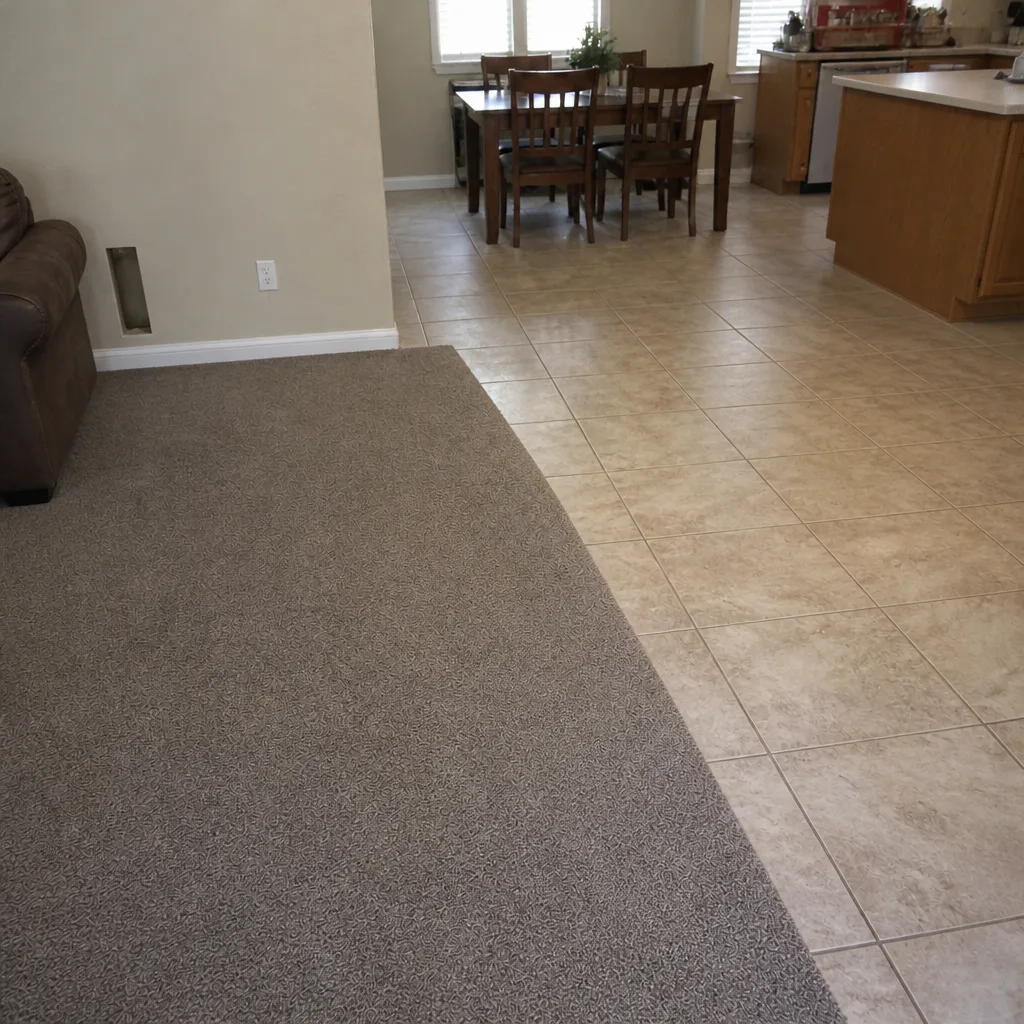 After
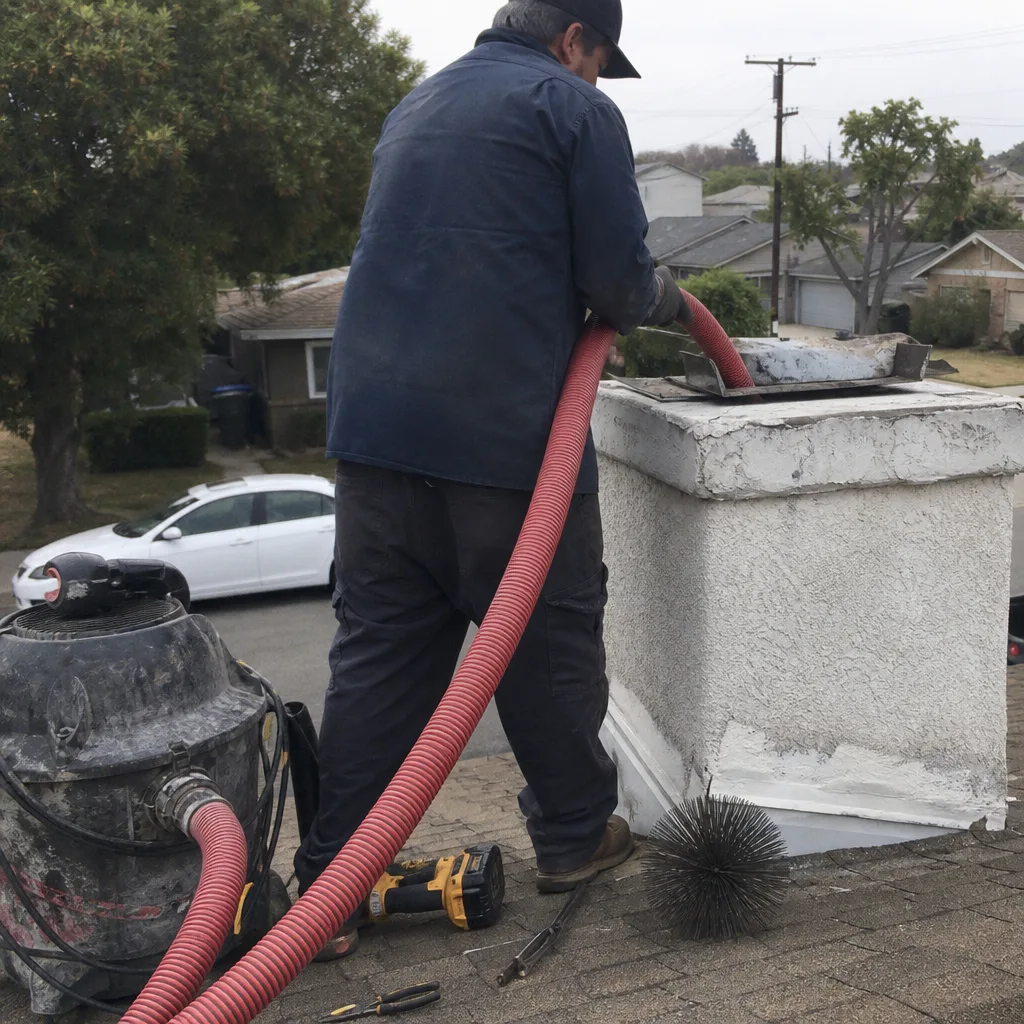 Before
 After