
Last updated November 4, 2026
 Whole-home duct cleaning
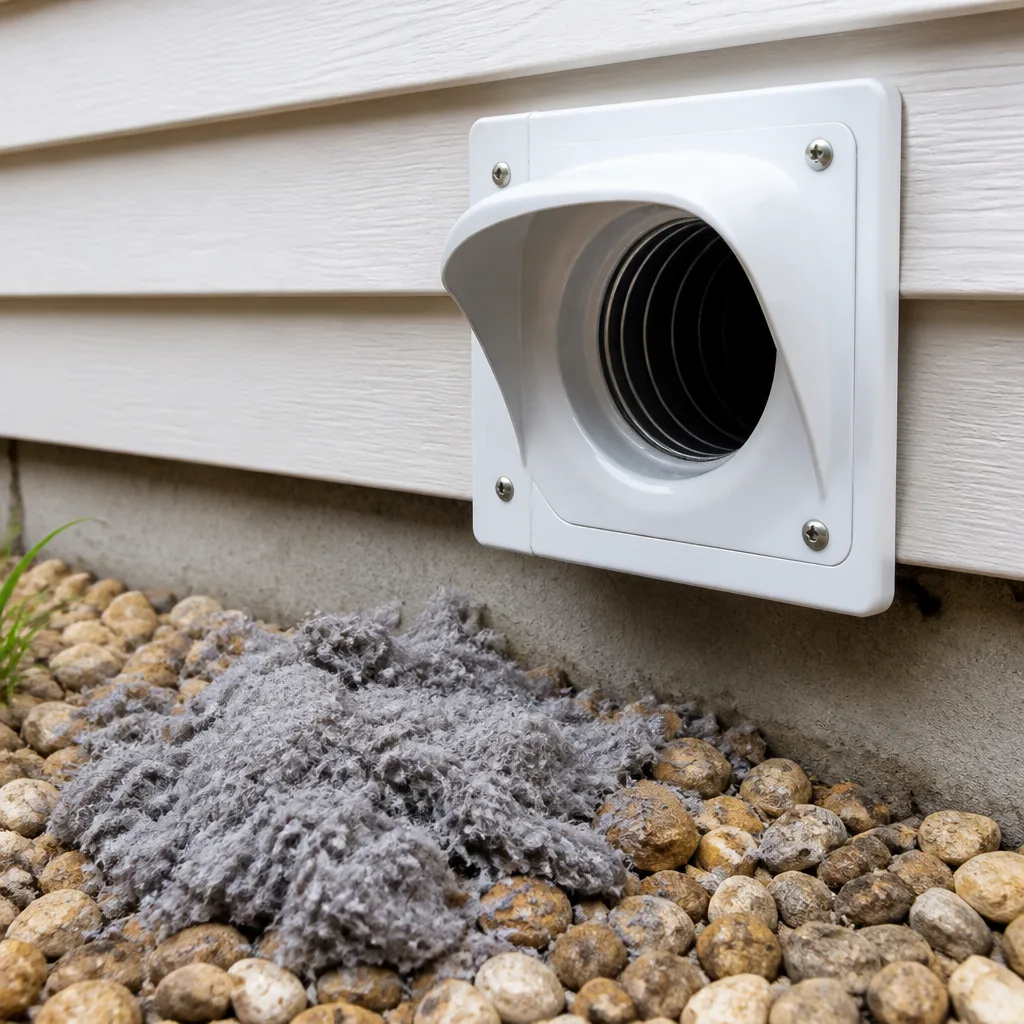 Dryer vent cleaning
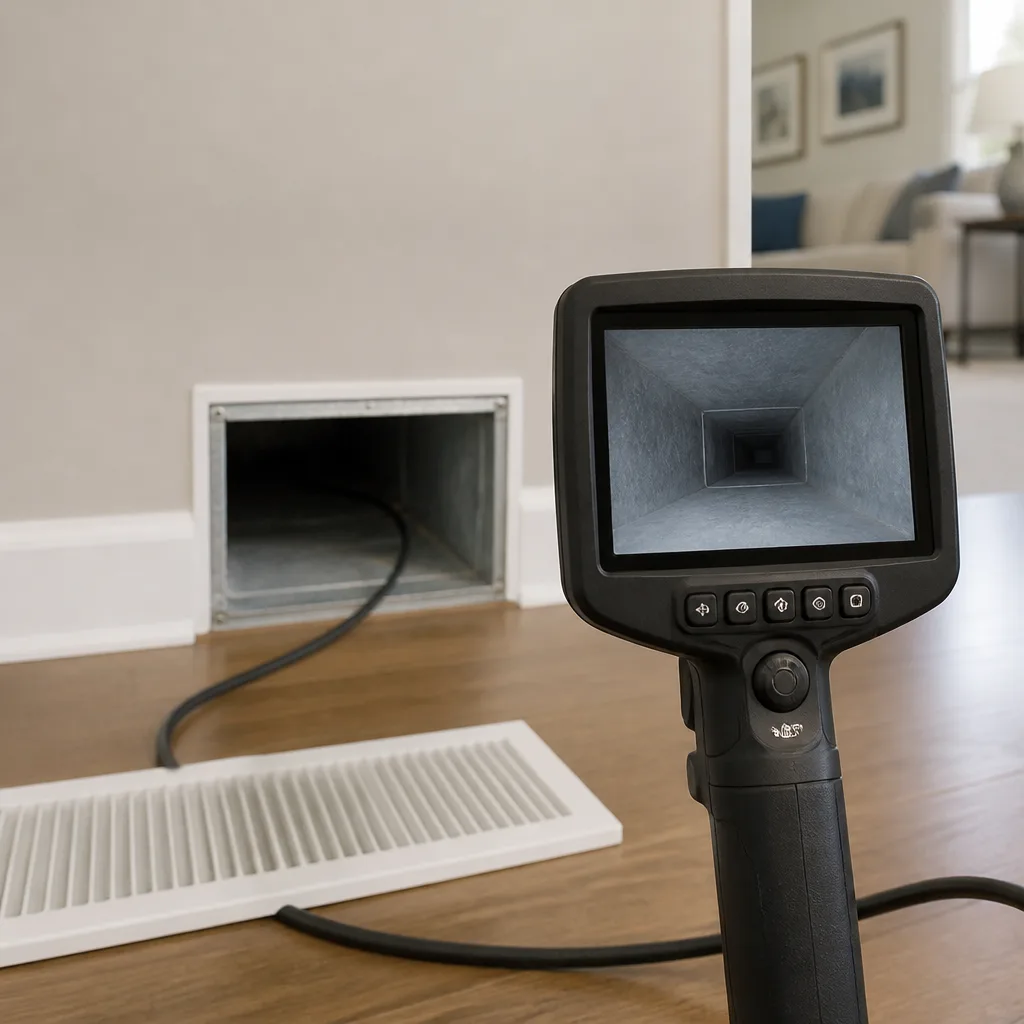 Camera inspection
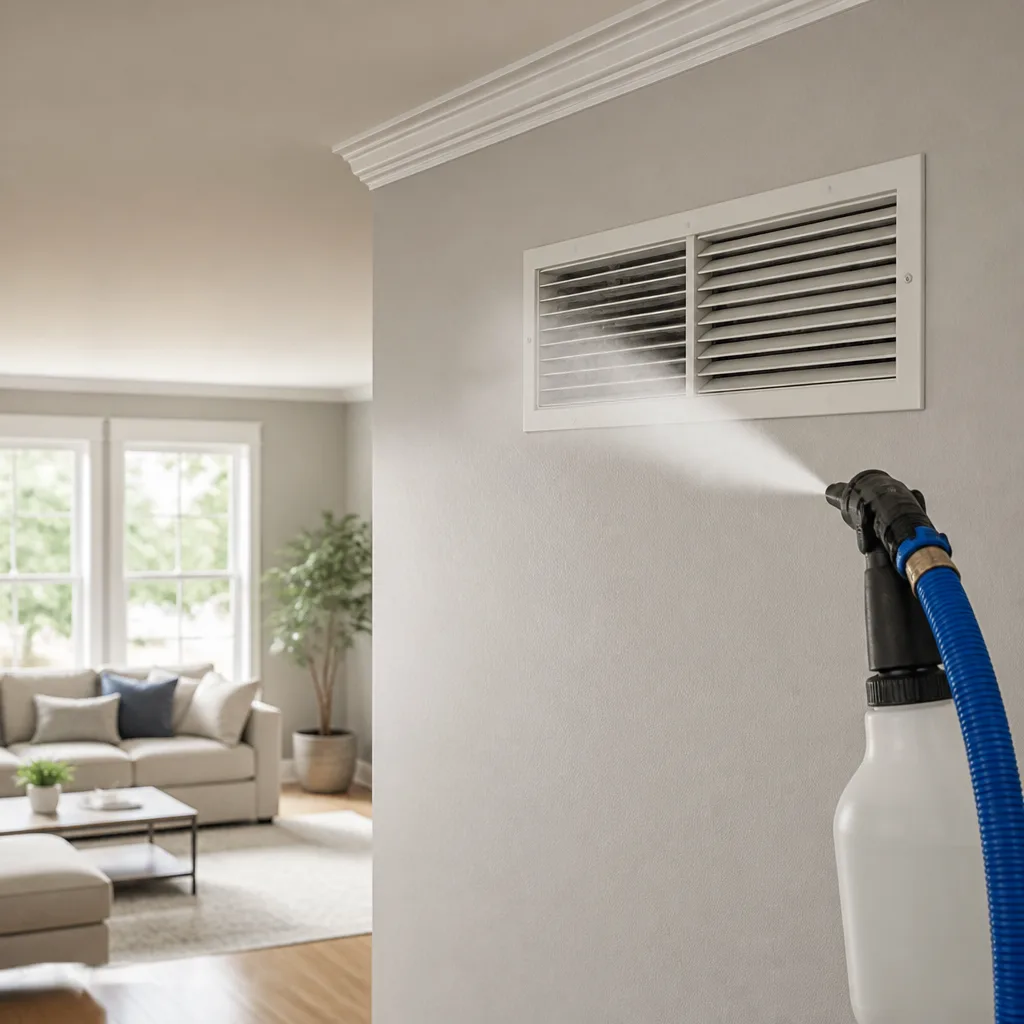 Sanitizing & deodorizing
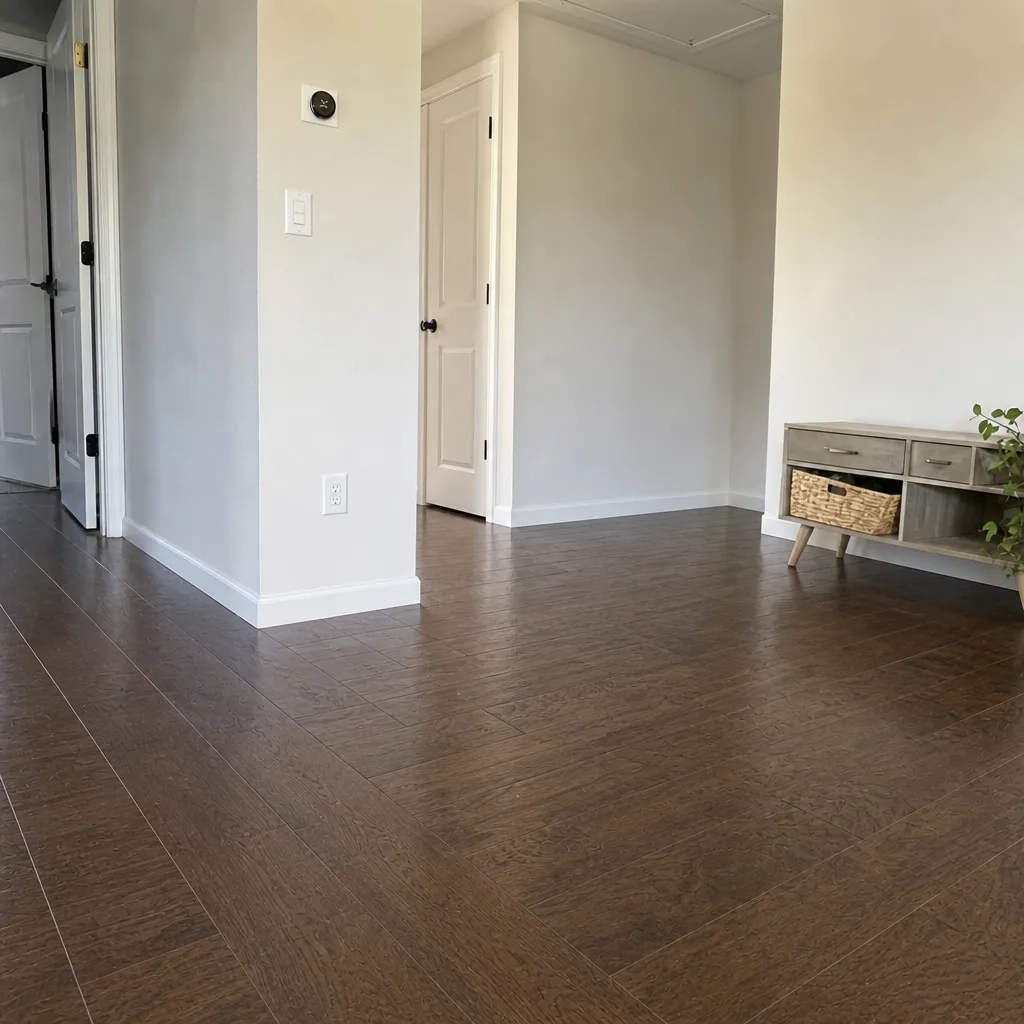
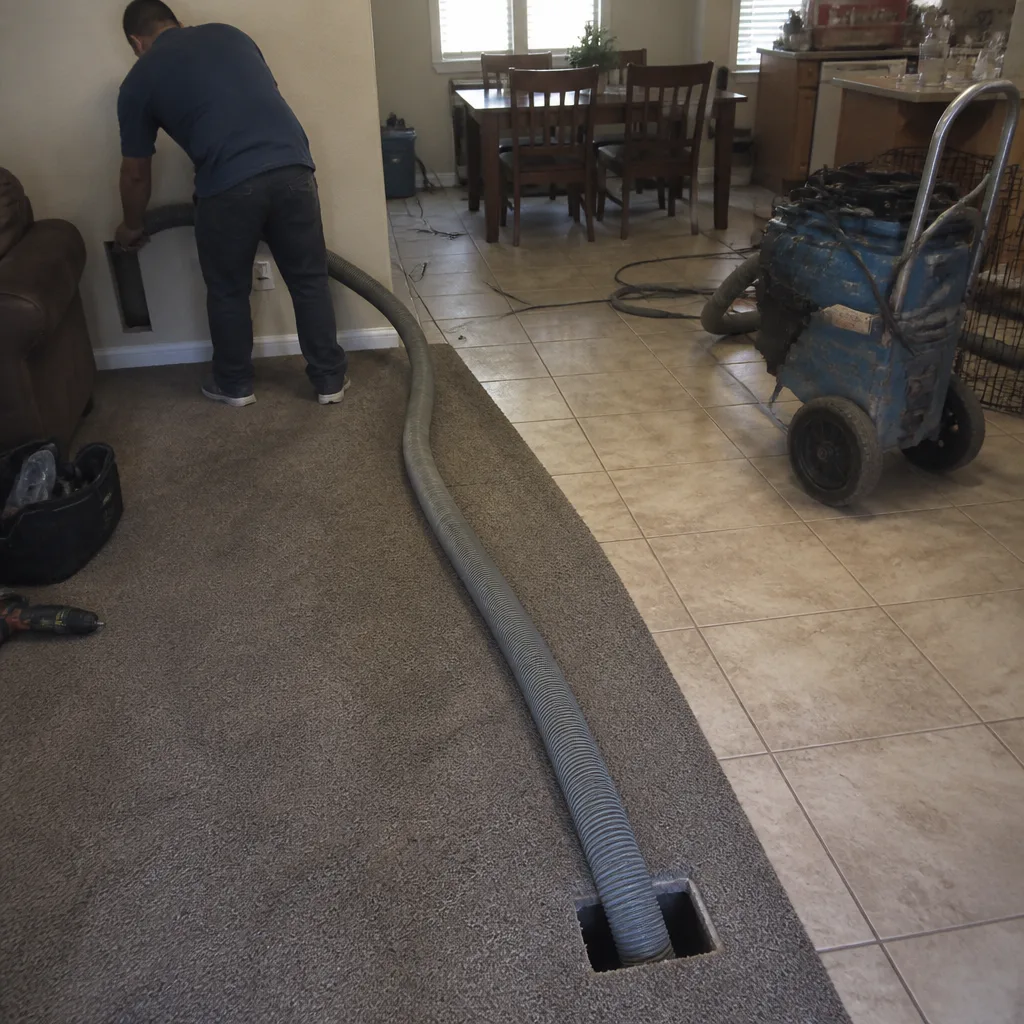
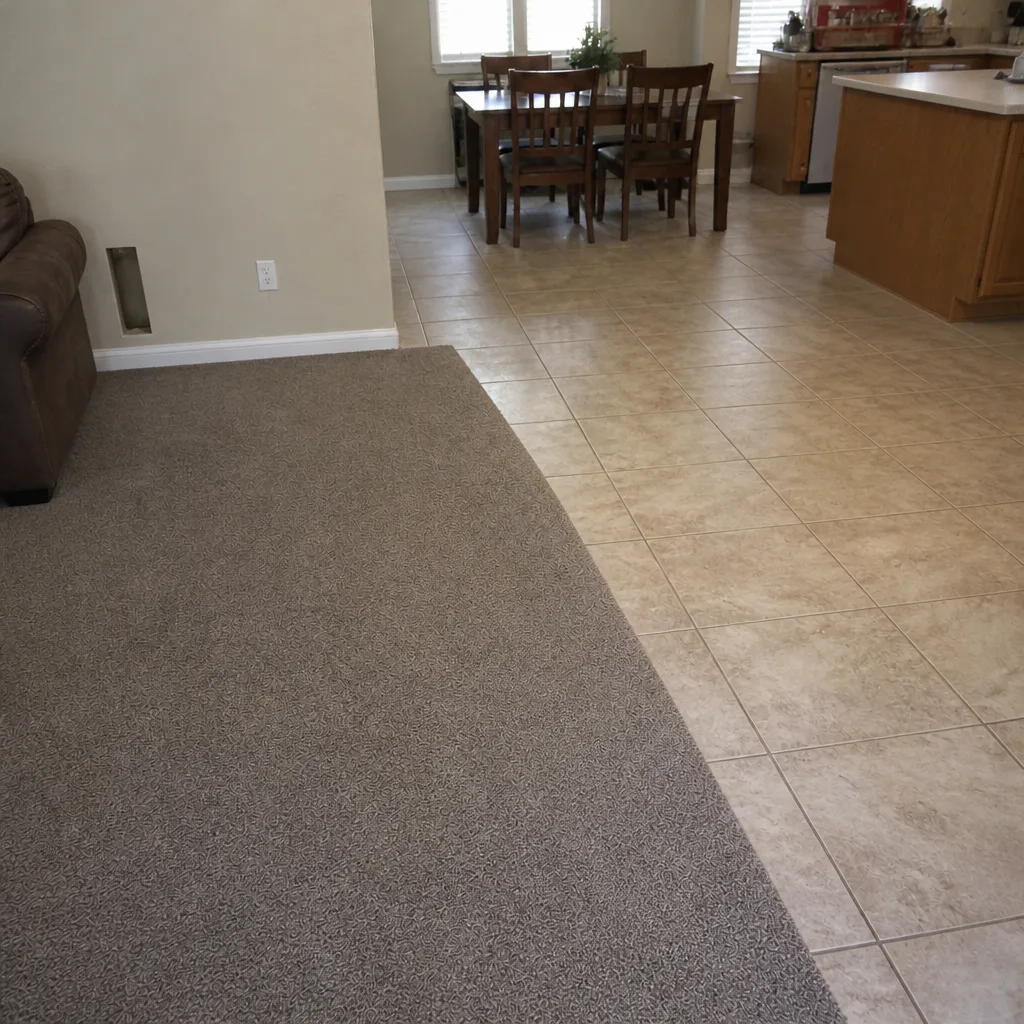
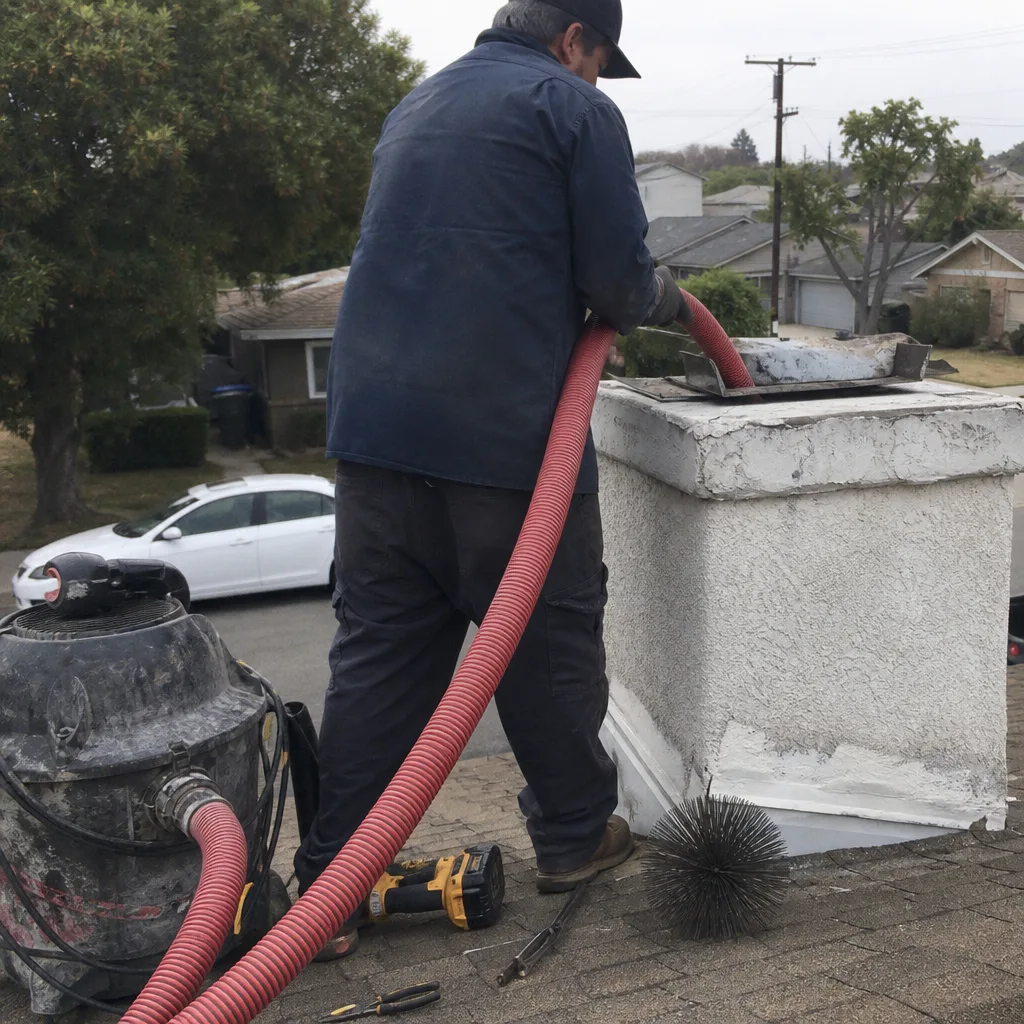
Whole-system duct and dryer vent check with before-and-after photos - you see exactly what came out of your vents
That "$99 whole-house special" is a bait ad - the real number appears once they are in your hallway, or the "clean" is a shop-vac at the register. We photograph the inside of your ducts before and after instead.
Air Duct Cleaning Maintenance Checklist for Chino Homeowners
Most homeowners change their furnace filter on a calendar schedule, not a condition schedule. That habit means maintenance work often gets done when it isn’t needed while the actual signals of duct contamination go unnoticed. In Chino, where dairy operations, nearby construction, and seasonal wildfire ash all put distinctive particles into the air, a fixed-date checklist misses what’s really happening inside your system. This guide replaces guesswork with observable benchmarks. You’ll learn how to read your filter, inspect your registers, and spot the performance changes that tell you when air duct cleaning is genuinely warranted, and when it can wait.
Styles & brands we work with
- Whole-home duct cleaning
- Dryer vent cleaning
- Camera inspection
- Sanitizing & deodorizing
Quick Answer
A useful air duct cleaning maintenance checklist for Chino homeowners combines monthly visual checks of return registers and filters, seasonal observations of HVAC performance, and event-triggered inspections after dust-generating events like renovations or nearby fires. If filter loading patterns show rapid accumulation of fine gray or tan dust within 30 days, or registers show visible debris buildup within a year, professional cleaning is likely justified. A written inspection from a dedicated duct specialist determines whether cleaning or dryer vent cleaning is actually required.
Table of Contents
- How Duct Maintenance Really Works in Chino
- The Monthly Homeowner Checklist
- Annual Professional Inspection Points
- Event-Triggered Cleaning Criteria
- How to Read Your Filter Like a Diagnostic Tool
- Register and Grille Inspection Protocol
- HVAC Performance Benchmarks That Signal Duct Restriction
- Common Mistakes to Avoid
- When to Call a Professional
- Frequently Asked Questions
- The Bottom Line
How Duct Maintenance Really Works in Chino
A duct system doesn’t need the same intervention on the same schedule every year. The maintenance it needs depends entirely on what’s entering the system and how much of it the filter is catching. In Chino, the particle load changes by season and by what’s happening nearby. Agricultural activity from the dairy operations that have long defined the area puts organic particulate into the air. Ongoing residential and commercial development kicks up fine construction dust that finds its way indoors. And during fire season, smoke and ash from regional wildfires can infiltrate homes across the Inland Empire, including Chino.
What that means practically is this: a home near an active construction site may load its filter and ducts with fine silica dust in a matter of weeks, while a home in a more established neighborhood with mature landscaping may go a year or more between meaningful changes. The checklist that works for Chino is a condition-based framework, not a date-based one. We approach every job this way at Duct Cleaning Chino. The goal is to tell you whether cleaning is actually needed, not to sell you a service on a timer.
Think of your HVAC system as a circulatory system for your house. The filter is the first line of defense, but it’s not a perfect barrier. Fine particles pass through standard filters, especially the lower-MERV fiberglass types common in rental properties and older homes. Those particles then accumulate in the return ductwork, the supply plenum, the blower housing, and eventually the supply registers. The rate of accumulation is what your maintenance checklist should be measuring.
The Monthly Homeowner Checklist
The monthly check is not about cleaning ducts. It’s about observing the system closely enough to notice changes early. These are the five checks a Chino homeowner can do in about ten minutes with no special tools.
- Inspect the return filter visually. Hold it up to a light. If you can still see light through the filter media, it’s likely functional. If it’s opaque with accumulated dust, it’s overdue regardless of the calendar.
- Examine the return grille surface. Look for visible dust accumulation on the grille itself, particularly on the louvered faces. A return grille that looks dusty from across the room indicates the filter may be bypassing or overdue.
- Check supply registers in main living areas. Look for dust streaking on the wall or ceiling around the register face. This is the first visible sign that supply ducts are shedding accumulated material.
- Note any new musty or stale odor when the system first starts. This can indicate moisture issues or deep accumulation in the duct lining that isn’t visible from the register.
- Monitor household allergy symptoms in relation to system runtime. If occupants consistently feel worse when the HVAC runs and better when it’s off, that’s a signal the ductwork itself may be redistributing particles.
These monthly observations are not chores with a fixed outcome. They’re a baseline. The first time you do them, you establish what normal looks like in your home. Every subsequent check is a comparison against that baseline. Changes over time, not any single observation, are what matter.
One detail worth noting for Chino specifically: homes within a mile or two of active dairy operations may notice a fine organic film on return grilles that feels slightly tacky to the touch. This is different from dry construction dust. It’s a sign that airborne agricultural particulate is moving through the system, and it may justify more frequent filter changes or a conversation about higher-MERV filtration products like those from Honeywell and Aprilaire.
Annual Professional Inspection Points
Once a year, a professional inspection is worth doing even if everything has looked normal on your monthly checks. The professional eye sees things the monthly checklist can’t. Here’s what a proper annual duct inspection in Chino should cover.
- Return-side duct visual inspection. This is where most contamination enters the system. The return side runs under negative pressure, drawing unconditioned air from inside the home. Any gaps, cracks, or failed tape joints on the return side pull dust directly into the duct stream.
- Supply-side inspection via register access. A technician looks into the supply runs from each register. Visible dust accumulation on the duct walls indicates that particles are making it past the filter and settling out in the system.
- Blower housing and evaporator coil inspection. The blower wheel and coil are often the dirtiest components in the system. A dirty blower reduces airflow, which makes the whole system work harder and run longer. A dirty coil reduces heat exchange efficiency.
- Duct seam and connection integrity check. In Chino’s older housing stock, original duct systems may be decades old. Seals degrade over time. A professional inspection should note where connections have loosened and whether duct repair is warranted.
- Filter rack inspection. Many homes have filter racks that don’t seal properly, allowing air to bypass the filter entirely. This is one of the most common findings that explains why ducts get dirty despite regular filter changes.
These inspection points matter because they change the calculus on cleaning. If the inspection finds a sealed, well-filtered system with minimal accumulation, you don’t need cleaning that year. If it finds bypass around the filter rack and visible dust in the supply runs, cleaning is justified and the bypass should be addressed. Our approach at Duct Cleaning Chino is inspection-first. We show you what we’re seeing before any work begins. That means you decide based on evidence, not on a sales script.
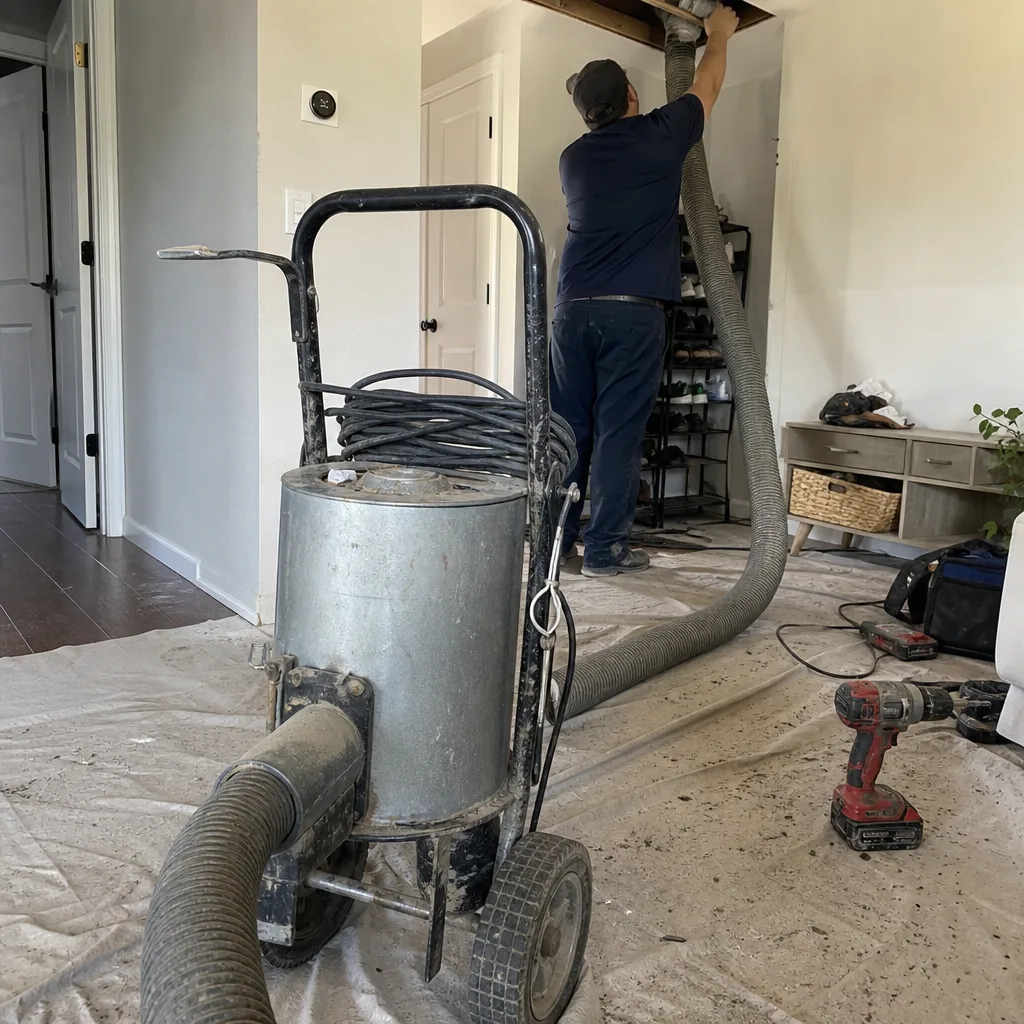
We use professional-grade inspection and cleaning equipment from Rotobrush and Nikro, the same systems used by commercial and restoration contractors. During the cleaning process, Abatement Technologies air-filtration equipment runs on site to capture displaced particulates. This matters because residential duct cleaning without proper containment can send dust back into the living space. The equipment difference is the difference between a cleaning that improves air quality and one that just moves dust around.
Event-Triggered Cleaning Criteria
Some situations override the normal maintenance schedule entirely. Certain events introduce so much material into a home that a professional cleaning becomes the sensible response, regardless of when the last one occurred. These are the event triggers that most commonly apply to Chino homeowners.
- Wildfire smoke exposure. When regional fires put smoke over Chino for multiple days, fine ash and combustion particles enter homes through windows, doors, and even the HVAC system’s own outdoor air intake. Ash is abrasive and chemically distinct from ordinary household dust. After a sustained smoke event, an inspection is warranted to assess whether the system has accumulated an unusual load.
- Home renovation or major remodeling. Drywall dust, sawdust, and demolition particulate are fine enough to stay suspended in air for hours and travel throughout the home through the duct system. Even with careful containment, renovation dust finds its way into return ducts. A cleaning after renovation is often the single highest-value intervention a homeowner can make.
- Nearby construction activity. New residential developments in and around Chino generate ongoing construction dust. If a home sits within a few blocks of active grading, framing, or excavation, that fine dust will enter the home and load the system unusually quickly.
- Long-term vacancy or extended HVAC shutdown. If a home sat empty through a season or the system was off for weeks, dust settles inside the ductwork undisturbed. When the system restarts, that accumulated material gets pushed out through the supply registers in the first few hours.
- Visible mold growth or persistent moisture. Any sign of microbial growth in the duct system is not a cleaning indicator; it’s a repair and source-correction issue. The moisture source must be identified and corrected before cleaning makes sense.
- Water intrusion or flooding. If water entered the duct system, drying alone is insufficient. Wet dust becomes a substrate for microbial growth. Professional assessment is required.
Event-triggered cleaning is not an upsell. It’s the honest application of what the duct system actually does: it moves air, and the quality of that air depends on what’s accumulated in the system. When a known event adds an unusual particle load, the professional check is warranted.
How to Read Your Filter Like a Diagnostic Tool
Your furnace filter is the single most informative maintenance tool you own. It collects a record of what’s been moving through your home’s air for the last 30 to 90 days. Learning to read it turns a disposable item into diagnostic evidence.
The first thing to understand is that filter loading patterns differ by contaminant type. Fine gray or tan dust that loads the filter evenly across the entire face is typically fine soil dust or construction particulate. In Chino, this is often the signature of nearby development activity or the natural fine soils of the Pomona Valley. Dark gray or black particulate concentrated in streaks is often a sign of soot or fine combustion particles, which can come from fireplaces, candles, or regional wildfire smoke. A filter with visible fibers and pet hair indicates that larger debris is reaching the filter, which is normal, but if the filter loads with this material within two weeks, the return path may be pulling from a dusty environment that warrants attention.
Rate of loading is equally important. In a typical Chino home with moderate occupancy and no unusual particle sources, a MERV 8 filter should remain functional for 60 to 90 days. If you’re changing a filter every 30 days because it’s visibly loaded, the system is either undersized for the particle load, the filter is catching more than it should because dust is bypassing other barriers, or there’s an indoor source contributing significantly. None of those situations is fixed by changing filters more often.
There’s also a specific pattern worth watching: a filter that loads heavily on one side but remains clean on the other indicates uneven airflow through the filter media. This can happen when the filter rack is oversized for the filter, when the filter is installed incorrectly, or when the return duct design creates flow imbalances. It’s a diagnostic clue that the system isn’t filtering efficiently even when maintenance is done on schedule.
For Chino homeowners dealing with dairy-related organic particulate, a filter may develop a slight earthy odor well before it’s visually loaded. That odor is not necessarily a problem, but it does indicate that organic material is being captured. For homes with this pattern, higher-MERV filtration pairs well with professional cleaning. We supply and install Honeywell and Aprilaire filtration products for exactly this reason. The goal is a system that captures what’s entering, not one that lets it settle in the ducts.
Register and Grille Inspection Protocol
Supply and return registers are the visible endpoints of a system you can’t easily see inside. They’re the first place contamination shows up, and the way they look tells you a lot about what’s happening deeper in the ductwork.
Start with the return grilles. In most Chino homes, these are located in a hallway, at the base of a wall, or on the ceiling. Return grilles run under negative pressure, meaning they draw room air toward the filter. Dust that would otherwise settle on surfaces gets pulled toward these grilles. Inspect the louvered faces. Dry, light-colored dust that brushes off easily is ordinary household dust. It accumulates on any surface in the home and doesn’t necessarily indicate a duct problem. A grille with a visible dark, sticky film, however, is a different matter. In Chino’s environment, this pattern often indicates a mix of cooking aerosols, candle soot, and agricultural particulate. The sticky film is not a filter failure; it’s the grille doing its job of capturing what’s in the air. But it’s also a signal that the same material is present in the duct system beyond the filter.
Now look at the supply registers. These push conditioned air into the room. Clean supply registers are the expected baseline. When supply registers show dust streaking across the adjacent wall or ceiling, it means the ductwork itself is shedding accumulated material. This is a clear signal that dust has settled inside the supply runs. The streaking pattern is diagnostic: it follows the airflow, showing how supply air is moving into the room and carrying duct contamination with it.
Pay attention to the color and texture of any buildup you find. Fine tan or gray powder indicates fine soil dust or construction particulate, common in Chino given the region’s ongoing development. Black particles near supply registers in a home with gas appliances warrant professional evaluation, as they can indicate incomplete combustion or accumulated soot from past events. Fibrous material, especially visible insulation fibers, suggests duct lining degradation or a compromised connection somewhere in the system. That’s an air duct cleaning and repair situation, not just a cleaning one.
One meaningful detail: registers are accessible. If a homeowner can see accumulation at the register face, it’s typically just the tip of what’s accumulated deeper in the run. The register is the last point before air enters the room. Dust there came from somewhere upstream in the system. That’s why we use Rotobrush contact-cleaning systems and Nikro negative-air equipment on our cleaning jobs. The register is not the job; it’s the evidence of the job.
HVAC Performance Benchmarks That Signal Duct Restriction
Duct restriction doesn’t just affect air quality. It affects system performance, and homeowners often notice the performance changes before they connect them to the ductwork. These benchmarks help you distinguish a normal system from one that’s fighting restricted airflow.
The first benchmark is runtime. A system that runs longer than it used to in order to reach the same thermostat setting is working against a limitation. Restricted airflow through a dirty coil or partially obstructed ducts reduces the system’s ability to move heat out of the air. The result is longer cycles, not sudden failure. This shows up gradually, and it’s easy to dismiss as normal summer operation in Chino’s hot inland summers. But if the system ran 20-minute cycles in July two years ago and now runs 40-minute cycles under the same conditions, something has changed.
The second benchmark is temperature differential. With the system running, measure the temperature at a supply register and compare it to the temperature at the return. A healthy system in good working order typically shows a 15 to 20 degree difference. If that differential drops below 10 degrees, the system is not moving enough air across the coil, which can result from a dirty blower wheel, a fouled evaporator coil, or duct restriction. All three of those are things a professional cleaning and inspection addresses.
The third benchmark is noise. Duct systems are not silent, but they shouldn’t whistle, rattle, or rumble. A whistling sound when certain registers are open indicates high static pressure, which can mean the ducts are undersized or partially obstructed. A rattle that appears when the blower ramps up suggests a loose connection or a failing seal. These are duct integrity issues, and they’re precisely the kind of finding our team at Duct Cleaning Chino addresses through our air duct repair service. The combination of cleaning and repair means the system gets corrected in one visit, not handed off to another contractor.
The fourth benchmark is dust accumulation on surfaces relative to system runtime. Every home accumulates dust, but a home with clean ducts accumulates it slowly and evenly. A home with contaminated supply ducts accumulates it rapidly, especially in rooms closest to the air handler. If you’re dusting furniture twice as often as you did a year ago, or if certain rooms accumulate dust much faster than others, the duct system is distributing material rather than simply moving air.
None of these benchmarks requires a tool. They’re all observable. What they require is attention. That’s the difference between a homeowner who catches a problem early and one who discovers it after an expensive system failure.
Common Mistakes to Avoid
- Changing filters on a fixed schedule regardless of condition. A filter that’s still clean after 90 days doesn’t need changing, and a filter that’s fully loaded after 30 days needed changing two weeks ago. Condition, not the calendar, should drive the decision in most Chino homes.
- Assuming a clean-looking home means clean ducts. Duct interiors are not visible. A home can be spotless while its duct system carries years of accumulated fine dust. The only way to know is to look, which is why inspection-first matters.
- Using the cheapest available filter without considering the consequences. Fiberglass filters catch large debris but let fine particles pass. Those fine particles are the ones that settle in ducts and accumulate over years. A better filter is not about air quality alone; it’s about protecting the duct system itself.
- Running the HVAC during a wildfire smoke event without checking it afterward. The system pulls outdoor air in through any imperfect seal and distributes it through the home. After a smoke event in the Chino area, an inspection should be part of the recovery, not an afterthought.
- Ignoring duct damage because the system still works. Loose connections, failed tape, and damaged insulation may not cause immediate failure, but they let unconditioned air and dust into the system. Damage found during inspection should be repaired. Duct Cleaning Chino does that work in-house, so there’s no need to coordinate a second contractor.
- Treating duct cleaning as a regular maintenance item rather than a response to evidence. The industry has its share of companies that clean ducts on a timer because it’s profitable. A legitimate checklist prevents unnecessary work. A professional who shows you the evidence before recommending a cleaning is worth keeping.
- Forgetting the dryer vent. The dryer vent is technically separate from the HVAC duct system, but it’s a duct that carries air and accumulates lint. Dryer vent cleaning is a distinct safety issue. Lint accumulation is the leading cause of residential dryer fires, and a dryer that takes longer than 40 minutes to dry a normal load in a Chino home with a properly functioning unit is sending a signal that the vent is restricted.
When to Call a Professional
Annual inspection is a good habit, but some situations warrant a professional visit sooner. If you’ve had a renovation, a nearby fire, or weeks of construction activity near your Chino home, the system should be inspected before you assume it’s still clean. If you’re seeing dust streaking from supply registers, or if registers you cleaned a month ago look dirty again, the ductwork itself is likely the source. If the HVAC system is running longer cycles for no clear reason, or if a musty odor accompanies startup, professional assessment is the right next step.
We serve homeowners throughout Chino with a three-service scope: cleaning, dryer vent cleaning, and duct repair. When our team finds damaged or leaking ductwork during a cleaning, we can address it on the same visit. That’s a different model than a cleaning-only contractor who hands you a list of problems and moves on. Duct Cleaning Chino offers free estimates in Chino. Call (844) 789-0415 and we’ll inspect your system, show you what we find, and give you a written estimate before any work begins.
Frequently Asked Questions
There is no universal schedule that applies to every Chino home. Homes near active construction, dairy operations, or wildfire-prone areas may need cleaning more frequently than homes in established neighborhoods with minimal particle sources. The right approach is condition-based: annual inspection determines whether cleaning is warranted. If visible dust accumulation, airflow restriction, or post-event contamination is present, cleaning is justified. If the system is clean and well-sealed, it is not. Call (844) 789-0415 for an inspection and written estimate.
Duct cleaning is priced per job by written estimate, not by a fixed rate. The cost depends on system size, accessibility, and the degree of contamination found during inspection. Be wary of very low flat-rate offers. A professional cleaning with proper equipment and containment takes time, and the equipment matters. We use Rotobrush contact-cleaning and Nikro negative-air systems, not consumer-grade tools. Estimates are free, and the written estimate sets the final price before work begins.
Cheaper quotes typically reflect cheaper equipment and a shorter time on the job. Consumer-grade vacuums and portable tools cannot achieve the same contact cleaning and negative-air containment as professional-grade systems. A company quoting a very low price is often doing a surface-level job that leaves the majority of the duct interior untouched. The work looks done but doesn’t deliver the air quality improvement you’re paying for.
The most reliable way is to ask for before-and-after documentation of the duct interior. A legitimate duct cleaning company should be able to show you what the ducts looked like before cleaning and what they look like after. We inspect first, show our findings, and document the completed work. You should never be asked to trust that it was done; you should be shown.
Cleaning removes accumulated dust, debris, and contamination from the duct interior. Repair addresses physical problems: loose connections, failed seals, damaged insulation, and restricted or crushed sections. A company that only cleans will note these problems but cannot fix them. Duct Cleaning Chino does both. If our inspection finds damage during a cleaning, we can repair it on the same visit without subcontracting the work to a third party.
For homes where the duct system has accumulated significant dust, pollen, and other airborne particulate, cleaning removes a source of ongoing exposure. But duct cleaning is not an allergy treatment, and it’s not a cure for all indoor air quality problems. If the system is clean and the home still has allergy issues, the next step is source control and better filtration. We supply and install Honeywell and Aprilaire filtration products for exactly that reason. Call (844) 789-0415 to discuss what’s appropriate for your home.
The Bottom Line
A duct cleaning maintenance checklist for Chino homeowners is most useful when it’s treated as a diagnostic tool, not a to-do list. Monthly visual checks establish a baseline. Annual professional inspection reveals what the monthly checks can’t see. Event triggers like renovation, wildfire smoke, or nearby construction justify immediate assessment regardless of the calendar. The filter tells you what’s entering the system. The registers tell you what’s leaving it. Join those observations with professional inspection findings and you have an accurate picture of whether your ducts actually need cleaning and when. That’s how you save money, avoid unnecessary work, and address real problems before they become expensive ones.
Call (844) 789-0415 for a free estimate in Chino. We answer 24/7. Fast dispatch from 7am to 7pm, Sunday through Friday. A written estimate sets the price before any work begins, and we show you what we find before we recommend anything.
Written by the team at Duct Cleaning Chino, serving Chino since 2018.
See the difference
 Before
 After
 Before
 After
 Before
 After