
Nikro Air Duct Cleaning in Chino: A Homeowner’s Guide
Nikro air duct cleaning refers to a method of source-removal extraction that uses a negative-air machine to pull contaminants out of your ductwork while a companion agitation tool loosens debris from the duct walls. For most Chino homes, a properly matched Nikro unit moves enough cubic feet of air per minute to create real suction at every register, not just the one closest to the truck. That distinction is the difference between a duct cleaning that actually removes material and one that just rearranges dust.
The hard truth about duct cleaning equipment is that a machine sitting in a van means nothing. What matters is whether it generates enough negative pressure for the specific volume of ductwork in your home, and whether the technician knows how to seal that system correctly. If you’d rather not spend your weekend thinking about CFM ratings, call (844) 789-0415 for a free estimate from a team that runs this equipment daily.
What a Nikro Negative-Air Machine Actually Does
Most homeowners picture duct cleaning as a powerful vacuum attached to a register, sucking dust toward the opening. That’s not how professional systems work. A Nikro unit creates negative pressure throughout the entire duct system at once, which means air is being pulled from every supply and return register simultaneously toward a single collection point, usually at the furnace or air handler.
Here’s why airflow direction matters in a typical Chino home. Your ducts form a closed loop. Supply ducts push conditioned air into rooms; return ducts pull air back to the furnace. A negative-air machine connected at the right point reverses that normal airflow and forces every cubic foot of air in the system to move toward the collection chamber. Debris that’s been sitting in a low spot of a trunk line or a far bedroom branch gets carried along with that airflow.
But here’s the part most marketing skips: negative pressure alone doesn’t remove anything that’s adhered to duct walls. Dust, pet hair, and construction debris that’s been compressed by years of airflow or moisture from Chino’s summer humidity won’t simply lift off because air is moving past it. That’s why Nikro equipment is only half the process, and we’ll get to that in a moment.
CFM Ratings: Why Duct Volume Determines Machine Size
The effectiveness of any negative-air duct cleaning comes down to a simple question: does the machine move enough air to create proper velocity through the ducts you actually have? This is measured in cubic feet per minute, or CFM. A small machine might generate decent suction in a short, straight run but lose almost all of it by the time the airflow reaches a second-story bedroom at the far end of the house.
In Chino, the housing stock runs from compact single-story ranch homes built decades ago to newer two-story homes with much larger duct volumes. The duct layout in an older single-story is often a simple radial pattern with short branch runs, which means even a moderate amount of negative pressure can do the job. A two-story home with a common trunk line and long vertical risers needs a machine with substantially more CFM to overcome the additional resistance.
We assess this before we start. The square footage of the home, the number of supply and return registers, and the visible duct configuration all tell us what machine size is appropriate. If a company can’t explain how they sized the machine for your home, or if they’re running a portable consumer-grade unit with an attached hose, you’re not getting source removal. You’re getting surface dusting.
The Agitation Problem: What Nikro Can’t Do Alone
Here’s the mechanical reality. Nikro negative-air equipment creates the airflow that carries debris out of your system. But debris that’s stuck to duct walls needs physical agitation before it can be carried away. Without that step, the airflow simply passes over the buildup and leaves it in place.
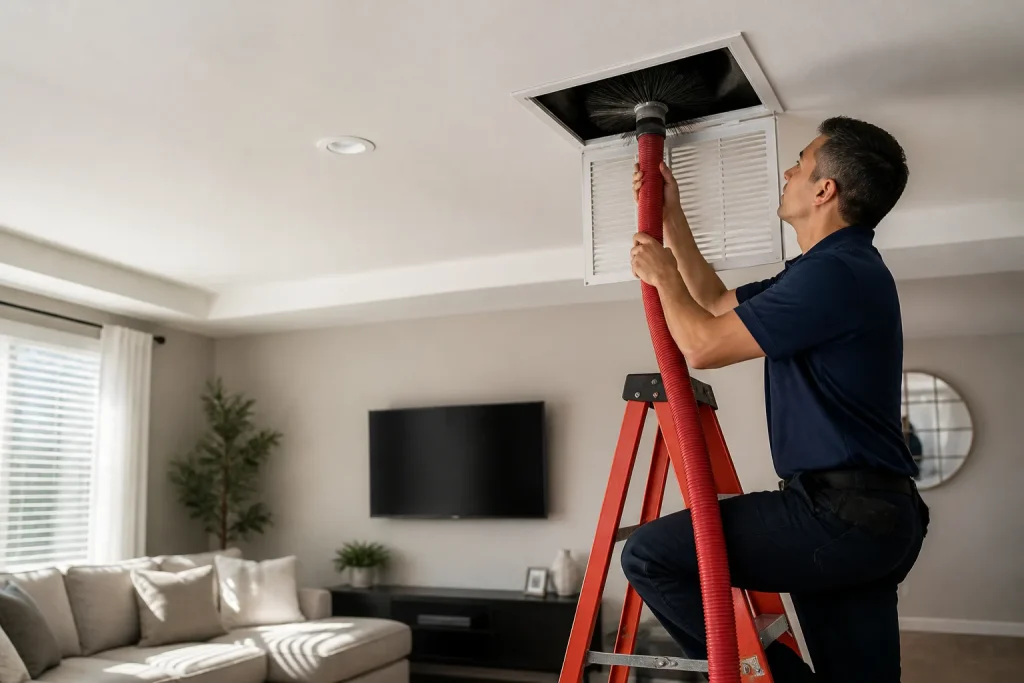
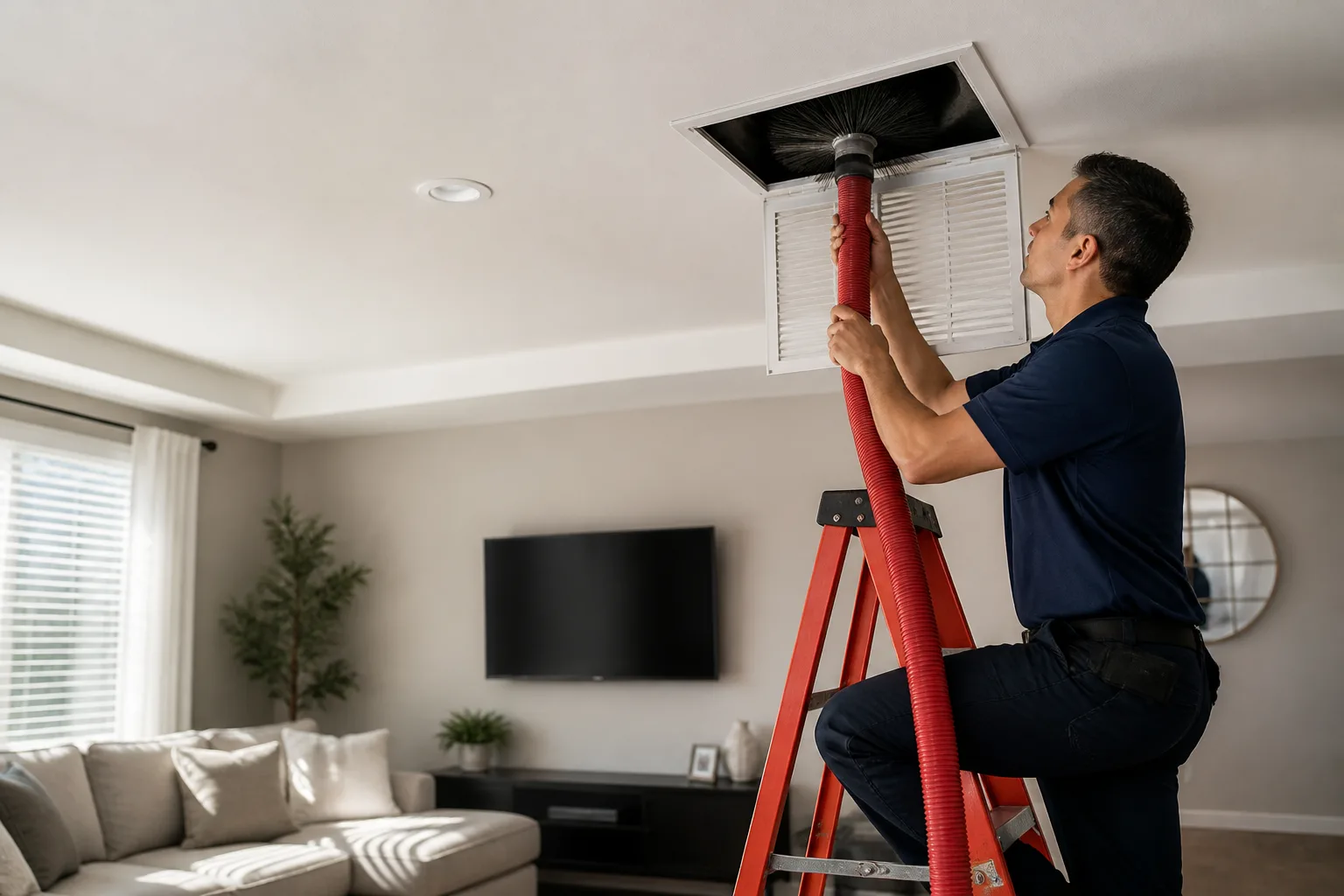
The companion tools are called agitation devices: air whips, skipper balls, and rotating brushes. These are inserted through access points into the ductwork while the negative-air machine is running. They knock material off the duct surfaces, and the airflow immediately carries it downstream to the collection point. The order matters. Turn on the agitation before the negative pressure, and you blow debris into rooms. Run the negative pressure without agitation, and nothing adhered to the duct releases.
When you’re evaluating a duct cleaning company in Chino, ask directly: “What agitation tools do you use alongside the negative-air machine?” A professional answer names specific tools and explains where they’re inserted. A vague answer about a “powerful vacuum” tells you the crew is counting on the machine’s reputation to do work it was never designed to do alone.
We run Duct Cleaning Chino with a simple operating principle: the machine creates the airflow, and our agitation tools do the physical work. Skip either one and you haven’t cleaned anything.
Sealing the System: Where Quality Equipment Gets Wasted
A premium Nikro machine running at full power is useless if the system isn’t sealed correctly. The negative pressure has to be contained within the duct loop, and any gap in that containment lets the machine pull air from the mechanical closet or attic instead of through the registers.
Here are the red flags we look for when we hear about duct cleaning jobs that didn’t produce results. Supply registers left completely open while only one is covered. The machine connected at a return but no temporary sealing done at the furnace. Access holes cut into the duct and left open during the cleaning. In each case, the airflow takes the path of least resistance, and the path of least resistance is almost never through twenty feet of dirty ductwork.
Proper sealing in a Chino home means covering all but the active register, creating the right airflow pattern, and maintaining negative pressure throughout the entire run. It also means sealing the connection at the collection point so the machine pulls only from the duct system. This is where experience shows. A technician who’s sealed a few hundred systems knows where air leaks happen and how to check for them before wasting time running the equipment.
This matters for another reason in the Inland Empire: we deal with attics that get genuinely hot. Air leaks around a poorly sealed access point pull in superheated attic air, which changes the pressure profile and can even draw in insulation particles. A well-sealed job gives you predictable results that aren’t affected by the temperature outside.
HEPA Filtration: Protecting Occupied Homes During Cleaning
One of the most overlooked benefits of professional-grade negative-air equipment is what happens to the air after it passes through the collection chamber. A Nikro unit with HEPA filtration captures the particulates that the negative pressure pulls from your ducts, rather than exhausting them into your living space or out an open window.
This is a significant difference in homes where someone has asthma, COPD, allergies, or any respiratory sensitivity. The cleaning process itself stirs up material that’s been sitting undisturbed for months or years. Without HEPA capture, that material can end up airborne during and after the cleaning. With proper filtration, the air leaving the machine is cleaner than the air entering it.
We take this one step further in occupied homes. On top of the Nikro unit’s filtration, we deploy Abatement Technologies air-filtration equipment during the cleaning process. This adds a second layer of air scrubbing in the living space itself, capturing any particulates that escape during register cleaning or agitation. It’s the same discipline used on remediation jobs, applied to residential duct cleaning.
For a homeowner in Chino with a child who has allergies or an elderly parent with respiratory issues, this is the kind of detail that matters more than a coupon price. Our air duct cleaning process is built around capture and containment, not just getting dust out of the ducts and into the rooms.
How to Verify the Equipment Is Being Used Correctly
You don’t need to become a duct cleaning technician to spot a job that’s being done properly. Here’s a practical checklist we give to homeowners in Chino who want to understand what they’re paying for:
- The machine is running outside or at the collection point, not inside your living room. Negative-air units are loud and designed for utility spaces, garages, or exterior connections. If the main machine is a small canister vacuum in your hallway, that’s not source removal.
- You can feel air movement at registers when the system is sealed correctly. Not a gentle breeze, but noticeable pull as the negative pressure draws room air toward the open register during the cleaning sequence.
- Agitation tools are visible. You should see air whips, skipper balls, or brush heads being inserted into duct access points. If no agitation tools come out of the truck, the job is incomplete by definition.
- The technician explains the airflow plan. Which register is active, where the negative pressure is connected, and how the trash is being captured. A pro can explain this in thirty seconds. A crew that can’t explain the process probably isn’t following one.
- Access points are sealed after the job. Any holes cut into the ductwork must be patched with proper caps or covers, not left open with a note to “remember to fix that.”
Trustworthy duct cleaning in Chino doesn’t require you to understand every detail of the equipment. But a company that invites you to understand the process and can answer direct questions is almost always doing the job the way it should be done.
When to Call a Pro
If you’re seeing dust accumulate on surfaces within days of cleaning, hearing debris rattle in the ducts when the system kicks on, or noticing that airflow from certain registers is noticeably weaker than others, those are signs of a problem worth investigating. Duct cleaning with proper negative pressure and agitation should produce results you can notice in your air quality and system performance.
There’s also a category of problems that duct cleaning alone can’t solve. Damaged or disconnected duct sections, crushed flex runs, and poorly sealed joints all reduce system efficiency regardless of how clean the ducts are. That’s why we offer air duct repair as a first-party service. If our inspection finds a disconnected trunk line or a crushed return in the attic, we can address it on the same visit rather than referring you to another contractor.
For related services in Chino, see our guides on air duct cleaning and dryer vent cleaning. A clogged dryer vent is a fire hazard that’s separate from your HVAC ducts and needs its own attention.
The Bottom Line
Nikro equipment has a strong reputation in the duct cleaning industry for good reason: when it’s matched to the right duct volume, sealed correctly, and paired with proper agitation, it delivers genuine source removal rather than cosmetic dusting. But the machine is only as good as the person running it and the process behind it.
When you’re comparing duct cleaning options in Chino, ask about CFM sizing for your specific home, agitation tools, and sealing procedures. A company that can answer those questions clearly is demonstrating competence. One that can’t is hoping the equipment brand name does the talking.
If you’re in Chino and need help evaluating your ductwork, Duct Cleaning Chino offers free estimates. Call (844) 789-0415 and we’ll walk you through what we found and what it’ll take to fix it. We answer 24/7. Fast dispatch from 7am to 7pm, Sunday through Friday.
Frequently Asked Questions
Nikro air duct cleaning uses a negative-air machine to pull air through your entire duct system at once, capturing debris at a central collection point. The Nikro unit creates the airflow, while agitation tools physically loosen debris from duct walls so the airflow can carry it out. Without agitation, even professional Nikro equipment can’t remove material that’s adhered to the duct surfaces.
Pricing for Nikro air duct cleaning in Chino depends on home size, the number of registers, and the condition of the ductwork. A single-story home with a simple duct layout typically costs less than a two-story home with long vertical risers. Written estimates should break down what’s included. For an exact quote on your specific home, call (844) 789-0415. Estimates are free.
Look for three things: the machine is connected at the furnace or air handler, not a portable vacuum in the living room; you can feel air pull at registers when the system is sealed; and agitation tools like air whips or skipper balls are visibly used during the job. If any of those three are missing, the equipment is present but not doing its job.
Yes, Nikro negative-air machines with HEPA filtration capture particulates pulled from your ducts rather than exhausting them into the home. This is especially important in households with asthma, allergies, or other respiratory conditions. Additional air-filtration equipment placed in the living space during cleaning provides a second layer of capture for anything that escapes the ductwork itself.
Written by the team at Duct Cleaning Chino, serving Chino since 2018.
Need Air Duct Cleaning Help?
Call Duct Cleaning Chino - licensed & insured, with free written estimates in Chino.
(844) 789-0415